Showing posts with label depression. Show all posts

Tuesday, April 16, 2013

Hypertension: Shifting From Prescribed Medications To Natural Remedies

You have hypertension when the blood pressure within your arteries gets higher than normal. This condition can lead to heart attacks, strokes and even leg pains while walking. Because it doesn’t manifest any symptoms until it has done much damage, having your blood pressure checked from time to time is one of the best health investments that you can make.

Hypertension

Although the use of prescription medication may be necessary to manage hypertension, there are also natural ways to control it. You can use prescribed medications to lower your blood pressure initially. When it reaches its normal level, natural remedies can be used to keep pressure at a healthy level and enable you to taper off the medicines.

Regrettably, most doctors only cure the symptoms of the disease but are not really able to identify the deep-seated cause of hypertension. In each visit, the average patient-doctor consultation takes less than seven minutes. Pharmaceutical giants who manufacture blood pressure lowering drugs invest a lot of money in educating doctors about their latest medications, and virtually nothing on teaching alternative natural cures. Sadly, doctors have been reduced to somebody who simply writes medical prescriptions.

Unlike medications that are passed as a cure for anxiety, but can cause more harm than good for most sufferers, hypertension medications really do help a lot of people. For hypertensive conditions, be sure to take first the medicines that lower blood pressure, and follow up with the natural remedies described below. In a few months, you can gradually reduce your intake of prescription medications and still stay within normal pressure levels.

Natural therapy that can bring down high blood pressure

Obesity can cause blood pressure to soar. If you are obese or overweight, exercise and the right diet can help shed off excess pounds and control your hypertension. A change in the foods you eat will also be beneficial. You should start including low sugar, low fat and high fiber foods in your diet. Quitting smoking and consuming alcohol in moderation must also be considered. Also, salt is one of the silent demons in your diet and should be avoided if possible. If you must use salt, then consume very moderate amounts.

By shifting to less fattening and more nutritious foods, you can eat your way to a trimmer and healthier you. You can also lower your blood pressure and be less prone to heart diseases if you take the following nutritional supplements.

• A healthy supply of vitamins A, C, and D with magnesium is available in powder supplement form.

• 500 to 1,000 mg of calcium can be taken partly during a meal, with the rest taken at bed time.

• Eating a banana and a cup of tomato has enough daily dose of potassium which can help lower blood pressure.

• Coenzyme Q10 is the rising star as far as lowering high blood pressure is concerned. 200 mg is the required daily dose. There were serious cases where pressure was lowered by up to 40 points. The supply of Coenzyme Q10 in the body gets depleted of cholesterol-lowering drugs are taken regularly.

• While dark chocolate only reduces blood pressure by 3 to 4 points, it makes up for its rich supply of antioxidants.

You should also consider the role of emotion in hypertension. Some people are like pressure cookers when they get angry. They keep all that pent-up anger inside until the pressure builds up. People may seem calm from their outside appearance but they are actually almost ready to keel over due to blood pressure that has gone through the roof. The best way to deal with anger is not to allow it to build up inside but to blow off some steam and let all that anger out. This way, you get to lower your blood pressure and reduce the risk of a stroke. Know more about panic attacks, depression, stress and anxiety.

Tuesday, April 2, 2013

Mindfulness Therapy For Stress Reduction

We all have stress in our lives on a day to day basis. We inevitably all experience pain or worry to a certain degree as a result of this stress. Sometimes the cause of this worry is something small and manageable and other times there are life situations that cause us as individuals to experience pain and worry that is significant enough that it seemingly takes over who we are. In either case when left unchecked these worries can have a negative overall effect on our well-being. Mindfulness therapy can help us deal with these problems weather the stress you may be experiencing is large or small in nature.

Mindfulness Therapy

The key to mindfulness therapy is learning how to become aware of the present moment in life. All too often we tend to focus our attention on the pain of the past and the worry of the future. When this happens we spend a significant amount of time and energy dealing with our own self talk or mental chatter. Self talk is the internal silent dialogue of thoughts that we have with ourselves throughout the day. When this internal self talk causes us to suffer by strongly resisting pain, sadly it can cause us to miss out on the experiences of the present moment. Sometimes people go through their entire lives in this manner being constantly stuck in the past or worried about the future. This can lead to problems with both depression and anxiety.

Mindfulness therapy can help in both of these situations. Mindfulness practice is best achieved through daily meditation. This practice has been in existence for thousands of years. Many people, particularly in western culture are somewhat skeptical of mindfulness meditation. There are preconceived notions that mindfulness meditation is an unorthodox far eastern religious practice. In fact this practice has nothing to do with religion and has been well adapted to fit the Western Culture. Additionally some are intimidated by the idea of mindfulness therapy meditation because of the misconception that only highly spiritual individuals can practice meditation in an effort to achieve enlightenment or that it is difficult. These ideas simply are not true.

Mindfulness meditation is easy to do and can be practiced by anyone. For beginners guided meditation is very effective at reducing stress, and anxiety. With guided meditation you simply find a comfortable chair to sit in, close your eyes and listen to an audio recording of a meditation instructor. There is usually an emphasis placed on noticing your breathing to help the practitioner become more acutely aware of the present moment.

Additionally there are usually some words that you will be instructed to focus on, also with the goal of decreasing your mental chatter and increasing your awareness of the present. Guided meditation recordings are usually 20 minutes long, and it is recommended that you make time for yourself to do this 2 times a day in order for the practice to be effective.

I have personally found it very rewarding to make it a priority to devote at least 40 minutes a day to my own personal well being. I recommend the guided meditations by Christopher Germer or Tara Brach. They both offer free guided meditations that you can download to your computer or an MP3 device. Christopher Germer also has a book that I found helpful in explaining the principles and benefits of this practice. You can read more such type of health articles on www.newsmicks.com

Tuesday, January 15, 2013

Childhood obesity is linked to more immediate health problems than doctors formerly realized

While a plethora of research on childhood obesity has linked it to long-term health problems, a new UCLA study focuses on the condition's more proximate consequences, showing that obese children are at a greater risk for immediate health problems than previously thought. That's important for Kentucky, which ranks poorly in many health measures and is third highest in child obesity. (Photo by Tara Kaprowy)

"This study paints a comprehensive picture of childhood obesity, and we were surprised to see just how many conditions were associated with childhood obesity," said lead author Dr. Neal Halfon, a professor of pediatrics, public health and public policy at UCLA.

Compared to kids who are not overweight, the study found that obese children have nearly twice the risk of having three or more reported medical, mental or developmental conditions. Specific medical conditions included bone, joint and muscle problems; asthma; allergies; headaches; and ear infections. Obese children also reported a greater tendency toward emotional and behavioral problems, higher rates of grade repetition, missed school days and other school problems, ADHD, conduct disorder, depression, learning disabilities, and developmental delays.

The study provides the first comprehensive national profile of associations between weight status and a broad set of associated health conditions, a UCLA release said. Halfon said these findings should serve as a wake-up call to physicians, parents and teachers, who should be better informed of the risk for health conditions associated with childhood obesity. (Read more)

Saturday, January 5, 2013

Five Facts about Stroke for the Caregiver

If your loved one has suffered a stroke, there's no doubt that you're going through a very difficult and frightening time. The National Stroke Association tells us that over 750,000 people in America each year suffer a first or recurrent stroke, and one in 55 Americans are living with the effects of a stroke. If you are caring for someone who has recently had a stroke, here are five facts that you need to know:

1.It's All in the Head

Many people are confused when it comes to exactly what a stroke is. To understand stroke, think of it as a sort of "brain attack." When a blood clot interrupts the blood flow to an area of the brain, a stroke results. During a stroke, brain cells can die due to a lack of oxygen. As brain cells die, the abilities that are controlled by that particular area of the brain become impaired. Typically, these abilities include memory, speech and movement.

2.Effects on the Survivor

Because not every person is the same, every stroke is different. Each person is affected by stroke in different ways. On average, a stroke survivor can expect to have impaired mobility, memory loss, depressions, communication problems, muscle spasticity, and difficulty in performing daily tasks that require manual dexterity. A stroke survivor can incur one of these results or a combination of them. The resultant issues of a stroke can last for weeks, months or for the rest of the survivor's life.

3.Rehabilitation

If your loved one has had a stroke, his or her needs for rehabilitation therapy may vary. Each stroke patient will need to undergo some form of rehabilitation immediately after leaving the hospital. Your loved one may receive rehabilitation services directly from the hospital, from a specialized rehab hospital or even in a nursing home. If your loved one's stroke was mild, he or she may be able to undergo a course of rehabilitation at home. It's also important to note that rehabilitation may take as little as a few weeks and as long as several years.

4.Recovery Rates

As a caregiver, you should know that recovery rates among stroke victims vary widely. Of stroke victims, only ten percent recover completely. Twenty-five percent will recover with only minor physical impairments, 40 percent will require special care due to moderate to severe impairments, ten percent will requpire long-term care, and 15 percent die within days, weeks or months of suffering their stroke.

5.As a Caregiver

Caring for a loved one who has suffered a stroke can be a tiring, overwhelming process. It's not unusual caregivers to encounter feelings of guilt and depression. As the caregiver of someone who has suffered a stroke, it's important to remember that you can't do it all. Find help when you need it from friends and family members. You may also want to consider hiring a part-time nurse who can relieve you of your duties, even if it's only one day a week. Don't forget to take time for yourself; it doesn't make you a bad person. Keep in mind that the healthier you are both physically and mentally, the better equipped you will be to care for your loved one.

If your loved one has suffered a stroke, arming yourself with the facts will make the process that follows a stroke less overwhelming. If you are directly related to the person who has suffered a stroke, don't neglect to have your own risk assessed. A simple blood test, conducted as part of an annual physical, can tell you if you are at high risk for stroke.

John Martin writes articles for health blogs and suggests having blood work done one of the Tennessee lab testing locations.

Saturday, December 1, 2012

Impotent at 24 years old?

Please read the following article to see if any of the items listed apply to you. If they do - then a lifestyle change for you is imminent. It shows how smoking, alcohol, drugs, prescription medicines, etc can affect a guy's penis and reproductive system. Stress, anxiety, depression, diet, lack of exercise all play an important role in your sexual health also.

Definite DON'Ts

Smoking - Nicotine reduces arterial pressure and as a result, prevents blood circulation to the penis. In addition, toxic substances from smoking are detrimental for sperm maturation.

Alcohol - Alcohol kills reproductive cells and decreases sperm viability. It also disrupts the link between the brain and the penis. Excessive use of alcohol inhibits the creation of the male sex hormone, androgen.

Marijuana - Sharply reduces the level of male sexual hormones, disrupts chromosomes and promotes undesired genetic changes.

Overweight - Being overweight can disrupt your hormone balance and, as a result, the production of hormones necessary for achieving erection can become insufficient.

Anabolic Steroids - Anabolic steroids bear a close resemblance to testosterone and as a result, the body stops its natural production causing impotence to occur.

High Cholesterol - Too much cholesterol blocks the vessels providing blood to the penis and thereby reduces the blood flow necessary to maintain an erection.

Chemical drugs - Studies show that out of two hundred most used medicines; as many as sixteen are likely to cause impotence. Among the most risky are drugs used for the treatment of high blood pressure, depression, insomnia, ulcers, tumors, plus a couple of medications used to combat allergy.

Thursday, November 29, 2012

Control Arthritis before it assault your health

Arthritis is a group of diseases that are the enemy of joints in the body. Various endangering diseases do not allow a man to live a healthy life in the long run. One or the other diseases are assured to attack human body wherein some can be silent or asymptomatic and other might show symptoms. Arthritis is not a single disease, but encompasses of over 100 different forms. The joint structure is changed with the harmful affect bringing about pain and swelling. Most commonly seen is osteoarthritis, following with rheumatoid arthritis, psoriatic arthritis, and others.

Osteoarthritis is a kind of degenerative joint disorder that causes degradation of joints, gradual loss of cartilage, bringing about bony spurs and cysts, and affects sub-chondral bone. Rheumatoid is a different disorder that starts to occur anywhere between ages 25 and 55.

Rheumatoid arthritis takes a chronic form and it is known to make the person crippled while causing damage, injury, loss of motion to the joints, and others, to distort them completely. The symptoms normally attached to this disorder include swelling, pain, and stiffness. Women are more prone towards this disorder showing the rate three times more than that of men. Obesity is one of the factors that drag women in the direction of this disorder. It was also included in one of the latest study held in 2012 that 18% to 19% overweight and obese women are likely to acquire rheumatoid arthritis. It is thus very important to have a control over the weight that can also aid in guarding from other disorders like diabetes or cardiovascular, apart from protecting from rheumatoid arthritis. It is basically the excessive presentation of the fat cells that delivers the inflamed proteins. Consequently, one should maintain a normal weight with the help of good diet and exercise.

The other dangerous episode of rheumatoid arthritis in connection with depression can probably lead to the jeopardy of death. Patient with this disorder are three times more probable to die within a year when he faces the symptoms of depression than other RA patient who do not show any sign of depressions. This can lead to the endangering complication in men.

Men with erectile dysfunction are mostly prone to depression, loneliness, and a feeling of worthlessness. Other normal men can also face the events of such depression without regards to ed disorder. These categories of men are 5 times more prone to die maybe in next year. Thus, it is important for men with RA chaos to control their emotions of sadness and try finding out for other solutions which will keep away from sadness thought. They need to solve their issues with doctor.

The other finding revealed about the newly identified genes and its connection to the rheumatoid arthritis. These genes linked to the X chromosome can help solve and clarify the fact of women being more prone to this disorder than men. As we all know that there are two X chromosomes in women while men have X chromosome and Y chromosome.

This is the guest post by Irvine Lampson,consultant physician and writer for Generic Pill Mart and author of various health related articles such as men health, generic celebrex, allergy etc. to help people to be aware about various health issues and their solution.

By Irvine Lampson

Monday, November 5, 2012

Kentucky teens attempt suicide more often than those in all U.S.

In a 2011 update of a study done four years ago, the U.S. Department of Health and Human Services Office of Adolescent Health (OAH) surveyed America's teenagers about their physical health and potentially risky behaviors. Broken down state-by-state, the study presents a picture of what ails us, if we are willing to pay attention.

In Kentucky, the numbers read as not terribly surprising. Our kids are a little more fat than the national average. They smoke and chew more tobacco. They have a little more sex while in high school. But one statistic is startling: Kentucky's teenagers are trying to kill themselves more frequently than other teenagers nationwide.

According to data collected by the Centers for Disease Control and Prevention last month, 11 percent of Kentucky youth have attempted suicide, compared to 8 percent nationally. Moreover, 5 percent of Kentucky's teenagers have had a suicide attempt result in an injury, poisoning or overdose that had to be treated by a doctor or nurse during the 12-month period before the survey was conducted. That compares to only 2 percent nationwide for kids responding who required the same treatment during the same duration.

If there is good news for Kentucky in the survey, it's this: The state's teenagers are in reasonably good health, but are not getting the physical exercise that the rest of the nation's teens are getting (39 percent vs. 49 percent) and they are playing fewer team sports (46 percent vs. 58 percent). They are heavier (16 percent vs. 13 percent) than the average American teen and more likely (36 percent to 28 percent) to drink a can, bottle or glass of soda or pop one or more times a day.

They are less likely to have never tried smoking (41 percent  to 55 percent) than other American teens, to have smoked on a least one day of the last 30 (24 percent to 18 percent), bought their own cigarettes (21 percent to 14 percent) and used chewing tobacco (17 percent to 8 percent). Eight percent of Kentucky teenagers report using pain relievers for non-medical reasons in the last 12 months. That's a bit higher than the national average of 6 percent of U.S. teens who report doing the same.

Kentucky's teenagers are also a bit more likely to have had sexual intercourse while in high school (52 to 47 percent) than the national average, more likely to carried a weapon on a least one day (23 percent o 17 percent), carried a gun (9 percent to 5 percent), though less likely to have been in a physical fight (29 to 33 percent).

To find each of these topics, go here. Look for the heading (physical health, mental health, substance abuse, healthy relationships), then go to the Kentucky site page. A more complete data picture will emerge.

Wednesday, September 26, 2012

Feel Sunshine Again

Is everyone Recall that old melody by the Carpenters, ""Rainy Days and Mondays?" Now and then feeling down or encountering an instance of soul might be credited to an unfavorable day, but at times it is something more genuine.


Psychotherapist Dr. Ellen McGrath describes depression as a disposition disarrange that is organic, mental and social. In the event that you've been encountering symptoms similar to a misfortune of longing, absence of life, updates in your dozing designs and a withdrawal from your standard exercises, particularly if the aforementioned symptoms final for longer than a few weeks, you could have discouragement and might as well look for medicine.

Depression may make individuals feel separated, but they are barely apart from everyone else in their battle. Nineteen million Americans have been diagnosed with depression, and statistics reveal to one in four grown-ups will encounter it at some indicate in their lives.

Anyway the exceptional news is, with increased awareness and good diagnosis more and more people are seeking treatment.. 56% of all sorrow sufferers are presently getting the assistance they require.That would be an excellent begin, but in the event that you feel like what you've got is a small above and beyond simply soul, don't waver to see your specialist.

Mondays can now and then get you down. But not each Monday and the right medication can get you over into essence and appreciating the sunshine again.

Wednesday, August 22, 2012

Spouses of heart attack survivors

Spouses of heart attack victims have an increased risk of depression and anxiety, even if their partner survives, Danish research suggests.

The study found that in the year after losing a spouse to a heart attack, partners were three times more likely to start taking anti-depressants.

Even if their partner survived, the use of anti-depressants still increased by 17%, compared with the year before.

The use of anxiety drugs also went up, the European Heart Journal reports.

There are about 340 heart attacks in the UK every day - approximately 13% are fatal.

Care needed
Maureen Talbot, senior cardiac nurse at the British Heart Foundation, said: "A heart attack can impact the whole family, and this study emphasises the importance of caring for the partners of heart attack sufferers.

"We know that people can feel anxious or helpless when a loved one has a heart attack. It is essential they receive the emotional and practical support they need during this often traumatic time."

This is the first study to look at the health of spouses after their partner survives a heart attack.

It also found men were more susceptible to the effect than women.

Report author Dr Emil Fosbol, from Duke University Medical Center, said: "This is a major public health issue for which there seems to be very little awareness among doctors and policy makers.

"The most important finding of this study is that the system needs to consider the care needs for the spouses too, not only when a patient dies from a [sudden heart attack], but also when the patient is 'just admitted' to hospital [after a sudden heart attack] and survives."

Using Danish registries, including the National Civil Status Registry that shows whether people are married or not, researchers studied 16,506 spouses of people who died from a sudden heart attack between 1997 and 2008 and 44,566 spouses of patients who survived a sudden heart attack.

Extreme health impact
They also looked at the use of anti-depressants and drugs to treat anxiety before and up to a year after the event, and medical records for depression and suicide.

The scientists also compared this data with the health of 49,518 people whose partners died from causes unrelated to a sudden heart attack, and 131, 563 spouses of people admitted to hospital for a non-fatal condition unrelated to a sudden heart attack.

If the partner had a heart attack, the spouse's health was more seriously affected than those whose partners died from or survived other medical conditions.

The researchers speculate that it is the sudden and unexpected nature of a sudden heart attack that causes the more extreme impact on the spouse.

Dr Fosbol said: "If your partner dies suddenly from a heart attack, you have no time to prepare psychologically for the death, whereas if someone is ill with, for example, cancer, there is more time to grow used to the idea.

"The larger psychological impact of a sudden loss is similar to post-traumatic stress disorder."

By Anna-Marie Lever, BBC News

Friday, August 10, 2012

Searching for a fundamental 'particle' of mental health

The discovery of the Higgs particle, which gives matter its mass, was a huge breakthrough for scientists since "confirming its existence was imperative to a full scientific understanding of the world," and its has an equivalent that has yet to be found when it comes to mental health, forensic psychiatrist Erik Roskes writes for The Crime Report.

The equivalent of the "Standard Model" of mental health — Higgs plays an essential part in the "Standard Model" of physics — is a world in which "people are not penalized for their illnesses but rather than an array of tools from which to choose and which they can use to become mentally healthy," Roskes writes.

Though those tools have not yet been identified, there are paths down which researchers are going to find them, including molecular and pharmaceutical research; psychotherapies and rehabilitation. Research has led to pharmaceutical approaches, "not perfect, but far preferable to a world without them," he writes. It has led to cognitive therapy to treat depression, anxiety and, in some cases, psychosis. It has also led to advances in rehabilitation of mental illnesses and developmental disabilities like autism.

Like the search for the Higgs particle, finding its equivalent in the world of mental health is worth the search, Roskes concludes. (Read more)

Wednesday, August 8, 2012

4 Negative Emotions that Trigger Binge Eating and How You Can Avoid Them

Being smart about your weight doesn't just involve counting your calories and measuring your body mass index. It also involves taking a hold of your emotional state and being disciplined when it comes to handling your food cravings. A lot of us soon realize that emotional episodes are the reason behind binging and over eating.

The best way to triumph over the weight loss battle is to understand what triggers the overeating and take control of it. Making sure that you take on a practical approach with regard to coping styles you use can ensure your lifelong success in conquering weight problems.

Experts agree that some eating triggers can be attributed to human genetics, though most eating cravings are directly associated with emotions. Here are a few identified emotional triggers and some advice on how to manage them.

Suppressed anger is one of the biggest factors that drive a person to seek out the comforts of food. Most often than not angry people end up managing their anger by succumbing to food cravings. Food does seem like a reliable source of solace, but the problem is that it leaves you in more trouble than before. The best way to manage anger is to understand what is causing it and face it. Once you have conquered your anger issues it will become easier to avoid giving into cravings and overeating.

Stress is probably the most common trigger that is associated with overeating. You want to ask yourself if your response to stressful situations is grabbing for the first sugary treat you can find or do you often find yourself eating a bag of your favourite chips whenever its time to do your taxes? You may not be able to avoid these stressors in your life but you can surely lower the anxiety level that leads to binge eating. Get enough rest and treat your body life a temple. You can be prone to anxiety when you aren't getting enough sleep and relaxation.

Is boredom an appetite inducer? It has happened to everyone. You are home on a Friday night, there is nothing good on TV and you don't have anything planned so you decide that raiding the refrigerator is better than washing the dishes or cleaning your room. Before you make the decision to reach for the freezer and pop open that pint of ice cream, do yourself a favor and compel yourself to shift your focus from food to something more meaningful.

Everyone goes through some level of depression at one point or another. Depression prevents people from doing activities which are part of a normal routine and sometimes can lead to doing things which aren't conventional for a person, such as binge eating. You can empower yourself to use your depression as a wakeup call and avoid giving in to the temptation of drowning your mood in food.

Engaging in physical activities is an effective way of battling bouts of depression. Exercise and physical activity are clinically proven to increase the level of endorphins in the body. Endorphins are chemicals in the brain that stimulate a sense of well-being. Regular exercise is the key to help your body take control and win the binge eating battle.

Author Bio: Read More at weightlossdiets4women.com, a site that aims to provide information about weight loss and diet plans for women and also about the trx promo code

By Praveen Sivaraman

Monday, August 6, 2012

Depression And Substance Abuse

Substance abuse disorders (including alcohol and prescription drugs) frequently co-exist with depression. Substance abuse must be discontinued in order to clarify the diagnosis and maximize the effectiveness of psychiatric interventions. Additional treatment is necessary if the depression remains after the substance use and withdrawal effects have ended.

Individuals or family members with concerns about the co-occurence of depression with another illness or chemical dependency, should discuss these issues with the physician.

Many factors can contribute to depression. Some people become depressed for a combination of reasons. For others, a single factor appears to trigger depression. Some become depressed for no apparent reason. Regardless of the cause, depression needs to be diagnosed and rated.

Check any symptoms experienced for more than 2 weeks. If four or more of the symptoms for depression or mania have been checked, physical and psychological evaluation by a physician and/or mental health specialist should be sought.

Symptoms of Depression:
  • A persistent sad, anxious or "empty" mood
  • Loss of interest or pleasure in ordinary activities, including sex
  • Decreased energy, fatigue, feeling "slowed down"
  • Sleep problems (insomnia, oversleeping, early-morning waking)
  • Eating problems (loss of appetite or weight, weight gain)
  • Difficulty concentrating, remembering, or making decisions
  • Feelings of hopelessness or pessimism
  • Feelings of guilt, worthlessness, or helplessness
  • Thoughts of death or suicide; a suicide attempt
  • Irritability
  • Excessive crying
  • Recurring aches and pains that don't respond to treatment
It is estimated that up to 80% of peolple with chemical dependency or addiction also have a co-occurring mental health problem such as anxiety or depression.

By BILL URELL

Monday, July 23, 2012

Unipolar depression in adolescence is common worldwide but often unrecognized

Unipolar depressive disorder in adolescence is common worldwide but often unrecognised. The incidence, notably in girls, rises sharply after puberty and, by the end of adolescence, the 1 year prevalence rate exceeds 4%.

The burden of depression is highest in low-income and middle-income countries. Depression is associated with morbidity, and heightens suicide risk.

The strongest risk factors for depression in adolescents are:

- family history of depression
- exposure to psychosocial stress

Factors that interact to increase risk through hormonal and perturbed neural pathways include:

- inherited risks
- developmental factors
- sex hormones
- psychosocial adversity

References:

Depression in adolescence. Prof Anita Thapar et al. The Lancet, Volume 379, Issue 9820, Pages 1056 - 1067, 17 March 2012.

Image source: OpenClipArt.org

Wednesday, June 27, 2012

5 Reasons You Need Your Sleep, and 5 Reasons You May Not Be Getting It

Fall bustles with the start of school and the continual grind at work. It's easy to skimp on your rest. We've got five reasons for you to make sleep a priority, and five health issues that could be ruining your rest.
  1. Plenty of R&R (rest and relaxation) can boost your mood, focus and energy. Conversely, people with poor sleep habits experience higher levels of stress, depression and anxiety.
  2. Want your kids to get A's and B's? Make sure they catch their Z's. Well-rested equals alert in the classroom, and a regular sleep routine may boost math and literacy scores. Some schools are even starting later in an effort to help kids improve learning.
  3. Reap the benefits of beauty sleep. When the body is sleep-deprived it produces more of the stress hormone cortisol. Cortisol can cause weight gain and oily skin.
  4. Getting your eight hours in could cut your risk for chest pain, heart attack and stroke. A recent study by West Virginia University indicates that people who sleep five hours daily are more than twice as likely to experience these problems.
  5. Rest is a responsibility, and apparently so is justice. In a study that appears in SLEEP, Swedish naval officers were more likely to act morally and make moral judgments when fully rested.
Maybe you want to get your shut-eye but can't quite get your eyes to shut? Sleeplessness plagues 60 million Americans. These are just a few health problems that could be keeping you up at night:
  1. Your thyroid helps regulate your sleep patterns. An overactive thyroid (hyperthyroidism) can cause difficulty sleeping, fatigue and irritability.
  2. Believe it or not, menstruation can affect your sleep patterns. Two in three women experience menstrual insomnia disturbed sleep due to tossing and turning and general menstrual discomfort.
  3. Maybe you do sleep, but continue to experience tiredness regardless of how much sleep you get? If you snore, have a dry throat on waking or regularly become irritable, you may want to talk to your doctor. This could be a symptom of sleep apnea.
  4. Your sweetie slumbers soundly while you lay awake at night, so you decide to wake him up. Sound familiar? Ladies, you may have a case of sleep envy. You're not alone, either. Up to 40 percent of women envy the ease with which their darlings doze. Jealous much?
  5. Some people toss and turn through the night before finding sleep. If this is caused by painful or irritating tingling or tugging in your lower limbs, you may have a condition known as restless leg syndrome (RLS).
Want to keep up with the latest sleep science? Visit the National Sleep Foundation site or check out the journal SLEEP.

Wednesday, June 13, 2012

Vitamin D Health Benefits

BY: Boris Washington

Vitamin D offers numerous health benefits, which make it the key factor for a healthy and balanced lifestyle. For that reason, we have to take care of the levels of vitamin D in our blood. We already know that vitamin D is essential for the regulation of the calcium in our body, it takes care of the bone density and prevents numerous diseases related to our bones thus preventing bone deformities.

We have to highlight its effects on our immunity. Vitamin D is there to minimize the risk of respiratory infections and regulate the blood pressure. Some recent studies have shown that vitamin D can play a key role in the prevention of up to 17 types of cancers, breast cancer being one of them.

Vitamin D can also increase the serotonin levels, which makes it a great way to deal with depression and other mental health issues. It also prevents diabetes type I because vitamin D can regulate the levels of insulin in our blood. And finally, this valuable vitamin has been recently tested, and the results show that it can help in the treatment and prevention of several heart diseases. As you can see there are more than enough reasons to take care of your vitamin D levels.

One of the best ways to get the recommended daily dose of vitamin D is from the sun, by spending some time exposed to direct sunlight. Sunlight exposure makes our skin and body start synthesizing vitamin D. However, there are many reasons why people don’t get enough vitamin D from the sun. The use of sun blocker creams is one of the reasons. Luckily, you can still get your daily dose of this vitamin from food and vitamin D supplements.

Some of the foods loaded with vitamin D are:
  • fatty fish
  • cod-liver oil
  • eggs
  • fortified cereal
  • fortified milk
If you decide to take vitamin D supplements always talk to your doctor and strictly follow the doctor's advice. Of course, it is important to do everything it takes to avoid vitamin D deficiency but taking high doses of vitamin D for a longer period of time can be dangerous too. Vitamin D is part of the fat-soluble vitamins group which means that it gets stored in our body so vitamin D toxicity symptoms are quite possible, especially if you take more vitamin D than required.

So, it is recommended to check your vitamin D levels at least twice a year and react in time, no matter whether you are vitamin D deficient or about to experience vitamin D overdose symptoms.

Monday, May 14, 2012

Depression affects up to 9% of U.S. population - how to do effective screening?

From American Family Physician:

Depression affects up to 9% of U.S. population.

The U.S. Preventive Services Task Force recommends screening in adolescents and adults but it does not recommend screening for depression in children 7-11 years of age, or screening for suicide risk in the general population.

The Patient Health Questionnaire (PHQ)-2 and PHQ-9 are commonly used and validated screening tools.

The PHQ-2 has a 97% sensitivity and 67% specificity in adults. The PHQ-2 inquires about the frequency of depressed mood and anhedonia over the past 2 weeks, scoring each as 0 ("not at all") to 3 ("nearly every day").

PHQ-9 has a 61% sensitivity and 94% specificity in adults. The PHQ-9 depression module scores each of the 9 DSM-IV criteria as “0” (not at all) to “3” (nearly every day).

If the PHQ-2 is positive for depression, the PHQ-9 should be administered.

In older adults, the 15-item Geriatric Depression Scale is an appropriate follow-up test.

If these screening tests are positive for depression, further evaluation is needed to confirm that the patient's symptoms meet the Diagnostic and Statistical Manual of Mental Disorders' (DSM) criteria for diagnosis.

Suicide is second to only accidental death as the leading cause of mortality in young men across the world. High-lethality methods of suicide are preferred by young men: hanging and firearms in high-income countries, pesticide poisoning in the Indian subcontinent, and charcoal-burning in east Asia (Lancet, 2012).

References:

Screening for depression. Maurer DM. Am Fam Physician. 2012 Jan 15;85(2):139-44.

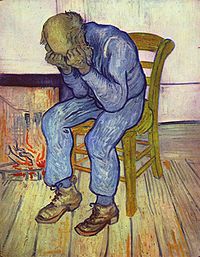
Image source: Vincent van Gogh's 1890 painting At Eternity's Gate. Wikipedia, public domain.

Tuesday, May 8, 2012

4 of 5 Kentuckians think child obesity is a problem, and more than half favor a statewide smoking ban, poll finds

More than four out of five Kentuckians think too many children are overweight, and more than half want a statewide smoking ban. These are two of key findings of the Kentucky Health Issues Poll, which also asked respondents about prescription drug abuse, depression and access to health care.

Poll findings are available by clicking here. Findings have been broken down by region: Western Kentucky, greater Louisville, greater Lexington area, Northern Kentucky and Eastern Kentucky.

Statewide, the poll found 54 percent of Kentuckians favor a statewide smoking ban, up from 53 percent the year before. In 2010, Kentuckians were split down the middle, 48 percent to 48 percent.

A whopping 84 percent of Kentuckians feel childhood obesity is a problem, which is timely since 33 percent of children, 60 percent of women and 80 percent of men in Kentucky are overweight or obese, "Shaping Kentucky's Future: A Community Guide to Reducing Obesity" reports.

The poll also found more than one in three Kentuckians know someone who has misused prescription drugs; 65 percent of adults dispose of their prescription drugs in an unsafe way; nearly half keep guns in their homes; and 1 in 2 Kentuckians have a family member or friend with a serious problem of depression. Nearly 90 percent of people asked favor providing access to affordable, quality health care for all Americans.

"The Kentucky Health Issues Poll provides an excellent snapshot of how various health related issues are viewed throughout the commonwealth," said Dr. Susan Zepeda, CEO of the Foundation for a Healthy Kentucky, which helped fund the poll. "The survey's methodology lets us compare responses and learn about regional differences in Kentucky views about health."

The poll was also funded by The Health Foundation of Greater Cincinnati. It was conducted Sept. 27 to Oct. 27 by the Institute for Policy Research at the University of Cincinnati. A random sample of adults across Kentucky were interviewed, including 1,313 landline interviews and 308 cell-phone interviews.

Monday, April 16, 2012

Battling depression with "battery-powered brains" - CNN report on deep brain stimulation (DBS)

CNN reports on treating severe depression with electrodes inside the brain:


The procedure -- called deep brain stimulation, or DBS -- targets a small brain structure known as Area 25, the "ringleader" for the brain circuits that control our moods.

Area 25 is relatively overactive in depressed patients. One hypothesis is that in patients who do not improve with treatments for depression, Area 25 is somehow stuck in overdrive.

DBS had been used since 1997 as a treatment for movement disorders, including essential tremor, Parkinson's disease and dystonia.

References:

Treating depression with electrodes inside the brain. CNN, 2012.

Saturday, March 31, 2012

Vincent van Gogh: "I'd like to show by my work what such an eccentric, such a nobody, has in his heart"


How a genius feels: "I'm a nonentity, an eccentric, an unpleasant person"

March 30th is the birthday of Vincent van Gogh, born in Holland in 1853, a famous painter and also great letter-writer. His letters were lively, engaging, and passionate; they also frequently reflect his struggles with bipolar disorder.

He wrote: "What am I in the eyes of most people — a nonentity, an eccentric, or an unpleasant person — somebody who has no position in society and will never have; in short, the lowest of the low. All right, then — even if that were absolutely true, then I should one day like to show by my work what such an eccentric, such a nobody, has in his heart."

He wrote thousands of letters to his brother Theo over the course of his life. Theo's widow published the van Gogh's letters to her husband in 1913.

Doctors' Day in a high-risk profession: suicide rate of U.S. doctors is one per day

This quote serves as a good reminder how people with depression may have an altered perception of themselves. March 30 is also National Doctors' Day in the U.S. Other countries celebrate Doctors' Day on different dates.

More than a quarter of primary care doctors reported being "burnt out." The United States loses the equivalent of at least one entire medical school class (approximately 400 physicians) each year to suicide.

In other words, 300-400 doctors in the United States kill themselves every year, or roughly 1 per day. Male doctors have suicide rates 1.4 times that of the general population, while female doctors have twice the rate of depression and 2.3 times the suicide rate when compared with women who are not physicians.

A conversation could save a life: "Are you OK?" Day

Hugh Jackman shows his support for R U OK?Day, a national day of action in Australia that aims to prevent suicide by encouraging people to connect with colleagues, friends and loved ones and ask simply: "Are you OK?" This may help your medical colleagues too:


References

Writer's Almanac. NPR, 2012.
High-risk profession: Suicide rate of U.S. doctors is one per day
Help for Today's Tense, Frustrated Doctors. Medscape, 2009.
http://www.medscape.com/viewarticle/710904
Doctors have higher rates of suicide than the general population: 40% higher for male doctors, 130% for female doctors http://goo.gl/ckTm
R U OK? Day
Image source: Vincent van Gogh's 1890 painting At Eternity's Gate. Wikipedia, public domain.

Tuesday, February 28, 2012

Extensive series focuses on the many faces of mental illness

Mental illness in Rowan County is the subject of an eight-part series of stories written by Noelle Hunter for The Morehead News.

With Part 1 largely an introduction to the project, Part 2 gets into the facts and figures of the disorders that fall under the mental-illness umbrella. According to the Substance Abuse & Mental Health Services Administration, 45.9 million American adults — one in five — experienced some mental illness in the past year. In Kentucky, 180,000 people live with a serious mental illness, which includes schizophrenia, bipolar disorder, major depression, obsessive compulsive disorder, panic disorder and post-traumatic stress disorder.

Dr. Thomas Insell, director of the National Institute of Mental Health, described mental illnesses as "real brain disorders that result from complex genetic risks plus environmental factors." Neither prevalence nor mortality rates associated with mental illness have decreased over time. And though there have been advancements in treatments these disorders, most in the way of medication and therapy, there is still much that is unknown, Hunter reports.

That comes with larger cultural ramifications. In 2008, about 5,100 adults who have a mental illness were incarcerated in Kentucky prisons and almost 700 adults committed suicide, "almost always a result of untreated mental illness," Hunter reports.

The series is running on Tuesdays in the twice-a-week paper. Part 3 profiles a woman living with bipolar disorder; Part 4 will report on the views of clinicians and therapists; Part 5 will profile a man living with bipolar disorder; Part 6 will profile a person living with schizophrenia; Part 7 will focus on the effects on families; and Part 8 will look at treatment options and recovery. The website of the newspaper, part of Community Newspaper Holdings Inc., is here.