Professor James Fallon from University of California, Irvine explains the beginnings of his work studying the brains of criminals and murders. Would his work prove the existence of a signature brain profile of a serial killer or are there other factors to consider?
Jim Fallon recently made a disquieting discovery: A member of his family has some of the biological traits of a psychopathic killer. "These results will cause some problems at the next family party," he said, reviewing the data on his laptop in his backyard. Fallon had already been studying the brains of psychopathic killers for years when his mother told him that he comes from a long line of murderers. Is he one of them?
After a PET scan, Professor Jim Fallon made a shocking discovery about his own brain - that he had the neurological and genetic correlates of psychopathy. However, he is not concerned by the findings and believes that his positive experiences in childhood negated the genetic susceptibility to violence and emotional issues.
References:
What's on Jim Fallon's Mind? A Family Secret That Has Been Murder to Figure Out - WSJ.com http://on.wsj.com/9CUbjG
A Neuroscientist Uncovers A Dark Secret - NPR http://n.pr/V2LMNl
Jim Fallon: Exploring the mind of a killer | Video on TED.com http://bit.ly/V2LNAI
Three Ingredients for Murder: Neuroscientist James Fallon on psychopaths - YouTube http://bit.ly/V2M2M9
Comments from Twitter:
Gia Sison MD @giasison: Wow To Watch! Great share Ves!!!!
Showing posts with label psychiatry. Show all posts
Showing posts with label psychiatry. Show all posts
Friday, February 8, 2013

Monday, January 21, 2013
Seasonal affective disorder (SAD)
 What is seasonal affective disorder?
Seasonal affective disorder is a combination of biologic and mood disturbances with a seasonal pattern. It typically occurs in the autumn (fall) and winter, with remission in the spring or summer.
How common is seasonal affective disorder?
5% of the U.S. population experiences seasonal affective disorder. Because the symptoms are seasonal, they are present for 40% of the year. Although the condition is seasonally limited, patients may have associated depression which would last longer.
What is the treatment for seasonal affective disorder?
Light therapy is well tolerated. Most patients improve within 1-2 weeks. To avoid relapse, light therapy should continue through the end of the winter season until spontaneous remission of symptoms in the spring or summer.
Antidepressant medications and cognitive behavior therapy are as effective as light therapy.
How to prevent seasonal affective disorder?
Light treatment may be used as prophylaxis before the subsequent autumn and winter seasons.
There are many devices available on Amazon, for example:
References:
Seasonal affective disorder. Kurlansik SL, Ibay AD. Am Family Physician, Dec 2012.
Image sources: Record breaking snowfall March 2008 at Aubrey, Texas, Wikipedia, public domain

Wednesday, December 12, 2012
New additions to Diagnostic and Statistical Manual of Mental Disorders (DSM-5)
 From TIME:
Doctors use the the Diagnostic and Statistical Manual of Mental Disorders (DSM)'s definitions to diagnose more 300 other conditions. Insurance companies use it to justify reimbursements; without a DSM code, mental-health patients and doctors usually don't get paid. DSM-5 is already so famous that it has its own website: http://dsm5.org
On Dec. 1, the American Psychiatric Association approved the fifth edition of the DSM which took 13 years and 1,500 mental-health experts to complete. They tried to approach mental disorders less as discrete illnesses, like leukemia, and more as problems on a continuum, like hypertension.
Here are a few of the new additions in DSM-5:
- Hoarding is included as a diagnosis, meaning those who can't get rid of ephemera can now seek reimbursement for therapy
- Binge eating was in the appendix for more than a decade, but now it's an official diagnosis
- Bereavement. The previous DSM said those in mourning don't necessarily qualify for depression therapy or medication. DSM-5 eliminates that exclusion.
- Excoriation, or skin picking, should be considered a mental illness according to DSM-5
References:
Redefining Mental Illness. TIME, 2012.
Monday, September 24, 2012
18 Kentucky hospitals cited as 'top performers' on accreditation board's annual list

Among the Kentucky hospitals that qualified on all four measurements were Greenview Hospital in Bowling Green, Ephraim McDowell Regional Medical Center in Danville, St. Elizabeth Medical Center in both Florence and Fort Thomas, Central Baptist Hospital in Lexington.
Those qualifying in three categories were the Robley Rex Veterans Affairs Medical Center in Louisville (not in surgery) and the Appalachian Regional Hospitals in Harlan and Middlesboro (not in heart attack).
Qualifying in two categories were Twin Lakes Regional Medical Center in Leitchfield, Frankfort Regional Medical Center, the Hospital of Louisa and Jackson Hospital Corp., all for pneumonia and surgical care.
Recognized for pneumonia care were Parkway Regional Hospital in Fulton, Paul B. Hall Regional Medical Center in Paintsville, Logan Memorial Hospital in Russellville and the KentuckyOne Health Hospital in Martin.
Among behavioral-health hospitals, ranked on their in-patient psychiatric care, the Kentucky facilities on the list were the Universal Health Services facility in Bowling Green, the new Cumberland Hall Hospital in Hopkinsville.
According to Kaiser Health News, the Leapfrog Group, a nonprofit organization devoted to patient safety, aided in the rankings process, as did Consumer Reports. The Commission has its own metrics. It's worth noting that next month, Medicare will start using hospital quality rankings on its Hospital Compare website to set reimbursements. (Read more)
Friday, August 10, 2012
Searching for a fundamental 'particle' of mental health

The equivalent of the "Standard Model" of mental health — Higgs plays an essential part in the "Standard Model" of physics — is a world in which "people are not penalized for their illnesses but rather than an array of tools from which to choose and which they can use to become mentally healthy," Roskes writes.
Though those tools have not yet been identified, there are paths down which researchers are going to find them, including molecular and pharmaceutical research; psychotherapies and rehabilitation. Research has led to pharmaceutical approaches, "not perfect, but far preferable to a world without them," he writes. It has led to cognitive therapy to treat depression, anxiety and, in some cases, psychosis. It has also led to advances in rehabilitation of mental illnesses and developmental disabilities like autism.
Like the search for the Higgs particle, finding its equivalent in the world of mental health is worth the search, Roskes concludes. (Read more)
Thursday, August 2, 2012
Munchausen's syndrome - NHS video
From the NHS Choices YouTube channel: A psychiatrist explains the motivation behind Munchausen's syndrome, also known as factitious illness, where someone pretends to be ill or causes symptoms in themselves. This can include inflicting wounds or tampering with blood and urine samples. He also explains the importance of getting treatment and describes another form of the condition where a person fabricates an illness in someone in their care (Munchausen's syndrome by proxy):
Comments from Twitter:
Julie Meadows-Keefe @esq140: Fascinatingly & disturbingly real.
Comments from Twitter:
Julie Meadows-Keefe @esq140: Fascinatingly & disturbingly real.
Monday, July 23, 2012
Unipolar depression in adolescence is common worldwide but often unrecognized
 Unipolar depressive disorder in adolescence is common worldwide but often unrecognised. The incidence, notably in girls, rises sharply after puberty and, by the end of adolescence, the 1 year prevalence rate exceeds 4%.
 The burden of depression is highest in low-income and middle-income countries. Depression is associated with morbidity, and heightens suicide risk.
The strongest risk factors for depression in adolescents are:
- family history of depression
- exposure to psychosocial stress
Factors that interact to increase risk through hormonal and perturbed neural pathways include:
- inherited risks
- developmental factors
- sex hormones
- psychosocial adversity
References:
Depression in adolescence. Prof Anita Thapar et al. The Lancet, Volume 379, Issue 9820, Pages 1056 - 1067, 17 March 2012.
Image source: OpenClipArt.org
Monday, May 14, 2012
Depression affects up to 9% of U.S. population - how to do effective screening?
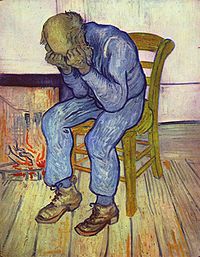 From American Family Physician:
Depression affects up to 9% of U.S. population.
The U.S. Preventive Services Task Force recommends screening in adolescents and adults but it does not recommend screening for depression in children 7-11 years of age, or screening for suicide risk in the general population.
The Patient Health Questionnaire (PHQ)-2 and PHQ-9 are commonly used and validated screening tools.
The PHQ-2 has a 97% sensitivity and 67% specificity in adults. The PHQ-2 inquires about the frequency of depressed mood and anhedonia over the past 2 weeks, scoring each as 0 ("not at all") to 3 ("nearly every day").
PHQ-9 has a 61% sensitivity and 94% specificity in adults. The PHQ-9 depression module scores each of the 9 DSM-IV criteria as “0” (not at all) to “3” (nearly every day).
If the PHQ-2 is positive for depression, the PHQ-9 should be administered.
In older adults, the 15-item Geriatric Depression Scale is an appropriate follow-up test.
If these screening tests are positive for depression, further evaluation is needed to confirm that the patient's symptoms meet the Diagnostic and Statistical Manual of Mental Disorders' (DSM) criteria for diagnosis.
Suicide is second to only accidental death as the leading cause of mortality in young men across the world. High-lethality methods of suicide are preferred by young men: hanging and firearms in high-income countries, pesticide poisoning in the Indian subcontinent, and charcoal-burning in east Asia (Lancet, 2012).
References:
Screening for depression. Maurer DM. Am Fam Physician. 2012 Jan 15;85(2):139-44.
Image source: Vincent van Gogh's 1890 painting At Eternity's Gate. Wikipedia, public domain.

Monday, May 7, 2012
The Diet Factor in Attention-Deficit/Hyperactivity Disorder - State-of-the-Art Review Article in Pediatrics
 Diets that were tried in attempt to reduce symptoms associated with attention-deficit/hyperactivity disorder (ADHD) include:
- sugar-restricted
- additive/preservative-free
- oligoantigenic/elimination
- fatty acid supplements
Omega−3 supplement is the latest dietary treatment with positive reports of efficacy. Interest in the additive-free diet of the 1970s is occasionally revived.
Provocative reports have drawn attention to the ADHD-associated “Western-style” diet, high in fat and refined sugars, and the ADHD-free “healthy” diet, containing fiber, folate, and omega-3 fatty acids.
Indications for dietary therapy include:
- medication failure
- parental or patient preference
- iron deficiency
- change from an ADHD-linked Western diet to an ADHD-free healthy diet, when appropriate
In practice, additive-free and oligoantigenic/elimination diets are time-consuming and disruptive to the household; they are indicated only in selected patients.
Iron and zinc are supplemented in patients with known deficiencies; they may also enhance the effectiveness of stimulant therapy.
In patients failing to respond or with parents opposed to medication, omega-3 supplements may warrant a trial.
References:
The Diet Factor in Attention-Deficit/Hyperactivity Disorder. J. Gordon Millichap, MD and Michelle M. Yee, CPNP. PEDIATRICS Vol. 129 No. 2 February 1, 2012, pp. 330 -337, (doi: 10.1542/peds.2011-2199)
Image source: Olive oil, Wikipedia
Monday, April 16, 2012
Battling depression with "battery-powered brains" - CNN report on deep brain stimulation (DBS)
CNN reports on treating severe depression with electrodes inside the brain:
The procedure -- called deep brain stimulation, or DBS -- targets a small brain structure known as Area 25, the "ringleader" for the brain circuits that control our moods.
Area 25 is relatively overactive in depressed patients. One hypothesis is that in patients who do not improve with treatments for depression, Area 25 is somehow stuck in overdrive.
DBS had been used since 1997 as a treatment for movement disorders, including essential tremor, Parkinson's disease and dystonia.
References:
Treating depression with electrodes inside the brain. CNN, 2012.
The procedure -- called deep brain stimulation, or DBS -- targets a small brain structure known as Area 25, the "ringleader" for the brain circuits that control our moods.
Area 25 is relatively overactive in depressed patients. One hypothesis is that in patients who do not improve with treatments for depression, Area 25 is somehow stuck in overdrive.
DBS had been used since 1997 as a treatment for movement disorders, including essential tremor, Parkinson's disease and dystonia.
References:
Treating depression with electrodes inside the brain. CNN, 2012.
Saturday, March 31, 2012
Vincent van Gogh: "I'd like to show by my work what such an eccentric, such a nobody, has in his heart"
How a genius feels: "I'm a nonentity, an eccentric, an unpleasant person"
March 30th is the birthday of Vincent van Gogh, born in Holland in 1853, a famous painter and also great letter-writer. His letters were lively, engaging, and passionate; they also frequently reflect his struggles with bipolar disorder.
He wrote: "What am I in the eyes of most people — a nonentity, an eccentric, or an unpleasant person — somebody who has no position in society and will never have; in short, the lowest of the low. All right, then — even if that were absolutely true, then I should one day like to show by my work what such an eccentric, such a nobody, has in his heart."
He wrote thousands of letters to his brother Theo over the course of his life. Theo's widow published the van Gogh's letters to her husband in 1913.
Doctors' Day in a high-risk profession: suicide rate of U.S. doctors is one per day
This quote serves as a good reminder how people with depression may have an altered perception of themselves. March 30 is also National Doctors' Day in the U.S. Other countries celebrate Doctors' Day on different dates.
More than a quarter of primary care doctors reported being "burnt out." The United States loses the equivalent of at least one entire medical school class (approximately 400 physicians) each year to suicide.
In other words, 300-400 doctors in the United States kill themselves every year, or roughly 1 per day. Male doctors have suicide rates 1.4 times that of the general population, while female doctors have twice the rate of depression and 2.3 times the suicide rate when compared with women who are not physicians.
A conversation could save a life: "Are you OK?" Day
Hugh Jackman shows his support for R U OK?Day, a national day of action in Australia that aims to prevent suicide by encouraging people to connect with colleagues, friends and loved ones and ask simply: "Are you OK?" This may help your medical colleagues too:
References
Writer's Almanac. NPR, 2012.
High-risk profession: Suicide rate of U.S. doctors is one per day
Help for Today's Tense, Frustrated Doctors. Medscape, 2009.
http://www.medscape.com/viewarticle/710904
Doctors have higher rates of suicide than the general population: 40% higher for male doctors, 130% for female doctors http://goo.gl/ckTm
R U OK? Day
Image source: Vincent van Gogh's 1890 painting At Eternity's Gate. Wikipedia, public domain.
Tuesday, February 7, 2012
Drug abuse is changing fast: Old drugs are falling from favor, new ones are growing
In recent years, hundreds of new drugs have appeared on the recreational drugs market in Europe and the U.S. New psychoactive substances, mainly stimulants and cannabinoids from China sold on the internet, proliferate too quickly for anyone to keep track of them. Websites such as Erowid.org create lists of those drugs.
It is all part of the rapid diversification of recreational drugs, fuelled by chemical ingenuity and by new distribution possibilities opened up by the internet.
New drugs of misuse, including ketamine, gamma-hydroxybutyrate (GHB), and a range of synthetic stimulants, have become part of global recreational drug culture. Use in combination with other substances (especially alcohol) is common and increases the associated health risks.
"A to Z" list of substances
"Talk to Frank" is a British government-funded website for drug abuse prevention and treatment tips for the general public available at http://talktofrank.com
The "A to Z" list of substances explains appearance and use, effects, chances of getting hooked, health risks and the UK law. It also includes information on peer pressure, etc.

References:
Drug use and abuse. The Economist, 2011.
New recreational drugs and the primary care approach to patients who use them. BMJ, 2012.
Comments from Facebook:
Pierrette Mimi Poinsett: And alcohol and tobacco remain the two most abused drugs eclipsing all the others combined.
It is all part of the rapid diversification of recreational drugs, fuelled by chemical ingenuity and by new distribution possibilities opened up by the internet.
New drugs of misuse, including ketamine, gamma-hydroxybutyrate (GHB), and a range of synthetic stimulants, have become part of global recreational drug culture. Use in combination with other substances (especially alcohol) is common and increases the associated health risks.
"A to Z" list of substances
"Talk to Frank" is a British government-funded website for drug abuse prevention and treatment tips for the general public available at http://talktofrank.com
The "A to Z" list of substances explains appearance and use, effects, chances of getting hooked, health risks and the UK law. It also includes information on peer pressure, etc.
References:
Drug use and abuse. The Economist, 2011.
New recreational drugs and the primary care approach to patients who use them. BMJ, 2012.
Comments from Facebook:
Pierrette Mimi Poinsett: And alcohol and tobacco remain the two most abused drugs eclipsing all the others combined.
Thursday, November 24, 2011
Holiday time can be really stressful for patients with eating disorders - here is what to do
From Mayo Clinic YouTube channel:
For people with eating disorders such as binge eating disorder, bulimia nervosa and anorexia nervosa, the holiday season can be a nightmare.
People with eating disorders usually begin to worry about food consumption at holiday gatherings weeks sometimes even months - before the event, says Leslie Sim, Ph.D., clinical director of the Mayo Clinic Eating Disorders Program. "It's really a stressful time because there are large amounts of food around."
Dr. Sim suggests a few tips to navigate through holiday gatherings:
- Have a plan. People with eating disorders should eat like they would on a normal day and not skip any meals. Make sure to eat breakfast, lunch, and a light snack in addition to the meal. People who starve themselves are more likely to skip out on the meal entirely or engage in binge eating.
- If family or friends know someone is struggling with an eating disorder, it's not a good idea to comment on their weight during a holiday gathering. Even a compliment can be taken the wrong way.
- If you're hosting a holiday gathering with plenty of food, don't take offense if someone doesn't eat.
- People with eating disorders should have a coping strategy if they begin to feel stressed during a gathering. Such tactics include deep breathing, meditation and talking to a close friend of family member.
Thursday, April 14, 2011
Effect of deployment on mental health of soldiers: common disorders and alcohol misuse more frequent than PTSD
 This Lancet study examined the consequences of deployment to Iraq and Afghanistan on the mental health of UK armed forces from 2003 to 2009.
9990 (56%) participants completed the study questionnaire (roughly 8000 regulars, 1700 reservists).
The prevalence was:
- 19·7% for symptoms of common mental disorders
- 13% for alcohol misuse
- 4% for post-traumatic stress disorder (PTSD)
Deployment to Iraq or Afghanistan was significantly associated with alcohol misuse for regulars (odds ratio 1·22) and with post-traumatic stress disorder (PTSD) for reservists (2·83)
Symptoms of common mental disorders and alcohol misuse remain the most frequently reported mental disorders in UK armed forces personnel, whereas the prevalence of post-traumatic stress disorder (PTSD) was low.
Deployment to Iraq or Afghanistan was significantly associated with alcohol misuse for regulars (odds ratio 1·22) and with post-traumatic stress disorder (PTSD) for reservists (2·83)
Symptoms of common mental disorders and alcohol misuse remain the most frequently reported mental disorders in UK armed forces personnel, whereas the prevalence of post-traumatic stress disorder (PTSD) was low.
References:
What are the consequences of deployment to Iraq and Afghanistan on the mental health of the UK armed forces? A cohort study. The Lancet, Volume 375, Issue 9728, Pages 1783 - 1797, 22 May 2010.
Image source: The Los Angeles Times.
Wednesday, January 26, 2011
New schizophrenia drug lurasidone (Latuda) does not cause significant weight gain
 Lurasidone (Latuda) was approved for the treatment of schizophrenia in adults in October 2010. Lurasidone acts as a D2, 5-HT2A, 5-HT7, and α2C-adrenergic receptor antagonist, and 5-HT1A receptor agonist.
Once-daily lurasidone did not cause significant weight gain, a common side effect of other schizophrenia drugs. Possible treatment side effects do include drowsiness, agitation, tremors, and nausea.
Lurasidone will carry a boxed warning - required of all atypical antipsychotics - about the increased risk for stroke and death when used off-label to treat dementia-related psychosis in older patients.
Other severe but rare side effects include neuroleptic malignant syndrome and tardive dyskinesia.
References:
New Schizophrenia Drug Approved. Journal Watch.
References:
New Schizophrenia Drug Approved. Journal Watch.
Image source: Lurasidone, Wikipedia, public domain.

Thursday, January 20, 2011
Alternative to alcohol - BBC video
Psychologist and addiction expert Dr John Marsden takes part in a radical experiment as he trials an non-addictive drug alternative to alcohol:
A single injection reverses the 'drug' alternative to alcohol and Dr John Marsden is left to reflect on whether this is indeed be the way forward in reducing alcohol dependency in future generations:
Twitter comments:
@yayayarndiva (P. Mimi Poinsett MD): How about water? -- Searching for non-addictive alternative to alcohol - BBC video http://goo.gl/KYtss
Alcohol literally kills: Gary Moore had 380mg/dL in his blood, Winehouse 416mg/dL when she died surrounded by 3 empty vodka bottles. Telegraph UK, 2012.
A single injection reverses the 'drug' alternative to alcohol and Dr John Marsden is left to reflect on whether this is indeed be the way forward in reducing alcohol dependency in future generations:
Twitter comments:
@yayayarndiva (P. Mimi Poinsett MD): How about water? -- Searching for non-addictive alternative to alcohol - BBC video http://goo.gl/KYtss
Alcohol literally kills: Gary Moore had 380mg/dL in his blood, Winehouse 416mg/dL when she died surrounded by 3 empty vodka bottles. Telegraph UK, 2012.
Wednesday, December 8, 2010
16% of motorists may be under the influence of drugs during weekends - one in six cars
Motorists under the influence of drugs are a growing threat on U.S. roads. If you think about driving on a Friday or Saturday evening about 16% of the vehicles - one in six of the cars - the driver will be under the influence of an illicit or licit drug.
"Drugged driving" hampers judgment, reaction time, driving skills and memory.
"Drugged driving" hampers judgment, reaction time, driving skills and memory.
Am I driving a car? Drunk motorist stuns police http://goo.gl/D9NOa
Drunk Driving, Distracted Driving, Moralism, and Public Health - NEJM
30% of U.S. adults have been arrested by age 23: study. Reuters, 2011.
Drunk Driving, Distracted Driving, Moralism, and Public Health - NEJM
30% of U.S. adults have been arrested by age 23: study. Reuters, 2011.
Monday, November 1, 2010
"Talk to Frank" - British government website for drug abuse prevention and treatment
Talk to Frank" is a British government-funded website for drug abuse prevention and treatment tips for the general public available at http://www.talktofrank.com
The "A to Z" list of substances explains appearance and use, effects, chances of getting hooked, health risks and the UK law. It also includes information on peer pressure, etc.
The "A to Z" list of substances explains appearance and use, effects, chances of getting hooked, health risks and the UK law. It also includes information on peer pressure, etc.
Thursday, October 7, 2010
R U OK? Day
Suicide is second to only accidental death as the leading cause of mortality in young men across the world. High-lethality methods of suicide are preferred by young men: hanging and firearms in high-income countries, pesticide poisoning in the Indian subcontinent, and charcoal-burning in east Asia (Lancet, 2012).
Hugh Jackman shows his support for R U OK?Day, a national day of action that aims to prevent suicide by encouraging people to connect with colleagues, friends and loved ones and ask: "Are you OK?". Suicide prevention in Australia: "A conversation could save a life", link via @dreamingspires.
References:
http://ruokday.com.au R U OK? Matt's Notes
Hugh Jackman shows his support for R U OK?Day, a national day of action that aims to prevent suicide by encouraging people to connect with colleagues, friends and loved ones and ask: "Are you OK?". Suicide prevention in Australia: "A conversation could save a life", link via @dreamingspires.
References:
http://ruokday.com.au R U OK? Matt's Notes
Wednesday, August 4, 2010
Using the Internet for health purposes was associated with increased depression
 The rapid expansion of the Internet has increased the ease with which the public can obtain medical information. Most research on the utility of the Internet for health purposes has evaluated the quality of the information or examined its impact on clinical populations. Little is known about the consequences of its use by the general population.
Health-related Internet use was associated with small but reliable increases in depression (i.e., increasing use of the Internet for health purposes from 3 to 5 days per week to once a day was associated with 0.11 standard deviations more symptoms of depression, P = 0.002).
Using the Internet for health purposes was associated with increased depression. The increase may be due to increased rumination, unnecessary alarm, or over-attention to health problems.
In contrast, using the Internet to communicate with friends and family was associated with declines in depression.
References:
Effects of Internet Use on Health and Depression: A Longitudinal Study. J Med Internet Res 2010;12(1):e6.
Negative consequences from the use of internet for health information - CDC (PDF) http://goo.gl/Fgcq via http://goo.gl/947F
Image source: Wikipedia, public domain.

Updated: 08/12/2010
Subscribe to:
Posts (Atom)