Showing posts with label Orthopedics. Show all posts

Wednesday, February 27, 2013

How can you find the Best Orthopedic Surgeons?

If you are planning to go for total knee replacement, it is important that you get in touch with a renowned surgeon for undergoing this surgery. Total knee replacement is an extremely crucial surgery and for this reason, you need to choose a surgeon who understands your problems and provides you with options to overcome them. In this article, we will highlight some tips that will help you to find best orthopedic surgeons. Read on.

The Surgeon should be Skilled

It is important to select a surgeon who is skilled in hip surgeries. More specifically, he should be well-acquainted with total knee and hip replacement, joint replacement surgery as well as shoulder replacement surgery. It is also a great idea to choose a surgeon who specializes in trauma reconstruction, skeletal tumor, and knee arthroscopy.

Regarding post surgery medications, the surgeon should have suggestions for required antibiotics. Usually antibiotics are given both during and after the surgery. This is done to ensure that infection does not develop in the new joint. However, not all medicines suit all patients. Hence, you should always opt for a surgeon who has relevant experience and has successfully treated numerous orthopedic cases both pre and post surgery.

He should be experienced

Experience is a great teacher and therefore, we suggest that you to select a surgeon who has been associated with reputed hospitals or medical centers. Ideally, you should select a surgeon who has been in this field for at least 5-10 years.

Is He Well-Known and Respected?

Apart from being skilled and experienced, a doctor should evaluate things from point of view of his patients, and be sympathetic towards them. To ascertain whether your chosen surgeon possesses these qualities or not, it is important that you check his reputation.

Ideally, you should trust a doctor who has been named at least once in the database of Best Orthopedic Doctors in America. You can also check with organizations of your area that bestow well-known doctors with awards and special recognition. If you reside in Florida, you can check Consumer's Research Council of America to obtain information
about your selected surgeon. Apart from specific organizations, you can also get in touch with previous patients of the doctor to get in-depth information about him.

He Should Enjoy his Work

Finally, you should go for a surgeon who enjoys his work, because this means that he has a genuine interest in solving the problems of his patients. If your chosen surgeon loves educating people about hip and knee surgeries, lectures regularly and contributes to health magazines, you can be sure that he loves his job.

Consider these tips for selecting best orthopedic surgeons. To get in touch with best surgeons in your area, consider reaching them online as there you get fair idea about the quality of experience they possess and treatment options they offer. Also, the online customer reviews will help you decide for the best surgical option in your region.

The information provided in this article is for informational purposes only. It is not to be construed as medical care or medical advice and is not a replacement for medical care given by your physicians or trained medical personnel.

Monday, February 18, 2013

Are Your Shoes Healthy?

Most people don't think about shoes when they think about being healthy. You might think about getting proper sleep, eating a healthy and nutritional diet, having regular exercise, and managing stress, but you probably aren't going to think about wearing the proper shoes. However, wearing comfortable shoes that offer your feet all of the support that they need can greatly contribute to your health.

Many people women especially will go to extremes to look good. They wear unusually high heels that are not good for their bodies. Studies have shown that wearing these types of shoes may give you back injuries later in life. Men, however, are also guilty of wearing shoes that do not offer the proper support that their feet need. Both men and women frequently wear shoes that are uncomfortable for whatever reason.

There are many health benefits associated with wearing comfortable shoes. With the proper support in tools like orthopedically designed airbeds, your feet will get the support that they need, and you can avoid ankle, leg, or back injuries. Also, if your shoes are more comfortable, you will be more likely to walk on a regular basis. You would probably go out of your way to avoid walking if your shoes were pinching your feet and giving you blisters all of the time, right? Wearing uncomfortable shoes can also increase your stress levels, and we all know how negative stress can be on several aspects of a person's health.

Many people think of comfortable shoes as being ugly shoes. This may have been true in the past, but there are starting to be more and more options when it comes to comfortable shoes. For example, Born shoes offers many different styles and models from dress shoes to sandals to boots for both men and women. Also, Clarks shoes offer a wide variety of comfort shoes, and they even offer some pairs of heels. With brands like Born and Clarks, being comfortable does not mean that you have to also be unfashionable.

The important thing is that the human body works best when you are taking care of the entire thing, and many people neglect the feet. One of the best ways to have healthy feet is to wear comfortable shoes that offer you proper support. For more suggestions on comfortable shoes, you can ask your orthopedic doctor and see which shoes he or she would recommend.

Thursday, January 31, 2013

Importance of Foot Health and a Proper Podiatrist

Many people complain of having tired eyes, a sore back, or achy arms after a long day of work, but what they should really be complaining about is their feet. Even though most people don't think about it, the feet are one of the body parts that do the greatest amount of work on a daily basis. If you want to be able to continue doing the things you love to do, make foot health and regular visits to the podiatrist a priority in your life.

Proper Posture

Having healthy feet not only refers to having feet that are disease and injury free, it also refers to having feet that are of a specific shape. The shape of a foot can greatly affect balance, distribution of bodyweight, gait and stride, and the ability to walk or run. The feature of the foot that affects posture most is the arch. Feet that are considered to be healthy should have a nice arch because it keeps the bones of the body in proper alignment during standing and other upright activities. Flat-footedness, or having a collapsed arch, puts the skeleton out of alignment and adds more stress to the joints. This creates a more slouched posture, increases the likelihood of injury, and can cause extra soreness on the joints. This can be remedied by buying shoes with arch support or slip-in arch pads.

Injury Prevention

A foot that is not in peak condition can be the cause of many other injuries down the road. The truth of the matter is that performance is compromised when there is any type of damage to the foot regardless if it came from a sprain, broken bone, blister, or gangrene. Pain in one foot could lead you to hobble down the stairs on the other, slip, and tumble to the bottom to receive even worse injuries, for example. Intense pain in the feet usually leads to an imbalance that can cause paralyzing or fatal falls, especially in seniors.

If you are looking for experienced professionals, be sure to contact our foot specialists at (817) 697-2197 with any questions of concerns about the health of your feet. Don't hesitate to act now because healthy feet make happier lives.

Advice Interactive is a blogger for Trinity Orthopedics of Fort Worth, Texas. Fort Worth is a recreationally and culturally diverse city with its cattle, historic districts, museums and car racing. The physicians at Trinity Orthopedics take pride in servicing such a diverse community with such treatments as physical therapy and pain medication. You can find more information about Trinity Orthopedics of Fort Worth at www.trinityorthopedics.com

Thursday, October 11, 2012

The management of ingrowing toenails - BMJ review

Ingrowing toenails are common, cause serious disability, and affect mainly young men. Most patients with ingrowing toenails are usually male, between the ages of 15 and 40 years.

There is a spectrum to the clinical presentation with pain progressing to infection, hypergranulation, and finally chronic infection.

Ingrowing toenails can occur in normal or abnormally shaped nails.

Cases in abnormally shaped nails are more difficult to manage conservatively and usually require surgery

Historically, a recurrence rate of 13-50% has been reported after surgical treatment, although more recent papers have reported recurrence rates of less than 5%.

Symptoms are less likely to recur after partial nail avulsion and segmental phenol ablation than after simple nail avulsion or wedge excisions alone.

Podiatrist Dr. Matthew Neuhaus explains what an ingrown toenail is (video):


Ingrown toenail surgery by Dr. Leo Krawetz (video). Warning: graphic content, do not try this at home:


References:

The management of ingrowing toenails. BMJ, 2012;344:e2089.

Friday, August 24, 2012

Bunions animation

From NHS Choices YouTube channel: A bunion is a bony deformity of the joint at the base of the big toe. This animation shows how a bunion forms and explains what could cause it. Find out how bunions are treated: http://nhs.uk/Conditions/Bunion/Pages/Treatment.aspx

Monday, June 25, 2012

Acute low back pain: What to do? What works and what doesn't?

Here is an excerpt from a recent review article in the official AFP journal American Family Physician:

Acute low back pain is one of the most common reasons for adults to see a physician. Most patients recover quickly with minimal treatment.

"Red flags"

Serious "red flags" include:

- significant trauma related to age (i.e., injury related to a fall from a height or motor vehicle crash in a young patient, or from a minor fall or heavy lifting in a patient with osteoporosis or possible osteoporosis)
- major or progressive motor or sensory deficit
- new-onset bowel or bladder incontinence or urinary retention
- loss of anal sphincter tone
- saddle anesthesia
- history of cancer metastatic to bone
- suspected spinal infection

Diagnosis

Without signs of serious pathology, imaging and laboratory testing often are not required.

Treatment

Patient education, nonsteroidal anti-inflammatory drugs (NSAIDs), acetaminophen, and muscle relaxants are beneficial.

Bed rest should be avoided, if possible.

Exercises directed by a physical therapist, such as the McKenzie method and spine stabilization exercises, may decrease recurrent pain.

Spinal manipulation and chiropractic techniques are no more effective than established medical treatments.

No substantial benefit has been shown with:

- oral steroids
- acupuncture
- massage
- traction
- lumbar supports
- regular exercise programs

References:

Diagnosis and treatment of acute low back pain. Casazza BA. Am Fam Physician. 2012 Feb 15;85(4):343-50.

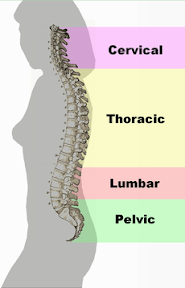
Image source: Different regions (curvatures) of the vertebral column, Wikipedia, public domain.

Wednesday, February 15, 2012

Running Marathons and Staying Injury Free - Mayo Clinic Video


Mayo Clinic Florida sports medicine physician Daniel Montero, M.D., provides tips on avoiding injuries while running in a marathon. He also addresses tips on:

- safely keeping up when running in large crowds
- staying hydrated
- dressing for weather conditions
- running the way you were trained to do

Monday, February 6, 2012

Osteoarthritis at the base of the thumb has a 15-30% prevalence in adults

What is it?

Patients with osteoarthritis of the thumb carpometacarpal joint, or base of the thumb, commonly seek help for their symptoms. Arthritis at the base of the thumb causes functional disability and pain, particularly with “pinching” actions.


A hand with arthritic changes. Image source: Cicadas, a Creative Commons license.

How common is osteoarthritis of the thumb?

The prevalence of this condition increases with age and is greatest in postmenopausal women. It ranges between 15% prevalence in adults in Finland and a 33% prevalence in postmenopausal women. This is likely to increase as populations age and people stay active for longer.

How to diagnose it?

Pain reproduced on the axial grind test localizes pathology to the base of the thumb.

Trapeziometacarpal and scaphotrapeziotrapezoid joints should be assessed with plain radiographs (X-rays) that typically show degenerative changes. However, X-rays may underestimate the extent of the disease.

What to do?

Non-operative treatments can ameliorate symptoms and delay surgery in most patients with osteoarthritis of the thumb:

- behaviour modification
- pain relief
- splinting
- corticosteroid injections

No single operative procedure has been shown to be superior:

- simple trapeziectomy has the lowest complication rate
- arthrodesis may be the best option for patients who value pain relief and reliable strength and stability more than mobility (such as younger manual workers)

Piano lesson: "Rachmaninov had big hands". See how one gets 4 million views on YouTube:


References:

Osteoarthritis at the base of the thumb. BMJ, 2011.

Thursday, December 22, 2011

How to Stay Active With Osteoarthritis: "Motion is Lotion"


Dr. Daniel Montero, a sports-medicine physician within the Department of Orthopedics at Mayo Clinic in Florida discusses what kind of exercises are you should take part in if you suffer from joint pain. Remember, "motion is lotion", says Dr. Montero.

Exercises you may need to avoid if you have moderate or severe osteoarthritis of the knee or hip include:

- Running and jogging. The difference between how much force goes through your joints jogging or running, as opposed to with walking, is sometimes more than 10-fold your whole body weight

- Jumping rope

- High-impact aerobics

- Any activity where, at any time, you have both feet off the ground at once, however briefly (basketball, jumping)

Fortunately, that leaves a lot of activities that are OK for people with knee and hip osteoarthritis and that can help keep you mobile - see the list at WebMD.

References:

Knee and Hip Exercises for Osteoarthritis. WebMD.

Wednesday, December 14, 2011

Stress fractures

From a 2011 review in the journal American Family Physician:

Stress fractures are common injuries in athletes and military recruits. These typically affect lower extremities.

Symptoms of stress fractures

Stress fractures should be considered in patients who present with tenderness and/or edema after a recent increase in activity or repeated activity with limited rest.

The Barefoot Professor says barefoot running could minimize injuries although this approach is still experimental:


The differential diagnosis of stress fractures includes:

- tendinopathy
- compartment syndrome
- nerve or artery entrapment syndrome
- medial tibial stress syndrome (shin splints) can be distinguished from tibial stress fractures by diffuse tenderness along the length of the posteromedial tibial shaft and a lack of edema

Diagnosis of stress fractures

When stress fracture is suspected, plain radiography should be obtained initially and, if negative, may be repeated after 2-3 weeks for greater accuracy.

If an urgent diagnosis is needed, triple-phase bone scintigraphy (bone scan) or magnetic resonance imaging (MRI) should be considered. Both modalities have a similar sensitivity, but MRI has greater specificity.

Treatment of stress fractures

Treatment of stress fractures consists of:

- activity modification - nonweight-bearing crutches if needed for pain relief
- analgesics
- pneumatic bracing

After the pain is resolved, patients may gradually increase their level of activity.

Surgical consultation may be appropriate for patients with:

- stress fractures in high-risk locations
- nonunion
- recurrent stress fractures


Related reading:

The Barefoot Running Revolution - INFOGRAPHIC  http://goo.gl/7SUGs

Tuesday, October 11, 2011

Pets Cause Many ER Visits For Owners Due to Accidental Falls


From Cleveland Clinic YouTube channel: Accidental falls are the leading cause of non fatal injuries in the United States according to the American Association of Neurological Surgeons, and a new study finds more than 86,000 of those falls are caused by cats and dogs.

Friday, September 16, 2011

Sciatica: Robert's story


From NHS Choices YouTube channel: Robert's sciatica caused him intense pain in his right leg. He describes how the condition affected his life and mobility and what treatment options were available to him.

Friday, August 19, 2011

Exercises to Avoid with Osteoarthritis of the Knee or Hip

Participation in sport is associated with a with a 20—40% reduction in all-cause mortality compared with non-participation. Exercise might also be considered as a fifth vital sign, according to the Lancet: http://goo.gl/gyxYf

Exercises to Avoid with Osteoarthritis of the Knee or Hip include:

- Running and jogging. The difference between how much force goes through your joints jogging or running, as opposed to with walking, is sometimes more than 10-fold your whole body weight
- Jumping rope
- High-impact aerobics
- Any activity where, at any time, you have both feet off the ground at once, however briefly (basketball, jumping)

Fortunately, that leaves a lot of activities that are OK for people with knee and hip osteoarthritis and that can help keep you mobile - see the list at WebMD.

Research Finds Exercise is Good for Arthritis (a Cleveland Clinic video):


References:

Knee and Hip Exercises for Osteoarthritis. WebMD.
Image source: OpenClipart.org, public domain.

Wednesday, June 30, 2010

Cognitive behavioural treatment may work for low-back pain

Low-back pain is a common and costly problem. This study estimated the effectiveness of a group cognitive behavioural intervention in addition to best practice advice in people with low-back pain in primary care.

Over 1 year, the cognitive behavioural intervention had a sustained effect on troublesome subacute and chronic low-back pain at a low cost to the health-care provider.

References:


Image source: Different regions (curvatures) of the vertebral column, Wikipedia, public domain.

Sunday, April 4, 2010

Serotonin Blocker May Build New Bone in Osteoporotic Mice by Decreasing GI Serotonin Levels

From WebMD:

When investigators treated mice with an experimental drug that stopped the gut from synthesizing serotonin, they were able to reverse severe bone loss and essentially cure osteoporosis in the animals.


Serotonin May Hold Key to Halting Osteoporosis. NatureVideoChannel — February 05, 2010 — A drug that reverses osteoporosis in mice looks like a promising candidate for treating the human version of the disease. Gerard Karsenty and his colleagues at Columbia University Medical Center have shown that blocking the neurotransmitter serotonin--secreted from the gut--promotes bone growth. The research appears on-line at www.nature.com/naturemedicine - Yadav et al. Nature Medicine, 7 February 2010. DOI: 10.1038/nm.2098.

Most bone treatments work to block bone loss and make existing bone stronger. One drug, Forteo (teriparatide), does build new bone, but it requires daily injections and is limited to two years of use.

References:
Serotonin May Be a Key to Treat Osteoporosis. WebMD.

Sunday, March 21, 2010

Did I Win?


A bicyclist falls into the finish and asked if he did win.

Whether it was staged or not, I am glad that he looks OK after the crash in the video.

Saturday, January 30, 2010

Plantar Fasciitis - Mayo Clinic Video


"There's nothing like foot pain to make you crazy. That's what an expert at Mayo Clinic says he hears from patients who have a condition called plantar fasciitis [fashee-EYE-tis]. It's very common and can make walking across the room a miserable experience. What can you do about it?"

Related reading:

The Barefoot Running Revolution - INFOGRAPHIC  http://goo.gl/7SUGs

Wednesday, January 20, 2010

Quadriparesis After Chiropractic Manipulation for Neck Pain

From The American Journal of Medicine (text modified):

18 million people annually visit chiropractors for treatment of neck pain and spinal manipulative therapy is a frequently applied for back and neck pain.

A 41-year-old man with chronic neck pain presented with weakness of the legs after he underwent chiropractic manipulation. He recalled hearing a snapping sound during the manipulation. He felt tingling and numbness in his arms and legs immediately after the manipulation. After a few hours, he was unable to move his legs and presented to the hospital.

The patient continued to deteriorate in the motor power of the extremities and rapidly developed complete quadriparesis.

MRI of the cervical spine showed large C6-C7 disc herniation with cord edema

He was treated with IV methylprednisone. An emergent C6-C7 anterior cervical discectomy and fusion was done. He showed partial improvement and regained power in his upper extremities, but continues to remain paraplegic 3 months after the incident.

References:
Catastrophic complication of chiropractic manipulation: a report of quadriparesis. Talluri SK, Talluri J, Besur S, Kakarala R, Klair N. Am J Med. 2009 Nov;122(11):e3-4.
Image source: A cervical vertebra. Wikipedia, public domain.

Friday, December 18, 2009

Whiplash injury: 2% are permanently disabled

Whiplash and whiplash-associated disorders (WAD) represent a range of injuries to the neck caused by or related to a sudden distortion of the neck. Whiplash is commonly associated with motor vehicle accidents, usually when the vehicle has been hit in the rear; however, the injury can be sustained in many other ways, including falls from bicycles or horses.

Most cases of whiplash injury occur as the result of rear-end vehicle collisions at speeds of less than 14 mph.

Patients present with:

- neck pain and stiffness
- occipital headache
- thoracolumbar back pain and upper-limb pain
- paraesthesia

Over 66% make a full recovery and 2% are permanently disabled.

References:
Whiplash injury. G. Bannister et al. Journal of Bone and Joint Surgery - British Volume, Vol 91-B, Issue 7, 845-850. doi: 10.1302/0301-620X.91B7.22639

Related:
Image source: A side collision in Tokyo, Japan. Wikipedia, Shuets Udono, Creative Commons Attribution ShareAlike 2.0 License.

Saturday, June 6, 2009

Video: Children and Sedentary Lifestyle


Video: Children and Sedentary Lifestyle, by the American Academy of Orthopaedic Surgeons.

"As our kids have more opportunities for sedentary entertainment like television, computers and video games, an increasing number of children are not getting the recommended exercise daily. Recent research indicates that recommended levels of physical activity - at least 35-60 minutes per day - increases children's bone strength. This video helps inform parents about the critical need for adequate levels of physical activity in our children."