Americans overdosing on salt - Author Michael Moss talks about our addiction to salt, and how the food industry develops our taste for it.
From Amazon:
"From a Pulitzer Prize–winning investigative reporter at The New York Times comes the explosive story of the rise of the processed food industry and its link to the emerging obesity epidemic. Michael Moss reveals how companies use salt, sugar, and fat to addict us and, more important, how we can fight back.
Every year, the average American eats 33 pounds of cheese (triple what we ate in 1970) and 70 pounds of sugar (about twenty-two teaspoons a day). We ingest 8,500 milligrams of salt a day, double the recommended amount, and almost none of that comes from the shakers on our table. It comes from processed food. It’s no wonder, then, that one in three adults, and one in five kids, is clinically obese. It’s no wonder that twenty-six million Americans have diabetes, the processed food industry in the U.S. accounts for $1 trillion a year in sales, and the total economic cost of this health crisis is approaching $300 billion a year.
In Salt Sugar Fat, Pulitzer Prize–winning investigative reporter Michael Moss shows how we got here. Featuring examples from some of the most recognizable (and profitable) companies and brands of the last half century—including Kraft, Coca-Cola, Lunchables, Kellogg, Nestlé, Oreos, Cargill, Capri Sun, and many more—Moss’s explosive, empowering narrative is grounded in meticulous, often eye-opening research.
Moss takes us inside the labs where food scientists use cutting-edge technology to calculate the “bliss point” of sugary beverages or enhance the “mouthfeel” of fat by manipulating its chemical structure. He unearths marketing campaigns designed—in a technique adapted from tobacco companies—to redirect concerns about the health risks of their products: Dial back on one ingredient, pump up the other two, and tout the new line as “fat-free” or “low-salt.” He talks to concerned executives who confess that they could never produce truly healthy alternatives to their products even if serious regulation became a reality. Simply put: The industry itself would cease to exist without salt, sugar, and fat. Just as millions of “heavy users”—as the companies refer to their most ardent customers—are addicted to this seductive trio, so too are the companies that peddle them. You will never look at a nutrition label the same way again."
Showing posts with label Endocrinology. Show all posts
Showing posts with label Endocrinology. Show all posts
Monday, March 25, 2013

Thursday, September 6, 2012
Thyrotoxicosis - Lancet 2012 review
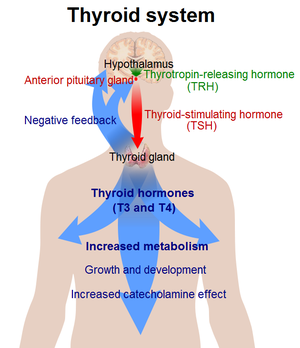 Thyrotoxicosis is a common disorder, especially in women. Thyroid disease affects 7 times more women than men.
Etiology
There are 3 main causes of thyrotoxicosis: Graves' disease, toxic nodular hyperthyroidism, and thyroiditis.
Here are some more details about them:
- Graves' disease (autoimmune hyperthyroidism) is the most frequent cause of thyrotoxicosis
- toxic nodular hyperthyroidism, due to the presence of one or more autonomously functioning thyroid nodules
- thyroiditis caused by inflammation, which results in release of stored hormones
Treatment
The available treatments for thyrotoxicosis have been unchanged for 60 years.
Antithyroid drugs are the usual initial treatment. Thionamides such as carbimazole or its active metabolite methimazole are the drugs of choice.
A prolonged course leads to remission of Graves' hyperthyroidism in only 30% of cases.
Because of this low remission rate in Graves' disease (only 30%) and the inability to cure toxic nodular hyperthyroidism with antithyroid drugs alone, radioiodine is increasingly used as first line therapy. It is the preferred choice for relapsed Graves' hyperthyroidism.
Surgery with total thyroidectomy is an option in selected cases. .
References:
Thyrotoxicosis. The Lancet, Volume 379, Issue 9821, Pages 1155 - 1166, 24 March 2012.
Thyroid disease—more research needed. The Lancet, Volume 379, Issue 9821, Page 1076, 24 March 2012.
Image source: Wikipedia, public domain.
Monday, August 13, 2012
7 healthy traits linked to lower death risk but only 2% of people have all 7 - are you one of them?
 People who meet the 7 healthy goals recommended by the American Heart Association are less likely to die of cardiovascular causes.
Here there are:
- not smoking
- moderate exercise at least 5 times a week
- untreated blood pressure under 120/80
- HbA1c under 5.7%
- total cholesterol under 200 mg/dL
- BMI less than 25
- a diet high in produce, fish, and whole grains, and low in sodium and sugary beverages
Less than 2% of people reached all 7 ideals.
Those who met 6-7 goals had reduced risks for all-cause mortality (hazard ratio, 0.49), compared with participants meeting zero or one goal.
References:
Healthy Habits Associated with Reduced Mortality Risk - Physician's First Watch http://bit.ly/N9x8ha
Trends in Cardiovascular Health Metrics and Associations With All-Cause and CVD Mortality Among US Adults - JAMA http://bit.ly/N9xzYO
Image source: OpenClipart.org, public domain.
Tuesday, September 13, 2011
Insulin is one of the top 10 high risk medications worldwide for prescription errors
 Insulin has been identified as one of the top 10 high risk medicines worldwide. Errors are common - the first national audit in England and Wales showed prescribing errors in 19.5% of cases.
Not only are mistakes common, they often lead to harm - 3% of medication errors are related to insulin, but these errors were also twice as likely to cause harm as errors for other prescribed drugs.
Errors relating to insulin arise because insulin has a narrow therapeutic range and requires precise dose adjustments with careful administration and monitoring.
Over 20 different types of insulin are in use, in various strengths and forms, and with a range of delivery devices, including insulin syringes (from vials), insulin pens (prefilled or reusable), or infusion pumps.
References:
Safer administration of insulin: summary of a safety report from the National Patient Safety Agency. BMJ 2010; 341:c5269 doi: 10.1136/bmj.c5269 (Published 13 October 2010).
Image source: Wikipedia, public domain.

Friday, August 26, 2011
The diabetes pandemic: 1 in 4 U.S. adults now has diabetes
 The number of adults with diabetes has doubled within the past 30 years.
70% of the increase is attributed to population growth and ageing. However, the number also reflects the unfortunate global shift towards a western lifestyle of unhealthy diet and physical inactivity, with obesity as the outcome.
Between 1980 and 2008, the global body-mass index (BMI) increased by 0·4—0·5 kg/m2 per decade.
In the USA, 10% of infants and toddlers already carry excess weight. More than 20% of children between the ages of 2 years and 5 years are overweight or obese.
By 2030, the number of individuals with diabetes worldwide is expected to rise to half a billion (470 million) - almost 80% of whom will be in low-income and middle-income countries. In these regions, diabetes drugs and insulin are often inaccessible or are too expensive.
References:
The diabetes pandemic. The Lancet, Volume 378, Issue 9786, Page 99, 9 July 2011.
Image source: Wikipedia, public domain.

Related from Amazon - pancreas plush toy:
Monday, August 15, 2011
Porphyrias
From a Lancet review:
Hereditary porphyrias represent a group of 8 metabolic disorders of the haem biosynthesis. They are characterised by acute neurovisceral symptoms, skin lesions, or both.
Every porphyria is caused by abnormal function of a separate enzymatic step, resulting in a specific accumulation of haem precursors:
Every porphyria is caused by abnormal function of a separate enzymatic step, resulting in a specific accumulation of haem precursors:
- 7 porphyrias are the result of a partial enzyme deficiency
- a gain of function mechanism is present in one new porphyria
Acute porphyrias present with acute attacks - severe abdominal pain, nausea, constipation, confusion, and seizure - and can be life-threatening.
Cutaneous porphyrias present with painful photosensitivity, skin fragility and blisters.
Porphyrias are still underdiagnosed. Screening of families to identify presymptomatic carriers and avoidance of precipitants is important.
References:
Acute porphyrias present with acute attacks - severe abdominal pain, nausea, constipation, confusion, and seizure - and can be life-threatening.
Cutaneous porphyrias present with painful photosensitivity, skin fragility and blisters.
Porphyrias are still underdiagnosed. Screening of families to identify presymptomatic carriers and avoidance of precipitants is important.
References:
Porphyrias. The Lancet, Volume 375, Issue 9718, Pages 924 - 937, 13 March 2010.
Wednesday, July 20, 2011
How much vitamin D do you need? Distilling strong advice from weak evidence
 Vitamin D is a steroid hormone and a component of a complex endocrine pathway sometimes called 'vitamin D endocrine system' (Medscape, 2012).
From Nature News:
Vitamin D has been lauded in the media for preventing or treating multiple disease but most evidence is circumstantial or weak.
Despite this, some physicians recommend supplementation of up to 6,000 international units (IU) to compensate for the time that people spend indoors. This is less than what a fair-skinned person make in 30 minutes of exposure to the summer sun (without sunscreen).
The amount spent on vitamin-D supplements in the United States had risen 10-fold in 10 years.
Poor data is one reason that the IOM panel did not recommend higher doses for vitamin D supplementation in 2010. The IOM 1,000-page report recommended that people should aim for blood levels of 50 nanomoles per litre (nmol/L).
However, according to the Endocrine Society's guidelines:
- people with levels under 50 nmol/L are "vitamin-D deficient"
- those with levels between 50 nmol/L and 72.5 nmol/L are "insufficient"
The society's guidelines also offer an 'ideal' level of 100–150 nmol/L which would require 1,500–2,000 IU daily. It advises physicians to monitor vitamin-D levels in healthy people.
Quest Lab already began to implement these deficiency and insufficiency standards over the IOM's. Many physicians are expected to follow suit.
A vitamin D3 dosage of 800 IU/d increased serum 25-(OH)D levels to greater than 50 nmol/L in 97.5% of women http://bit.ly/GzBCcA
References:
The vitamin D-lemma. 6 July 2011 | Nature 475, 23-25 (2011) | doi:10.1038/475023a
Image source: Wikipedia, public domain.

Comments from Google+:
Neil Mehta - This sounds like deja vu' all over again. How many times have we been down this path? vitamin C, Vitamin E, Carotenes....
Common themes:
The myth of natural products: "it is a natural product so it can't cause harm can it?" Thus if a little bit of it is good, more must be better.
The research problem: "It is over the counter and present in foods so very difficult to determine how much someone is actually taking"
Huge confounder of observational studies: "People who take supplements, other "health products" are different from those who don't.
Wednesday, July 13, 2011
Cholesterol numbers - Mayo Clinic video
Mayo Clinic: You've heard the warnings before — high cholesterol increases your risk of heart disease. So how often should you get your cholesterol checked, what should your numbers be, and how do you get them there?
Heart numbers to know, from Cleveland Clinic
Knowing your risk for heart disease depends on knowing and understanding some important numbers:
- Blood pressure should be less than 120/80 mm Hg
- Fasting blood sugar should be less than 100 mg/dL
- Total cholesterol less than 200 mg/dL
- LDL (bad cholesterol) less than 100 mg/dL, HDL (good) greater than 40 mg/dL
- Waist circumference should be less than 40 inches for men and less then 35 inches for women
- Body Mass Index (BMI) should be between 18.5 and 25. Calculate your BMI here: http://bit.ly/glMJE5
Wednesday, April 13, 2011
Statins slightly increase risk of cataracts, liver dysfunction, kidney failure and muscle weakness
 Statins do NOT prevent a long list of diseases
Statins were not significantly associated with risk of Parkinson’s disease, rheumatoid arthritis, venous thromboembolism, dementia, osteoporotic fracture, gastric cancer, colon cancer, lung cancer, melanoma, renal cancer, breast cancer, or prostate cancer.
Statins may decrease risk of esophageal cancer
Statin use was associated with decreased risks of oesophageal cancer.
Statins slightly increase the risk of liver dysfunction, kidney failure, muscle weakness and cataracts
Statin use was associated with increased risks of moderate or serious liver dysfunction, acute renal failure, moderate or serious myopathy, and cataract.
Is the risk the same with all statins?
Adverse effects were similar across statin types for each outcome except liver dysfunction where risks were highest for fluvastatin.
A dose-response effect was apparent for acute renal failure and liver dysfunction. All increased risks persisted during treatment and were highest in the first year.
How long does the risk last?
After stopping treatment the risk of cataract returned to normal within a year in men and women. Risk of acute renal failure returned to normal within 1-3 years in men and women, and liver dysfunction within 1-3 years in women and from three years in men.
What was the NNT and NNH?
Based on the 20% threshold for cardiovascular risk, for women the NNT with any statin to prevent one case of cardiovascular disease over five years was 37 and for oesophageal cancer was 1266 and for men the respective values were 33 and 1082.
In women the NNH for an additional case of acute renal failure over five years was 434, of moderate or severe myopathy was 259, of moderate or severe liver dysfunction was 136, and of cataract was 33. Overall, the NNHs and NNTs for men were similar to those for women, except for myopathy where the NNH was 91.
Conclusion
Claims of unintended benefits of statins, except for oesophageal cancer, remain unsubstantiated, although potential adverse effects at population level were confirmed and quantified.
Interestingly, the BMJ abstract did not mention increased diabetes risk that was reported in a previous study published in The Lancet.
References:
Unintended effects of statins in men and women in England and Wales: population based cohort study using the QResearch database. BMJ 2010; 340:c2197 doi: 10.1136/bmj.c2197 (Published 20 May 2010).
Balancing the intended and unintended effects of statins. BMJ 2010; 340:c2240 doi: 10.1136/bmj.c2240 (Published 20 May 2010).
People on statins are 9% more likely to develop diabetes according to a meta-analysis
Cholesterol drug side effects need watching: study. Reuters.
Cholesterol drug side effects need watching: study. Reuters.
Image source: Simvastatin. Wikipedia, public domain.

Tuesday, April 5, 2011
Gout update: New drugs for an old disease
 Febuxostat is a non-purine-analogue inhibitor of xanthine oxidase that opened a new era in the treatment of gout.
 Modified uricases
The use of modified uricases to rapidly reduce serum urate concentrations in patients with otherwise untreatable gout is progressing. Pegloticase, a pegylated uricase, is in development.
JAMA update, 08/2011: New Treatment Offers Hope for Patients With Severe Gout: pegloticase (Krystexxa) costs $2,500 per dose (http://goo.gl/gz9sO).
Drugs in development
Transport of uric acid in the renal proximal tubule and the inflammatory response to monosodium urate crystals (shown above) are targets for potential new treatments.
Several pipeline drugs for gout related to the targets above include:
- selective uricosuric drug RDEA594
- various interleukin-1 inhibitors. Canakinumab (trade name Ilaris) is a human monoclonal antibody targeted at interleukin-1 beta. It was rejected by the FDA panel in June 2011.
References:
Gout therapeutics: new drugs for an old disease. The Lancet, Volume 377, Issue 9760, Pages 165 - 177, 8 January 2011.
Diuretics, beta-blockers, ACEi, non-losartan ARBs associated with increased risk of gout vs. CCB lower risk. BMJ, 2012.
With FDA Approval, a Gout Drug Now Costs $5 Instead of Pennies - WSJ, 2011.
FDA Panel Rejects Gout Drug Canakinumab on Safety Concerns http://goo.gl/lO9uy
The strange story that links gout with the birth of the cocktail drinks. Lancet, 2012.
Image source: Spiked rods of uric acid (MSU) crystals from a synovial fluid sample photographed under a microscope with polarized light. Wikipedia, public domain.

Friday, March 18, 2011
What drug to add to maximal metformin therapy for diabetes?
 Metformin is the recommended initial drug therapy for patients with type 2 diabetes mellitus (DM). However, the optimal second-line drug when metformin monotherapy fails is unclear.
All noninsulin antidiabetic drugs were associated with similar HbA1c reductions but differed in their associations with weight gain and risk of hypoglycemia.
The different classes of drugs were associated with similar HbA1c reductions (range, 0.64%-0.97%) compared with placebo.
Noninsulin antidiabetic drugs and their effect on body weight:
- thiazolidinediones, sulfonylureas, and glinides were associated with weight gain (range, 1.77-2.08 kg)
- glucagon-like peptide-1 analogs, alpha-glucosidase inhibitors, and dipeptidyl peptidase-4 inhibitors were associated with weight loss or no weight change
Sulfonylureas and glinides were associated with higher rates of hypoglycemia than with placebo.
References:
Effect of Noninsulin Antidiabetic Drugs Added to Metformin Therapy on Glycemic Control, Weight Gain, and Hypoglycemia in Type 2 Diabetes. JAMA. 2010;303(14):1410-1418. doi: 10.1001/jama.2010.405
Insulin treatment for type 2 diabetes: When to start, which to use - The Cleveland Clinic approach
Image source: Metformin. Wikipedia, public domain.
Thursday, February 17, 2011
Screening for Familial Hypercholesterolemia - CDC Expert Commentary
Screening for Familial Hypercholesterolemia - CDC Expert Commentary (video). Renée M. Ned, PhD, MMSc discusses the benefits of cascade screening to identify familial hypercholesterolemia, a common genetic disorder that causes high levels of low-density lipoprotein (or LDL) cholesterol.
Thursday, February 3, 2011
Heart numbers to know - by Cleveland Clinic
 Cleveland Clinic has been ranked the number one hospital in the U.S. for heart disease and heart surgery for the last 19 years. They must know what they are talking about when selecting the "heart numbers to know". This is the list by the cardiologist Dr. Richard Krasuski and the Clinic Twitter account.
Knowing your risk for heart disease depends on knowing and understanding some important numbers:
- Blood pressure should be less than 120/80 mm Hg
- Fasting blood sugar should be less than 100 mg/dL
- Total cholesterol less than 200 mg/dL
- LDL (bad cholesterol) less than 100 mg/dL, HDL (good) greater than 40 mg/dL
- Waist circumference should be less than 40 inches for men and less then 35 inches for women
- Body Mass Index (BMI) should be between 18.5 and 25. Calculate your BMI here: http://bit.ly/glMJE5
I worked at the Cleveland Clinic until 2008 and at that time the imposing building of the Heart & Vascular Institute was just getting completed:
Cleveland Clinic Heart & Vascular Institute
Image source: Cleveland Clinic logo.
Monday, January 31, 2011
Vitamin D receptor activation with paricalcitol decreases albuminuria in type 2 diabetes
 Vitamin D is a steroid hormone and a component of a complex endocrine pathway sometimes called 'vitamin D endocrine system' (Medscape, 2012). Despite treatment with renin—angiotensin—aldosterone system (RAAS) inhibitors, patients with diabetes have increased risk of progressive renal failure that correlates with albuminuria.
281 patients with type 2 diabetes and albuminuria who were receiving angiotensin-converting enzyme inhibitors or angiotensin receptor blockers were enrolled in this study.
Patients were assigned to receive 24 weeks' treatment with:
- placebo
- 1 μg/day paricalcitol
- 2 μg/day paricalcitol
Paricalcitol (trade name Zemplar, Abbott Laboratories) is an analog of calcitriol, the active form of vitamin D.
The primary endpoint was the percentage change in mean urinary albumin-to-creatinine ratio (UACR).
The change in urinary albumin-to-creatinine ratio (UACR) was: −14% in the 1 μg paricalcitol group, and −20% in the 2 μg paricalcitol group.
The addition of 2 μg/day paricalcitol to RAAS inhibition safely lowers albuminuria in patients with diabetic nephropathy, and could be a novel approach to lower renal risk in diabetes.
References:
Selective vitamin D receptor activation with paricalcitol for reduction of albuminuria in patients with type 2 diabetes (VITAL study): a randomised controlled trial. The Lancet, Volume 376, Issue 9752, Pages 1543 - 1551, 6 November 2010.
Image source: Paricalcitol, Wikipedia, public domain.

Thursday, December 30, 2010
Laughter May Increase Appetite
A hearty laugh and a moderate workout may have more in common than anyone thought.Both affect the appetite hormones in much the same way:
- When leptin goes down, it increases appetite
- When ghrelin goes up, it increases appetite
That is what typically happens after moderate exercise.
Leptin (from Greek, leptos, meaning thin) is a protein hormone that plays a key role in regulating energy intake and expenditure, including appetite and metabolism. Leptin acts on receptors in the hypothalamus of the brain where it inhibits appetite.
Ghrelin is a hormone that stimulates hunger. The name is based on its role as a growth hormone-releasing peptide, with reference to the root "ghre", meaning to grow. It is produced by the cells lining the fundus of the stomach and epsilon cells of the pancreas. It is considered the counterpart of the hormone leptin, produced by adipose tissue.
Twitter comments:
@LJaneTn Fat and Funny?
@doctorwhitecoat This explains why I'm always so hungry.
@scanman That explains why I eat too much when I party with friends.
Image source: Wikipedia, public domain.
Tuesday, December 14, 2010
Correcting Vitamin D Deficiency May Decrease Risk of Heart Disease
Vitamin D is a steroid hormone and a component of a complex endocrine pathway sometimes called 'vitamin D endocrine system' (Medscape, 2012). In a recent study, 9,400 patients had an average vitamin D level of 19.3 nanograms per milliliter - levels of 30 are generally considered "normal". At their next follow-up visit, 50% of patients had raised their vitamin D levels to above 30 nanograms per milliliter.
Compared with patients whose vitamin D levels were still low, patients who raised their vitamin D levels were 33% less likely to have a heart attack, 20% less likely to develop heart failure, and 30% less likely to die between the two visits (source: WebMD).
"While normal has generally been considered to be 30, some people have suggested 40 or 50 is better. People who increased their vitamin D blood level to 43 nanograms per milliliter had the lowest rates of heart disease and stroke. But increasing it beyond that, say to 60 or 70, offered no greater benefit."
One of the BMJ blogs calls vitamin D "the elixir of life", but it all starts to sound a bit too good to be absolutely true.
Serum 25(OH)D.
The circulating half-life of 25(OH)D is 2 weeks. This is the best test to determine vitamin D status. A 25(OH)D level of less than 32 ng/mL is considered vitamin D insufficient because intestinal calcium absorption is optimized at levels above 32 ng/mL.
A 25(OH)D level of less than 15 or 20 ng/mL have been used to define vitamin D deficiency.
Parathyroid hormone levels start to rise at 25(OH)D levels below 31 ng/mL, which is another marker of vitamin D insufficiency. Although not always required for the diagnosis of vitamin D insufficiency, a serum PTH may be used to help establish the diagnosis of vitamin D insufficiency.
The word vitamin was originally derived from Funk's term "vital amine."
A vitamin D3 dosage of 800 IU/d increased serum 25-(OH)D levels to greater than 50 nmol/L in 97.5% of women http://bit.ly/GzBCcA
A vitamin D3 dosage of 800 IU/d increased serum 25-(OH)D levels to greater than 50 nmol/L in 97.5% of women http://bit.ly/GzBCcA
References:
Vitamin D Supplements Lower Heart Disease Risk. WebMD.
Tuesday, December 7, 2010
Following DASH Diet Improves Brain Activity in Overweight Adults
 A new study suggest that the DASH diet in combination with regular exercise improves mental activity by 30% in overweight adults compared with those who didn’t diet or exercise. The DASH diet was developed for the Dietary Approaches to Stop Hypertension (DASH) study and emphasizes low-fat dairy products and low-cholesterol foods as well as carbohydrates and fruits and vegetables.
Researchers say high blood pressure affects about 50% of adults aged 60 and older and increases the risk of Alzheimer’s disease and other forms of mental decline like dementia.
These are 5 healthy lifestyle factors associated with a lower risk of developing high blood pressure:
1. Healthy weight: body mass index (BMI) of less than 25.
2. Daily exercise: average of 30 minutes of vigorous exercise per day.
3. Heart-healthy diet (DASH).
4. Moderate alcohol use.
5. Use non-narcotic pain relievers less than once per week.
References:
DASH Diet Fuels the Brain - WebMD.
Top diets of 2012 - from Cleveland Clinic health blog http://buff.ly/X2I4BJ
6 healthy lifestyle factors associated with a lower risk of developing high blood pressure
A table to show the impact of lifestyle interventions on blood pressure http://bit.ly/johjzs - Great for patient education.
Related:
What is the best diet in the world? DASH Diet, according to the latest review. TIME, 2011.
The long history of dieting fads: "soap should be eaten for its diuretic properties", wrote a prominent surgeon in 1810. Lancet, 2012.
Monday, November 8, 2010
Liraglutide (Victoza) superior to sitagliptin (Januvia) for reduction of HbA1c in diabetics
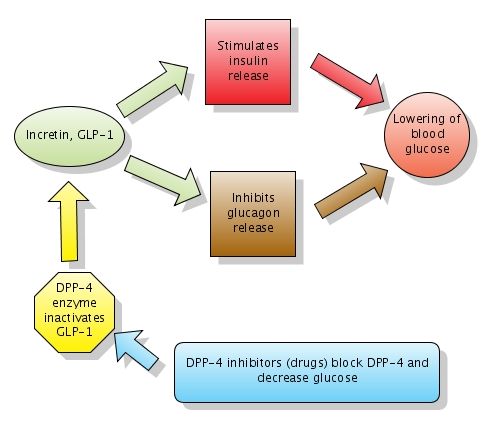
Action of DPP-4 inhibitors. Note that DPP-4 normally inactivates GLP-1. DPP-4 inhibitors block DPP-4 which in turn leaves GLP-1 active. Click to enlarge the figure. Created with Gliffy.
What is Glucagon-like peptide-1 (GLP-1)?
Glucagon-like peptide-1 (GLP-1) is a GI peptide that stimulates insulin secretion (similar to sulfonylureas). GLP-1 also inhibits glucagon release, gastric emptying and food absorption. GLP-1 and another similar peptide are called incretins. As noted above, incretins have a dual action which leads to lowering blood glucose:
1. Stimulate insulin release
2. Inhibit glucagon release
Exenatide (Byetta) is a GLP-1 receptor agonist approved for adjunctive therapy for patients with DM 2 who are not well controlled on oral agents. It is available only as injections and has to be administered twice daily.
DPP-4 inhibitors, or gliptins, increase GLP-1 levels by blocking the enzyme which inactivates GLP-1. The enzyme is called DPP-4 (dipeptidyl peptidase-4). They act similarly to Byetta (see figure above) but have the big advantage to be available in oral form (pills). Gliptins used for treatment of DM2 include sitagliptin (Januvia) and vildagliptin (Galvus).
What is Liraglutide?
Liraglutide (Victoza) is a long-acting glucagon-like peptide-1 (GLP-1) analog that was developed by Novo Nordisk for the treatment of type 2 diabetes. Liraglutide has a half-life after subcutaneous injection of 11–15 hours, making it suitable for once-daily dosing (in contrast to Byetta's twice daily).

Liraglutide. Image source: Wikipedia, public domain.
Liraglutide (Victoza) is a long-acting glucagon-like peptide-1 (GLP-1) analog that was developed by Novo Nordisk for the treatment of type 2 diabetes. Liraglutide has a half-life after subcutaneous injection of 11–15 hours, making it suitable for once-daily dosing (in contrast to Byetta's twice daily).

Liraglutide. Image source: Wikipedia, public domain.

Liraglutide (Victoza) superior to sitagliptin (Januvia) for reduction of HbA1c in diabetics
This Lancet study assessed the efficacy and safety of the human GLP-1 analogue liraglutide versus the DPP-4 inhibitor sitagliptin, as adjunct treatments to metformin, in individuals with type 2 diabetes who did not achieve adequate glycaemic control with metformin alone.
More than 600 participants (aged 18—80 years) with type 2 diabetes mellitus who had inadequate glycaemic control (glycosylated haemoglobin [HbA1c] 7·5—10·0%) on metformin (more than 1500 mg daily) were enrolled.
Participants were randomly allocated to receive 26 weeks' treatment with 1·2 mg or 1·8 mg subcutaneous liraglutide once daily, or 100 mg oral sitagliptin once daily.
Greater lowering of mean HbA1c (8·5% at baseline) was achieved with 1·8 mg liraglutide (−1·50%) and 1·2 mg liraglutide (−1·24%) than with sitagliptin (−0·90%).
Nausea was more common with liraglutide (27%) on 1·8 mg. Minor hypoglycaemia was recorded in about 5% of participants in each treatment group.
Liraglutide was superior to sitagliptin for reduction of HbA1c, and was well tolerated with minimum risk of hypoglycaemia. These findings support the use of liraglutide as an effective GLP-1 agent to add to metformin.
More than 600 participants (aged 18—80 years) with type 2 diabetes mellitus who had inadequate glycaemic control (glycosylated haemoglobin [HbA1c] 7·5—10·0%) on metformin (more than 1500 mg daily) were enrolled.
Participants were randomly allocated to receive 26 weeks' treatment with 1·2 mg or 1·8 mg subcutaneous liraglutide once daily, or 100 mg oral sitagliptin once daily.
Greater lowering of mean HbA1c (8·5% at baseline) was achieved with 1·8 mg liraglutide (−1·50%) and 1·2 mg liraglutide (−1·24%) than with sitagliptin (−0·90%).
Nausea was more common with liraglutide (27%) on 1·8 mg. Minor hypoglycaemia was recorded in about 5% of participants in each treatment group.
Liraglutide was superior to sitagliptin for reduction of HbA1c, and was well tolerated with minimum risk of hypoglycaemia. These findings support the use of liraglutide as an effective GLP-1 agent to add to metformin.
References:
Liraglutide versus sitagliptin for patients with type 2 diabetes who did not have adequate glycaemic control with metformin: a 26-week, randomised, parallel-group, open-label trial. The Lancet, Volume 375, Issue 9724, Pages 1447 - 1456, 24 April 2010.
Tuesday, November 2, 2010
Lowering Triglycerides With Exercise - Mayo Clinic Video
Mayo Clinic | October 22, 2010: Instead of taking medicine to lower triglycerides, most people can lower that number simply by moving more.
Friday, October 29, 2010
Statins Use in Presence of Elevated Liver Enzymes: What to Do?
The beneficial role of statins in primary and secondary prevention of coronary heart disease has resulted in their frequent use in clinical practice.
However, safety concerns, especially regarding hepatotoxicity, have driven multiple trials, which have demonstrated the low incidence of statin-related hepatic adverse effects. The most commonly reported hepatic adverse effect is the phenomenon known as transaminitis, in which liver enzyme levels are elevated in the absence of proven hepatotoxicity.
"Ttransaminitis" is usually asymptomatic, reversible, and dose-related.

Lovastatin, a compound isolated from Aspergillus terreus, was the first statin to be marketed for lowering cholesterol. Image source: Wikipedia, public domain.
The increasing incidence of chronic liver diseases, including nonalcoholic fatty liver disease and hepatitis C, has created a new challenge when initiating statin treatment. These diseases result in abnormally high liver biochemistry values, discouraging statin use.
A PubMed/MEDLINE search of the literature (1994-2008) was performed for this Mayo Clinic Proceedings review. The review supports the use of statin treatment in patients with high cardiovascular risk whose elevated aminotransferase levels have no clinical relevance or are attributable to known stable chronic liver conditions.
References:
Statins in the Treatment of Dyslipidemia in the Presence of Elevated Liver Aminotransferase Levels: A Therapeutic Dilemma. Rossana M. Calderon, MD, Luigi X. Cubeddu, MD, Ronald B. Goldberg, MD and Eugene R. Schiff, MD. Mayo Clinic Proceedings April 2010 vol. 85 no. 4 349-356.
However, safety concerns, especially regarding hepatotoxicity, have driven multiple trials, which have demonstrated the low incidence of statin-related hepatic adverse effects. The most commonly reported hepatic adverse effect is the phenomenon known as transaminitis, in which liver enzyme levels are elevated in the absence of proven hepatotoxicity.
"Ttransaminitis" is usually asymptomatic, reversible, and dose-related.
Lovastatin, a compound isolated from Aspergillus terreus, was the first statin to be marketed for lowering cholesterol. Image source: Wikipedia, public domain.
The increasing incidence of chronic liver diseases, including nonalcoholic fatty liver disease and hepatitis C, has created a new challenge when initiating statin treatment. These diseases result in abnormally high liver biochemistry values, discouraging statin use.
A PubMed/MEDLINE search of the literature (1994-2008) was performed for this Mayo Clinic Proceedings review. The review supports the use of statin treatment in patients with high cardiovascular risk whose elevated aminotransferase levels have no clinical relevance or are attributable to known stable chronic liver conditions.
References:
Statins in the Treatment of Dyslipidemia in the Presence of Elevated Liver Aminotransferase Levels: A Therapeutic Dilemma. Rossana M. Calderon, MD, Luigi X. Cubeddu, MD, Ronald B. Goldberg, MD and Eugene R. Schiff, MD. Mayo Clinic Proceedings April 2010 vol. 85 no. 4 349-356.
Subscribe to:
Posts (Atom)