Suleika Jaouad, a writer and recent college graduate, is chronicling her experiences as a young adult with cancer in a weekly column for the NYTimes: http://well.blogs.nytimes.com/author/suleika-jaouad
Showing posts with label Hematology. Show all posts
Showing posts with label Hematology. Show all posts
Wednesday, January 9, 2013

Wednesday, October 31, 2012
Sickle cell anemia - NHS Choices video
From NHS Choices YouTube channel:
Sickle cell anaemia is a genetic (inherited) blood disorder where red blood cells develop abnormally. In this video a specialist nurse explains what it is, and Junior describes living with the condition:
The estimated survival at 18 years is now 94 percent for those with HbSS sickle cell disease or HbS/beta(0) thalassemia and 98 percent for those with HbSC or HbS/beta(+) thalassemia.
Related reading:
What's new in hematology from UpToDate http://bit.ly/Tm97Ee
Sickle cell anaemia is a genetic (inherited) blood disorder where red blood cells develop abnormally. In this video a specialist nurse explains what it is, and Junior describes living with the condition:
The estimated survival at 18 years is now 94 percent for those with HbSS sickle cell disease or HbS/beta(0) thalassemia and 98 percent for those with HbSC or HbS/beta(+) thalassemia.
Related reading:
What's new in hematology from UpToDate http://bit.ly/Tm97Ee
Wednesday, May 23, 2012
Hemophilia educational videos by CDC
Hemophilia belongs to a family of inherited lifelong bleeding conditions that prevent blood from clotting properly. Patients with these disorders bleed for longer than normal, either as a result of injury or spontaneously without an external cause.
The severity of bleeding depends on the amount of clotting factor that is missing or not functioning properly, which in hemophilia A and B - the most common types of hemophilia - is the coagulation factors VIII and IX, respectively.
In addition to external bleeding, patients more commonly have internal bleeding around the joints and muscles, which can be extremely painful and cause permanent disability. Bleeding into major organs such as the brain is especially difficult to manage and can be fatal.
Here are 2 hemophilia educational videos by CDC: Playing it Safe With Hemophilia: Friends with hemophilia talk about playing sports growing up and the importance of making smart decisions.
Starting the Conversation: Hemophilia. How to talk to your friends about hemophilia. A group of friends ask their friend Billy questions about his hemophilia:
Hemophilia care has undergone substantial improvements during the past 40 - 50 years. Early clotting factor concentrates were not sufficiently refined to enable self-administered treatment at home until the 1970s.
Long-term substitution therapy (prophylaxis) of the missing clotting factor is the recommended treatment in severe hemophilia. The major side-effect of treatment, development of inhibitors to the infused concentrate, is the main threat to the health of patients.
Mnemonic: Differential Diagnosis of Bleeding Disorders: F-CAP
Fibrinolysis - tPA
Coagulopathy - hemophilia, vWD
Angiopathy - conditions affecting blood vessels, e.g. Osler-Weber-Rendu syndrome
Platelets - thrombocytopenia or thrombocytopathia
Initial diagnostic tests = 3P:
Platelets
PT - INR
PTT
References:
http://www.cdc.gov/NCBDDD/video/Hemophilia_sports/index.html
http://www.cdc.gov/NCBDDD/video/Hemophilia_Friends/index.html
Making haemophilia a global priority - The Lancet, 2012.
Modern haemophilia care - The Lancet, 2012.
The severity of bleeding depends on the amount of clotting factor that is missing or not functioning properly, which in hemophilia A and B - the most common types of hemophilia - is the coagulation factors VIII and IX, respectively.
In addition to external bleeding, patients more commonly have internal bleeding around the joints and muscles, which can be extremely painful and cause permanent disability. Bleeding into major organs such as the brain is especially difficult to manage and can be fatal.
Here are 2 hemophilia educational videos by CDC: Playing it Safe With Hemophilia: Friends with hemophilia talk about playing sports growing up and the importance of making smart decisions.
Starting the Conversation: Hemophilia. How to talk to your friends about hemophilia. A group of friends ask their friend Billy questions about his hemophilia:
Hemophilia care has undergone substantial improvements during the past 40 - 50 years. Early clotting factor concentrates were not sufficiently refined to enable self-administered treatment at home until the 1970s.
Long-term substitution therapy (prophylaxis) of the missing clotting factor is the recommended treatment in severe hemophilia. The major side-effect of treatment, development of inhibitors to the infused concentrate, is the main threat to the health of patients.
Mnemonic: Differential Diagnosis of Bleeding Disorders: F-CAP
Fibrinolysis - tPA
Coagulopathy - hemophilia, vWD
Angiopathy - conditions affecting blood vessels, e.g. Osler-Weber-Rendu syndrome
Platelets - thrombocytopenia or thrombocytopathia
Initial diagnostic tests = 3P:
Platelets
PT - INR
PTT
References:
http://www.cdc.gov/NCBDDD/video/Hemophilia_sports/index.html
http://www.cdc.gov/NCBDDD/video/Hemophilia_Friends/index.html
Making haemophilia a global priority - The Lancet, 2012.
Modern haemophilia care - The Lancet, 2012.
Tuesday, September 27, 2011
Haemochromatosis - NHS Choices Video
From NHS Choices YouTube channel: Alan was 55 when he was diagnosed with haemochromatosis or iron overload disorder, a condition where the body contains too much iron. In this video, he describes how he learned to manage the condition by changing is diet and having venesection treatment several times a year.
Thursday, September 22, 2011
Antiphospholipid antibody syndrome (APS)
From The Lancet:
Graham Hughes, who first described antiphospholipid syndrome (APS) in 1983, urged for more efforts to raise awareness of this disorder. APS often remains undiagnosed and untreated with catastrophic consequences, such as multiple miscarriages, or stroke at a young age.
Clinical features of APS
Antibodies
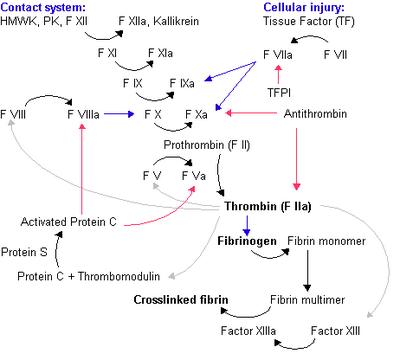
The coagulation cascade. Black arrow - conversion/activation of factor. Red arrows - action of inhibitors. Blue arrows - reactions catalysed by activated factor. Grey arrow - various functions of thrombin. Image source: Wikipedia
Treatment of APS
Graham Hughes, who first described antiphospholipid syndrome (APS) in 1983, urged for more efforts to raise awareness of this disorder. APS often remains undiagnosed and untreated with catastrophic consequences, such as multiple miscarriages, or stroke at a young age.
Clinical features of APS
Clinical manifestations of antiphospholipid syndrome (APS) include:
- venous, arterial, and small-vessel thrombosis
- pregnancy loss
- preterm delivery for patients with severe pre-eclampsia or placental insufficiency
- cardiac valvular disease
- renal thrombotic microangiopathy
- thrombocytopenia
- haemolytic anaemia
- cognitive impairment
Antibodies
Antiphospholipid antibodies promote activation of endothelial cells, monocytes, and platelets; and overproduction of tissue factor and thromboxane A2 (procoagulants). Complement activation might have a central pathogenetic role.
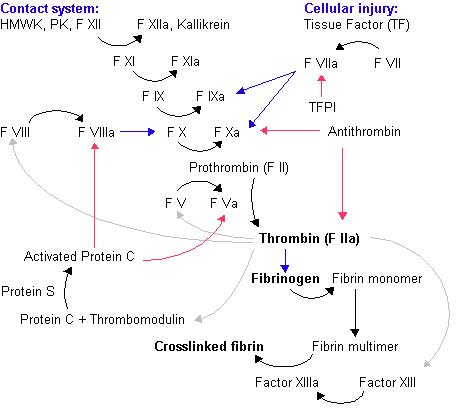
The coagulation cascade. Black arrow - conversion/activation of factor. Red arrows - action of inhibitors. Blue arrows - reactions catalysed by activated factor. Grey arrow - various functions of thrombin. Image source: Wikipedia
Of the different antiphospholipid antibodies, lupus anticoagulant is the strongest predictor of clinical presentation.
Treatment of APS
Therapy of thrombosis is based on long-term oral anticoagulation (warfarin). Patients with arterial events should be treated aggressively.
Primary thromboprophylaxis is recommended in patients with systemic lupus erythematosus (SLE) and in obstetric antiphospholipid syndrome. Obstetric care is based on treatment with aspirin and heparin.
Hydroxychloroquine is a potential additional treatment for APS. Possible future therapies for non-pregnant patients with antiphospholipid syndrome are statins, rituximab, and new anticoagulant drugs.
References
References
Antiphospholipid syndrome. The Lancet, Volume 376, Issue 9751, Pages 1498 - 1509, 30 October 2010.
Raising awareness of antiphospholipid antibody syndrome. The Lancet, Volume 375, Issue 9717, Page 778, 6 March 2010.
Tuesday, August 2, 2011
Post-splenectomy and hyposplenism - Lancet review
The spleen links innate and adaptive immunity.
The impairment of splenic function is defined as hyposplenism. The term asplenia refers to the absence of the spleen, a condition that is rarely congenital and mostly post-surgical.

Spleen. Image source: National Cancer Institute and Wikipedia, public domain.
Complications of hyposplenism and asplenia
The impairment of splenic function is defined as hyposplenism. The term asplenia refers to the absence of the spleen, a condition that is rarely congenital and mostly post-surgical.

Spleen. Image source: National Cancer Institute and Wikipedia, public domain.

Complications of hyposplenism and asplenia
Hyposplenism and asplenia might predispose individuals to thromboembolic events. However, infectious complications are the most widely recognised consequences of these states.
Splenectomy and hyposplenism are associated with infections by encapsulated bacteria with high mortality, fulminant course, and refractoriness to common treatment.
Prevention through vaccination and antibiotic prophylaxis is the basis of management.
References:
Post-splenectomy and hyposplenic states. Antonio Di Sabatino MD, Rita Carsetti MD, Prof Gino Roberto Corazza MD. The Lancet, Volume 378, Issue 9785, Pages 86 - 97, 2 July 2011.
Splenectomy and hyposplenism are associated with infections by encapsulated bacteria with high mortality, fulminant course, and refractoriness to common treatment.
Prevention through vaccination and antibiotic prophylaxis is the basis of management.
References:
Post-splenectomy and hyposplenic states. Antonio Di Sabatino MD, Rita Carsetti MD, Prof Gino Roberto Corazza MD. The Lancet, Volume 378, Issue 9785, Pages 86 - 97, 2 July 2011.
Thursday, March 10, 2011
Investigating easy bruising in a child
From BMJ:
In a child, unusual bruising or bleeding out of proportion to the injury sustained should be investigated.
All children under investigation for easy bruising or a bleeding tendency should have:
- full blood count
- blood film (peripheral smear)
- coagulation screen including a thrombin time, in addition to a Von Willebrand factor assay and assays of factors VIII and IX
This is to ensure that mild forms of haemophilia are excluded even if the activated partial thromboplastin time is normal
In 30% of cases of haemophilia, there is no family history: it arises secondary to new genetic mutations
The coagulation cascade. Black arrow - conversion/activation of factor. Red arrows - action of inhibitors. Blue arrows - reactions catalysed by activated factor. Grey arrow - various functions of thrombin. Image source: Wikipedia
References:
Investigating easy bruising in a child. Anderson and Thomas 341, BMJ.
In a child, unusual bruising or bleeding out of proportion to the injury sustained should be investigated.
All children under investigation for easy bruising or a bleeding tendency should have:
- full blood count
- blood film (peripheral smear)
- coagulation screen including a thrombin time, in addition to a Von Willebrand factor assay and assays of factors VIII and IX
This is to ensure that mild forms of haemophilia are excluded even if the activated partial thromboplastin time is normal
In 30% of cases of haemophilia, there is no family history: it arises secondary to new genetic mutations
The coagulation cascade. Black arrow - conversion/activation of factor. Red arrows - action of inhibitors. Blue arrows - reactions catalysed by activated factor. Grey arrow - various functions of thrombin. Image source: Wikipedia
References:
Investigating easy bruising in a child. Anderson and Thomas 341, BMJ.
Friday, February 4, 2011
Romiplostim for Treatment on Immune Thrombocytopenia (ITP)
 Romiplostim, a thrombopoietin mimetic, increases platelet counts in patients with immune thrombocytopenia, with few adverse effects.
In this open-label, 52-week study (funded by Amgen), 234 adult patients with immune thrombocytopenia, who had not undergone splenectomy, were randomized to receive the standard of care or weekly subcutaneous injections of romiplostim.
The rate of a platelet response in the romiplostim group was 2.3 times that in the standard-of-care group.
Patients receiving romiplostim had a significantly lower incidence of treatment failure [11%] than those receiving the standard of care [30%].
Splenectomy also was performed less frequently in patients receiving romiplostim [9%]) than in those receiving the standard of care [36%].
The romiplostim group had a lower rate of bleeding events, fewer blood transfusions, and greater improvements in the quality of life.
Romiplostim is a fusion protein analog of thrombopoietin. It is marketed under the trade name Nplate through a restricted usage program. Romiplostim was designated an orphan drug by the FDA in 2003, as the chronic ITP population in the USA is under 200,000.
In 2008, the FDA approved romiplostim as a long-term treatment for chronic ITP in adults who have not responded to other treatments, such as:
- corticosteroids
- intravenous immunoglobulin (IVIG)
- Rho(D) immune globulin
- splenectomy
References:
Romiplostim or Standard of Care in Patients with Immune Thrombocytopenia. NEJM, 2010.
Immune Thrombocytopenia - 2010 Review in Hematology http://goo.gl/tXT2U
References:
Romiplostim or Standard of Care in Patients with Immune Thrombocytopenia. NEJM, 2010.
Immune Thrombocytopenia - 2010 Review in Hematology http://goo.gl/tXT2U
Immune thrombocytopenia: No longer ‘idiopathic’ http://goo.gl/z2Ks0
Immune thrombocytopenia in adults: An update. CCJM, 2012.
Immune thrombocytopenia in adults: An update. CCJM, 2012.
Image source: Nplate.com
Wednesday, September 29, 2010
What's new in hematology from UpToDate
 35% of UpToDate topics are updated every four months. The editors select a small number of the most important updates and share them via "What's new" page. I selected the brief excerpts below from What's new in hematology:
Transplantation in aplastic anemia
In patients with severe aplastic anemia over the age of 40 who received allogeneic hematopoietic cell transplantation from an HLA-identical sibling, overall survival was 65 percent.
Improved survival when rituximab is added to fludarabine plus cyclophosphamide in CLL
There were higher response rates and survival with six courses of FCR (fludarabine, cyclophosphamide, and rituximab) when compared with six courses of FC (fludarabine, cyclophosphamide).
Second generation tyrosine kinase inhibitors (TKIs) for CML
Trials comparing dasatinib or nilotinib to imatinib for chronic myeloid leukemia (CML) demonstrated faster and deeper responses with these second generation tyrosine kinase inhibitors.
Improved understanding of pathobiology of multiple myeloma
Virtually all multiple myeloma (MM) cases are preceded by a premalignant plasma cell proliferative disorder known as monoclonal gammopathy of undetermined significance (MGUS). The pathobiology of myeloma as a two-step process - first there is the establishment of a limited stage of clonal proliferation (MGUS); then there is progression of MGUS to MM.
Denileukin diftitox superior to placebo for relapsed mycosis fungoides
There were better response rates with the recombinant interleukin-2-diphtheria toxin fusion protein denileukin diftitox used for therapy of mycosis fungoides and Sezary syndrome.
Survival in sickle cell disease
The estimated survival at 18 years is now 94 percent for those with HbSS or HbS/beta(0) thalassemia and 98 percent for those with HbSC or HbS/beta(+) thalassemia.
References:
What's new in hematology. UpToDate.
Thursday, August 26, 2010
Gene test decreases warfarin-related hospitalizations by 28%
Patients who received a test of two genes connected to warfarin sensitivity were 28 percent less likely to be hospitalized for a bleeding episode or blood clot than those whose safe and effective warfarin dosing was determined by traditional trial and error method.
The genetic tests, which are easily done with a cheek swab or blood sample, need only be performed once ever for each patient and cost somewhere between $200 and $400 - far less than even a brief hospital stay.
Warfarin Sensitivity Genotype Test - Mayo Clinic Video.
References:
Gene test can cut warfarin hospitalizations | Reuters.
The genetic tests, which are easily done with a cheek swab or blood sample, need only be performed once ever for each patient and cost somewhere between $200 and $400 - far less than even a brief hospital stay.
Warfarin Sensitivity Genotype Test - Mayo Clinic Video.
References:
Gene test can cut warfarin hospitalizations | Reuters.
Monday, June 7, 2010
Oral factor Xa inhibitor apixaban - more effective than enoxaparin for thromboprophylaxis after knee replacement
 Low-molecular-weight heparins such as enoxaparin are preferred for prevention of venous thromboembolism after major joint replacement. Apixaban, an orally active factor Xa inhibitor, might be as effective, have lower bleeding risk, and be easier to use than is enoxaparin.
The primary outcome in this Lancet study was the composite of asymptomatic and symptomatic deep vein thrombosis (DVT), non-fatal pulmonary embolism (PE), and all-cause death during treatment. The primary outcome was reported in 15% of apixaban patients and 24% of enoxaparin patients (relative risk 0·62), absolute risk reduction 9·3%.
Major or clinically relevant non-major bleeding occurred in 4% of patients receiving apixaban and 5% of treated with enoxaparin.
The authors concluded that apixaban 2·5 mg twice daily, starting on the morning after total knee replacement, offers a convenient and more effective orally administered alternative to 40 mg per day enoxaparin, without increased bleeding.
References:
Apixaban versus enoxaparin for thromboprophylaxis after knee replacement (ADVANCE-2): a randomised double-blind trial. The Lancet, Volume 375, Issue 9717, Pages 807 - 815, 6 March 2010.
Image source: Apixaban, Wikipedia, public domain.
Friday, February 19, 2010
Superficial Venous Thrombosis Linked to Increased Risk of "Deep" Venous Thromboembolism for Months
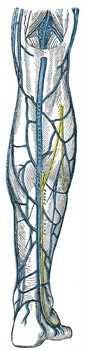 Superficial venous thrombosis (SVT) is perceived to have a benign prognosis.
 Among 844 patients with SVT, 24.9% also had deep venous thrombosis (DVT) or symptomatic pulmonary embolism.
Among 600 patients without DVT or pulmonary embolism at inclusion who were eligible for 3-month follow-up, 10.2% developed thromboembolic complications at 3 months despite 90.5% having received anticoagulants:
- pulmonary embolism 0.5%
- DVT 2.8%
- extension of SVT 3.3%
- recurrence of SVT 1.9%
A substantial number of patients with SVT exhibit venous thromboembolism at presentation, and some that do not can develop this complication in the subsequent 3 months.
References:
http://www.annals.org/content/152/4/218.short
Image source: Saphenous vein, Gray's Anatomy, 1918 (public domain).
Tuesday, January 19, 2010
Essential Thrombocythemia - Mayo Clinic Video
Hematologist Ruben Mesa, M.D., of Mayo Clinic in Arizona, provides a comprehensive overview of Essential Thrombocythemia, also known as ET.
Dr. Mesa describes the fundamentals of this myeloproliferative disease, covering symptoms and how it is diagnosed to current and potential future treatment options.
Tuesday, January 12, 2010
Hematology and Oncology
Editor: V. Dimov, M.D., Assistant Professor at the University of Chicago
Hematology and Oncology Cases at ClinicalCases.org
Hematology and Oncology News at CasesBlog
Hematology and Oncology Cases at ClinicalCases.org
Hematology and Oncology News at CasesBlog
Hematology and Oncology: Images in Clinical Medicine
Patient Information
Follow us and connect:


Published: 01/12/2010
Updated: 06/28/2010
Patient Information
Follow us and connect:
Published: 01/12/2010
Updated: 06/28/2010
Sunday, November 8, 2009
BMJ video: The woman who knew too much
BMJ video: Alice Stewart: The woman who knew too much.
"Alice Stewart was one of Britain's foremost epidemiologists. However her recognition came late in her career, having spent her life fighting the establishment's enshrined views.
In the 1950s when she started her work, x-rays were routinely used in foetal monitoring. It was Stewart who first showed the link between the practice and childhood leukemia. She went on to look at the effects of low-level radiation exposure - uncovering the true adverse effects of chronic exposure, and thus earning herself the enmity of the nuclear industry."
Sunday, August 2, 2009
TED Talks: Daniel Kraft invents a better way to harvest bone marrow
Daniel Kraft invents a better way to harvest bone marrow
"Daniel Kraft demos his Marrow Miner -- a new device that quickly harvests life-saving bone marrow with minimal pain to the donor. He emphasizes that the adult stem cells found in bone marrow can be used to treat many terminal conditions, from Parkinson's to heart disease."
Tuesday, June 23, 2009
Eltrombopag (Promacta) is a New Treatment for Idiopathic Thrombocytopenic Purpura (ITP)
The pathogenesis of chronic idiopathic thrombocytopenic purpura (ITP) involves antibody-mediated platelet destruction and reduced platelet production. Stimulation of platelet production may be an effective treatment for this disorder.
Eltrombopag is an oral thrombopoietin-receptor agonist.

Eltrombopag is a small molecule agonist of the c-mpl (TpoR) receptor, which is the physiological target of the hormone thrombopoietin. Image source: Wikipedia, public domain.
A NEJM study from 2007 reported that eltrombopag increased platelet counts in a dose-dependent manner in patients with relapsed or refractory ITP.
Promacta® (eltrombopag) was approved by the FDA in November 2008 as the first oral medication to increase platelet production in ITP.
BOXED WARNING
PROMACTA may cause hepatotoxicity. Because of the risk for hepatotoxicity and other risks, PROMACTA is available only through a restricted distribution program called PROMACTA Cares.
References
Eltrombopag for the Treatment of Chronic Idiopathic Thrombocytopenic Purpura. NEJM.
FDA approves Promacta® (eltrombopag), the first oral medication to increase platelet production for people with serious blood disorder. GSK.
Eltrombopag. Wikipedia.
Eltrombopag is an oral thrombopoietin-receptor agonist.

Eltrombopag is a small molecule agonist of the c-mpl (TpoR) receptor, which is the physiological target of the hormone thrombopoietin. Image source: Wikipedia, public domain.

A NEJM study from 2007 reported that eltrombopag increased platelet counts in a dose-dependent manner in patients with relapsed or refractory ITP.
Promacta® (eltrombopag) was approved by the FDA in November 2008 as the first oral medication to increase platelet production in ITP.
BOXED WARNING
PROMACTA may cause hepatotoxicity. Because of the risk for hepatotoxicity and other risks, PROMACTA is available only through a restricted distribution program called PROMACTA Cares.
References
Eltrombopag for the Treatment of Chronic Idiopathic Thrombocytopenic Purpura. NEJM.
FDA approves Promacta® (eltrombopag), the first oral medication to increase platelet production for people with serious blood disorder. GSK.
Eltrombopag. Wikipedia.
Monday, May 18, 2009
Case of the Week: Anemia with Hemoglobin 4.2 mg/dL. What is the Cause?
 The Case of the Week series features a different article from Clinical Cases and Images each week:
A 51-year-old female has had fatigue, weakness, and SOB with exertion during the past 4-5 days. She called her PCP who recommended she had hemoglobin checked. He called her back with the results, and told her to go to the ER for further treatment of severe anemia.
Physical examination
VS: mild tachycardia, no hypotension.
General appearance: pale, non-icteric. The rest of the exam was unremarkable.
Laboratory results
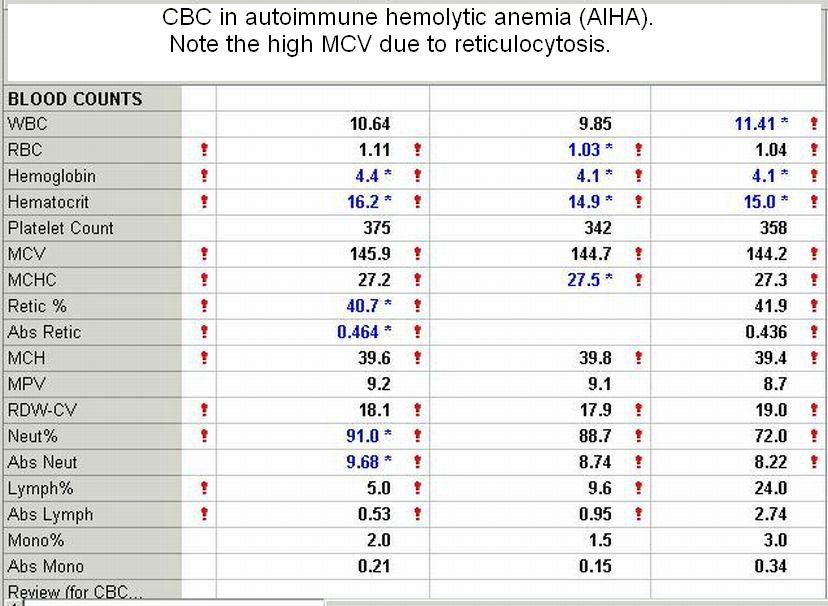

CBC and CMP
What is the most likely diagnosis?
Severe anemia that is symptomatic with fatigue and shortness of breath (SOB).
What are the likely causes of anemia in this patient?
Blood loss?
Hemolytic anemia?
Iron-deficiency?
What laboratory workup would you order? Would you transfuse this patient? How would you treat this patient?
Read the rest of the case here: Hemoglobin 4.2 mg/dL due to Autoimmune Hemolytic Anemia from Clinical Cases and Images.
Keep the feedback coming -- we are listening to you
You can use any comment section under any post or article to submit feedback. All comments are emailed to the editor immediately after you hit the "submit" button. Keep the feedback coming. We are listening to you and our goal is to make the Clinical Cases and Images as useful as possible to all readers around the world.
Submit your own case
Do not forget to use the online form to submit your own case for consideration and inclusion in this collaborative resource which has become the most popular free online case-based curriculum of clinical medicine. You will be credited as an author with each case you submit.
References:
Starting "Case of the Week" Series in Response to Reader Requests. Clinical Cases and Images - Blog, Nov 2008.
Clinical Cases and Images: About Us.
Complete List of Medical Abbreviations and Acronyms.
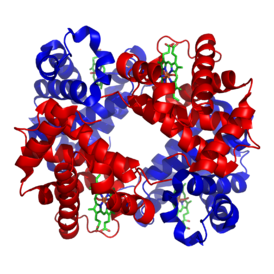
Image source: Structure of human hemoglobin, Wikipedia, GNU Free Documentation License.

Monday, March 30, 2009
Statins may decrease DVT and PE risk
The study authors randomly assigned 17,802 healthy men and women with LDL of less than 130 mg/dL (3.4 mmol/L) and high-sensitivity CRP of 2.0 mg/L or higher to receive rosuvastatin, 20 mg per day, or placebo.
The rates of venous thromboembolism were 0.18 and 0.32 event per 100 person-years of follow-up in the rosuvastatin and placebo groups, respectively (hazard ratio with rosuvastatin, 0.57; P=0.007).
The rates of pulmonary embolism were 0.09 in the rosuvastatin group and 0.12 in the placebo group (hazard ratio, 0.77; 95% CI, 0.41 to 1.45; P=0.42), whereas the rates of deep-vein thrombosis only were 0.09 and 0.20, respectively (hazard ratio, 0.45; P=0.004).
In this trial of apparently healthy persons, rosuvastatin significantly reduced the occurrence of symptomatic venous thromboembolism by 43% (DVT and PE).
NBC video.
References:
A Randomized Trial of Rosuvastatin in the Prevention of Venous Thromboembolism. MEJM, March 29, 2009 (10.1056/NEJMoa0900241).
The rates of venous thromboembolism were 0.18 and 0.32 event per 100 person-years of follow-up in the rosuvastatin and placebo groups, respectively (hazard ratio with rosuvastatin, 0.57; P=0.007).
The rates of pulmonary embolism were 0.09 in the rosuvastatin group and 0.12 in the placebo group (hazard ratio, 0.77; 95% CI, 0.41 to 1.45; P=0.42), whereas the rates of deep-vein thrombosis only were 0.09 and 0.20, respectively (hazard ratio, 0.45; P=0.004).
In this trial of apparently healthy persons, rosuvastatin significantly reduced the occurrence of symptomatic venous thromboembolism by 43% (DVT and PE).
Visit msnbc.com for Breaking News, World News, and News about the Economy
References:
A Randomized Trial of Rosuvastatin in the Prevention of Venous Thromboembolism. MEJM, March 29, 2009 (10.1056/NEJMoa0900241).
Saturday, February 7, 2009
Turning animals into walking drug producers: F.D.A. approves antithrombin from genetically engineered goats
The intravenous therapy, ATryn, is purified from the milk of the genetically engineered goats.
One genetically engineered goat can produce as much antithrombin in a year as can be derived from 90,000 blood donations. GTC Biotherapeutics antithrombin is the first drug from genetically engineered animals.

ATryn. Photo compliments of LEO Pharma. Image source: GTC Biotherapeutics.

Antithrombin monomer drawn from PDB. Image source: Wikipedia, public domain.
Antithrombin (AT) is a small protein molecule that inactivates several enzymes of the coagulation system. It is a glycoprotein produced by the liver and consists of 432 amino acids.

The coagulation cascade. Image source: Wikipedia, GNU Free Documentation License.
Antithrombin is a serine protease inhibitor (serpin) that degrades the serine proteases: thrombin, FIXa, FXa, FXIa, and FXIIa. It is constantly active, but its adhesion to these factors is increased by the presence of heparan sulfate (a glycosaminoglycan) or the administration of heparins (different heparinoids increase affinity to FXa, thrombin, or both).
Quantitative or qualitative deficiency of antithrombin leads to thrombophilia. Hereditary AT deficiency occurs in a small population (approximately 1 in 5,000 people in the United States). The first family suffering from inherited antithrombin deficiency was described in 1965. These patients are at high risk of blood clots during medical interventions, such as surgery, and before, during and after childbirth.
References:
F.D.A. Approves Drug From Gene-Altered Goats. NYT.
GTC Drug Is First From Genetically Engineered Animals. Bloomberg.
Antithrombin, from Wikipedia, the free encyclopedia.
Coagulation, from Wikipedia, the free encyclopedia.
FDA Approves Orphan Drug ATryn to Treat Rare Clotting Disorder. FDA.
One genetically engineered goat can produce as much antithrombin in a year as can be derived from 90,000 blood donations. GTC Biotherapeutics antithrombin is the first drug from genetically engineered animals.

ATryn. Photo compliments of LEO Pharma. Image source: GTC Biotherapeutics.

Antithrombin monomer drawn from PDB. Image source: Wikipedia, public domain.

Antithrombin (AT) is a small protein molecule that inactivates several enzymes of the coagulation system. It is a glycoprotein produced by the liver and consists of 432 amino acids.

The coagulation cascade. Image source: Wikipedia, GNU Free Documentation License.

Antithrombin is a serine protease inhibitor (serpin) that degrades the serine proteases: thrombin, FIXa, FXa, FXIa, and FXIIa. It is constantly active, but its adhesion to these factors is increased by the presence of heparan sulfate (a glycosaminoglycan) or the administration of heparins (different heparinoids increase affinity to FXa, thrombin, or both).
Quantitative or qualitative deficiency of antithrombin leads to thrombophilia. Hereditary AT deficiency occurs in a small population (approximately 1 in 5,000 people in the United States). The first family suffering from inherited antithrombin deficiency was described in 1965. These patients are at high risk of blood clots during medical interventions, such as surgery, and before, during and after childbirth.
References:
F.D.A. Approves Drug From Gene-Altered Goats. NYT.
GTC Drug Is First From Genetically Engineered Animals. Bloomberg.
Antithrombin, from Wikipedia, the free encyclopedia.
Coagulation, from Wikipedia, the free encyclopedia.
FDA Approves Orphan Drug ATryn to Treat Rare Clotting Disorder. FDA.
Subscribe to:
Posts (Atom)