Showing posts with label genetics. Show all posts

Monday, October 22, 2012

Breast cancer awareness: Testing urged, guidelines explained, misconceptions explored

Women with BRCA1 and BRCA2, the
genes most commonly involved in breast
cancer, have up to an 80 percent chance
of getting the disease.
October is Breast Cancer Awareness Month. Although Kentucky's breast cancer rate is slightly lower than the nationwide rate, almost 600 women die every year from breast cancer in the Commonwealth. The American Cancer Society predicts approximately 3,160 new cases of breast cancer will be diagnosed in Kentucky this year. Early detection and prompt treatment can significantly reduce suffering and death from the disease.

According to the Cabinet for Health and Family Services, all health plans serving Kentuckians must, by law, cover mammograms. Medical guidelines strongly recommend that women older than 40 have annual mammograms and women younger than 40 with a family history of breast cancer should also have regular screenings. Through local health departments, the Kentucky Women's Cancer Screening Program provides breast cancer screenings, mammograms and Pap tests to eligible women in every county. During the 2011 fiscal year, KWCSP provided breast cancer screenings to 14,212 women. Services are provided to low-income women through the Kentucky Department for Public Health. Those women must be uninsured with incomes less than 250 percent of federal poverty guidelines.  For more information about breast cancer or screening services, call your local health department.

There are many misconceptions about the risks of developing breast cancer. Genetics, of course, is a well-documented factor but lifestyle issues have gotten a lot of talk. So what's true? Wendy Chen, MD, MPH, a breast cancer expert at Dana-Farber Cancer Institute in Boston, a principal teaching affiliate of Harvard University, tackles some of the more common questions here:

1) Soy may increase the risk of breast cancer returning.
False. Chen, who was part of a study that looked at over 9,500 American and Chinese breast cancer survivors who ate soy every day, says that eating soy may be linked to a lower risk of recurrence of breast cancer.

2) Alcohol consumption can increase the risk of breast cancer.
True. Dana-Farber researchers found that women who consume one alcoholic drink a day may increase their risk for breast cancer.  Chen and her colleagues analyzed data from over 105,000 women in the Nurses’ Health Study. Those who consumed three to six glasses of wine a week were 15 percent more likely to receive a diagnosis of breast cancer. Those who drank fewer than three drinks a week had no increased risk.

3) Fertility treatments increase a woman’s risk of breast cancer.
False. According to a recent study from the National Institutes of Health, ovulation-inducing fertility treatments like Clomid and follicle stimulating hormone (FSH) do not significantly increase a woman's risk of developing breast cancer.

4) Wearing deodorant can increase the risk of breast cancer.
False. According to the National Cancer Institute, there is no conclusive research linking underarm deodorants to breast cancer.

5) The bigger the baby the bigger the risk of getting breast cancer.
Possibly true. “This is a tough one because the research is still evolving,” says Chen. "But the latest research shows that women who have larger babies have more than twice the risk of developing breast cancer than mothers who give birth to smaller infants. Researchers say that having a heavier baby may create a hormonal environment in pregnancy that could lead to the future development of breast cancer. They found that during pregnancy in women who have heavier babies, the ratio of estrogen to anti-estrogen is unusually high. The greater the level of estrogen, the higher the risk of breast cancer. However, Chen emphasizes, women who have larger babies should not panic. There is definitely a need for further research.” (Read more)

Monday, October 1, 2012

UK researcher part of team that has identified Usher Syndrome gene, responsible for genetic loss of sight and hearing in babies

A University of Kentucky physiologist has teamed with researchers from several institutions to report a novel type of gene associated with Usher Syndrome, a hereditary disease that causes individuals to lose both hearing and sight. The work of Gregory Frolenkov, associate professor at the University of Kentucky College of Medicine, and others led by Zubair M. Ahmed from the University of Cincinnati and Cincinnati Children's Hospital Medical Center, is being published in the November 2012 issue of Nature Genetics.

 In the United States, approximately six of every 100,000 babies have Usher Syndrome. About 3 to 6 percent of all children who are deaf and another 3 to 6 percent of children who are hard of hearing have Usher Syndrome. According to the National Institute on Deafness and Other Communication Disorders, parents who have normal hearing and vision usually do not know if they are carriers of an Usher gene mutation. It is not yet possible to determine whether a person who does not have a family history of Usher syndrome is a carrier. Several genes associated with different types of Usher Syndrome have been identified.

Saturday, August 25, 2012

Hospitals can learn from revealing account of the attack of a superbug; sequencing germ's DNA seems to be key

Dr. Tara Palmore, deputy hospital epidemiologist at the
National Institutes of Health Clinic Center, left, and Dr.
Julie Segre, a geneticist with the National Human
Genome Research Institute. Both were integral in
pinpointing the spread of a superbug at NIH.
Associated Press photo by Patrick Semansky.
A candid account of how a superbug was contained at one of the nation's leading research hospitals indicates that fast sequencing of a germ’s full DNA can make all the difference.

Over a six-month period, Klebsiella pneumonia, or KPC, a germ that cannot be treated by most antibiotics, sickened 18 people at the National Institutes of Health. Six of them died and another five, though they survived the effects of the germ, died from the disease that originally brought them to the facility.

Infections at health-care facilities kill about 100,000 Americans each year. But, fearful of lawsuits, hospitals generally don’t reveal to the public when infections outfox control measures, reports Lauran Neergaard for The Associated Press. That changed this week when government researchers published the story of what happened at NIH.

Dr. Julie Segre, a senior investigator at NIH’s National Human Genome Research Institute, was in charge of the “genetic sleuthing that found the bug hiding in sink drains and, most chilling, even in a ventilator that had been cleaned with bleach,” Neergaard reports. A multidrug-resistant strain of Klepsiella bacteria has emerged that spreads easily between patients who are very ill, and it kills half of whomever it sickens.

On June 13, 2011, a research nurse checked the medical records of a study participant who was being transferred from a New York City hospital and was critically ill with a rare lung disease. She found the patient had KPC, prompting the hospital to put her in strict isolation. “Everyone entering her room donned a protective gown and gloves and rigorously washed their hands,” Neergaard reports. “Her medical equipment got special decontamination. All other patients in the intensive care unit had their throats and groins tested regularly to see if the bug was spreading.” All seemed to be clear and the woman was sent home two days later.

But three weeks later, a patient with cancer was found to have KPC, though he was never in the presence of the first patient. Ten days later, a woman with an immune disease also got sick with KPC. Both died from the infection.

Researchers wondered if the cases were related or if the patients were arriving already infected with KPC. Segre turned to DNA for answers. "As bacteria multiply, mistakes appear and are repaired in their genetic codes," Neergaard reports. "Sequencing that genome allowed Segre to follow differences in single genetic letters like a trail of the germ’s transmission and evolution." Using this method, Segre discovered the KPC appearing at NIH was the same strain that came from the New York patient. "Testing bacteria from the 17 additional patients who ultimately caught it shows the KPC was transmitted three separate times from Patient No. 1 and then spread more widely," Neergaard reports.

NIH completely overhauled its decontamination practices, but the bacteria continued to spread. By November, the bacteria appeared in two patients who were not even in intensive care. Finally, the hospital built a new isolation room and all 200-plus patients in the hospital were subject to rectal testing.

The contamination is now contained, but the account of it is giving pause to infection-control specialists around the country. “Absolutely this could happen in any hospital,” said Dr. Deverick Anderson, co-director of a Duke Universityinfection control network. (Read more)

Wednesday, April 18, 2012

The 21 genetic conditions that should be reported by patients if found incidentally during whole-genome sequencing


Illustration: DNA associates with histone proteins to form chromatin. Image source: Wikipedia.

There are no established guidelines on which genetic variants should be presented to physicians as incidental findings from whole-genome sequencing. A recent study showed that genetic specialists agreed that pathogenic mutations for 21 common genetic conditions should be disclosed by patients.

For adult patients

APC-associated polyposis
Fabry disease
Familial hypercholesterolemia
Galactosemia
Gaucher disease
Glycogen storage disease type IA
Hereditary breast and ovarian cancer
Homocystinuria
Li-Fraumeni syndrome
Lynch syndrome
Multiple endocrine neoplasia type 1
Multiple endocrine neoplasia type 2
MYH-associated polyposis
Phenylketonuria
Pompe disease
PTEN hamartoma tumor syndrome
Retinoblastoma
Romano-Ward (long QT syndrome)
Tyrosinemia type 1
Von Hippel-Lindau disease
Wilson disease

For pediatric patients (child)

PTEN hamartoma tumor syndrome
Retinoblastoma
Romano-Ward (long QT syndrome)
Von Hippel-Lindau disease

Collecting family history predicts cancer risk better than 23andMe genetic testing, according to a recent study from the Cleveland Clinic:


References

Exploring concordance and discordance for return of incidental findings from clinical sequencing. Green RC, Berg JS, Berry GT, Biesecker LG, Dimmock DP, Evans JP, Grody WW, Hegde MR, Kalia S, Korf BR, Krantz I, McGuire AL, Miller DT, Murray MF, Nussbaum RL, Plon SE, Rehm HL, Jacob HJ. Genet Med. 2012 Apr;14(4):405-10. doi: 10.1038/gim.2012.21. Epub 2012 Mar 15.

Genome sequencing to add new twist to doctor-patient talks. American Medical Association, 2012.

How to talk to patients about genetic testing  http://goo.gl/kkW4m

Monday, April 9, 2012

Two gene variants identified as risk factors for childhood obesity

The largest ever genome-wide study has identified two new gene variants that increase the risk of common childhood obesity.

"We have definitively identified and characterized a genetic predisposition to common childhood obesity," said lead investigator Struan F.A. Grant, associate director of the Center for Applied Genomics at The Children's Hospital of Philadelphia.

The analysis included 14 previous studies "encompassing 5,530 cases of childhood obesity and 8,300 control subjects, all of European ancestry," reports research-reporting service Newswise.

The study team identified two novel loci, or specific locations of a gene or DNA sequence on a chromosome. One is near the OLFM4 gene on Chromosome 13, the other in the HOXB5 gene on Chromosome 17. There was a degree of evidence for two other gene variants as well. "The known biology of three of the genes hints at a role of the intestine, although their precise functional role in obesity if currently unknown," Newswise reports. (Read more)

Wednesday, January 4, 2012

The Third Component of Genetic Blueprint - Writing in Pen (DNA) vs. Pencil (Epigenetics)

The term epigenetics refers to changes in phenotype (appearance) or gene expression caused by mechanisms other than changes in the underlying DNA sequence, hence the name epi- (Greek: over; above) -genetics. There is no change in the underlying DNA sequence of the organism; the phenotype is expressed by activating some genes while inhibiting others. Epigenetics includes changes in gene function that occur without a change in the sequence of DNA. These changes occur as a result of the interaction of the environment with the genome. Epigenetic determinants activate or silence fetal genes through alterations in DNA, histone methylation and acetylation.


DNA associates with histone proteins to form chromatin. Image source: Wikipedia, GNU Free Documentation License.

From the National Geographic magazine:

"Mother Nature writes some things in pencil and some things in pen. Things written in pen you can't change. That's DNA. But things written in pencil you can. That's epigenetics. Now that we're actually able to look at the DNA and see where the pencil writings are, it's sort of a whole new world."

If you think of our DNA as a piano keyboard and our genes as keys - each key symbolizing a segment of DNA responsible for a particular note, or trait, and all the keys combining to make us who we are - then epigenetic processes determine when and how each key can be struck, changing the tune being played.

Recent studis focuses on a particular epigenetic process called DNA methylation, which is known to make the expression of genes weaker or stronger.

The good news is that some of these processes, unlike our DNA sequences, can be altered. Genes muted by methylation, for example, sometimes can be switched back on again relatively easily. And though it may not happen soon, the hope is that someday epigenetic mistakes will be as simple to repair as a piano that's out of tune.
"


Human chromosomes (grey) capped by telomeres (white). Image source: Wikipedia, public domain.

References:

Twins. National Geographic magazine, 01/2012.
Portrait of twins: series one and series two from National Geographic.
Twins Data Reshaping Nature Versus Nurture Debate. NPR.
Epigenetics, Wikipedia.
Feedback of DNA based risk assessments does not motivate behaviour change - BMJ, 2012 http://goo.gl/3HaRy

Wednesday, March 9, 2011

Collecting family history predicts cancer risk better than 23andMe genetic testing

Collecting family history predicts cancer risk better than 23andMe genetic testing, according to a recent study from the Cleveland Clinic:

As you're sharing fond family memories, don't forget to bring up family health history -- it's the best gift you can give. Dr. Charis Eng comments on a study she led looking at the important role of family history in predicting future disease risk. Whole genome sequencing fails to predict risk of most common diseases, according to BMJ.

Here is the Family Health Portrait Tool by the U.S. Surgeon General: http://buff.ly/zH0N1g

Related reading

Beware the fortune tellers peddling genetic tests - BMJ http://goo.gl/F0DQt
FDA panel: genetic testing should not be available directly to consumers without what amounts to a "prescription". WebMD, 2011. Genetic testing is available for approximately 2000 clinical conditions - Preparing for Precision Medicine - NEJM, 2012. How to talk to patients about genetic testing  http://goo.gl/kkW4m

Comments from Twitter
@23andMe: See our perspective of Cleveland Clinic study - http://bit.ly/c373aj - bottom line is 2 aren't the same, so can't compare h2h. Also, we agree that family history is a very important piece, and believe it complements detailed genetic info.

Wednesday, January 19, 2011

Participation in clean-up of oil spill associated with airway injury and chromosomal damage

In 2002, the oil tanker Prestige spilled more than 67 000 tons of bunker oil, heavily contaminating the coast of northwestern Spain. The study population included local fishermen who were highly exposed (n = 501) or not exposed (n = 177) to oil. They were evaluated 2 years after the spill.

Elevated markers of airway injury

Persons exposed to oil were at increased risk for lower respiratory tract symptoms (risk difference, 8.0). However, lung function did not significantly differ between the groups. Exposed participants also had higher levels of exhaled vascular endothelial growth factor (risk difference, 44.8) and basic fibroblast growth factor (risk difference, 16.0).

Human chromosomes (grey) capped by telomeres (white). Image source: Wikipedia, public domain.

Chromosomal damage

A higher proportion of exposed participants had structural chromosomal alterations (risk difference, 27.4), predominantly unbalanced alterations.

Participation in clean-up of a major oil spill was associated with persistent respiratory symptoms, elevated markers of airway injury in breath condensate, and chromosomal damage.

References:
Health Changes in Fishermen 2 Years After Clean-up of the Prestige Oil Spill. Ann Intern Med, October 19, 2010, vol. 153 no. 8 489-498.

Thursday, January 13, 2011

CDC Discourages Patients from Ordering Personal Genomic Tests


Dr. Khoury comments on the personal genomic tests that consumers can buy on the Internet to measure their genetic risk for multiple diseases.

Direct-to-consumer genomewide profiling to assess disease risk provides information about a person's genetic risk of 20 to 40 common polygenic diseases. The tests simultaneously genotype approximately 500,000 variant bases of a person's DNA. Consumers can purchase these tests, currently priced between $400 and $2,000, on the Internet

Proponents argue that providing this type of information directly to consumers may result in improved compliance with health-screening practices and more healthful lifestyle choices.

Skeptics assert that such testing has the potential to cause harm, including anxiety and increased use of unnecessary and expensive screening and medical procedures.

The clinical validity and utility of these tests have not been demonstrated, and given their cost, many observers argue that their sale raises consumer-protection issues.

In a recent study published in the NEJM, subjects who chose to undergo direct-to-consumer genomewide testing, had no short-term changes in psychological health, diet and exercise behavior, or use of screening tests.

References:
Beware the fortune tellers peddling genetic tests - BMJ http://goo.gl/F0DQt
"Genetic testing eases pain of hypochondria" - BBC  http://goo.gl/IRCPP
Feedback of DNA based risk assessments does not motivate behaviour change - BMJ, 2012 http://goo.gl/3HaRy

Monday, October 11, 2010

Short telomeres lead to chromosomal instability and increased cancer risk and mortality

Telomeres are essential to preserve the integrity of the genome. Critically short telomeres lead to replicative cell senescence and chromosomal instability and may thereby increase cancer risk.

Leukocyte telomere length was measured by quantitative polymerase chain reaction in 787 participants free of cancer at baseline in 1995 from a prospective, population-based study in Italy. The follow-up period was 10 years.

Human chromosomes (grey) capped by telomeres (white). Image source: Wikipedia, public domain.

11.7% of participants developed cancer (incidence rate, 13.3 per 1000 person-years).

Short telomere length at baseline was associated with incident cancer independently of cancer risk factors (hazard ratio [HR] 1.60).

Compared with participants in the longest telomere length group, the HR for incident cancer was 2.15 in the middle length group and 3.11 in the shortest length group. Furthermore, short telomere length was associated with cancer mortality and individual cancer subtypes with a high fatality rate.

There is an inverse relationship between telomere length and both cancer incidence and mortality.

References:
Telomere Length and Risk of Incident Cancer and Cancer Mortality. Peter Willeit, MD; Johann Willeit, MD; Agnes Mayr, MD; Siegfried Weger, MD; Friedrich Oberhollenzer, MD; Anita Brandstätter, PhD; Florian Kronenberg, MD; Stefan Kiechl, MD. JAMA. 2010;304(1):69-75.

Wednesday, August 18, 2010

DNA Is a Doctor's Best Friend

The Director of the National Institutes of Health (NIH):

"It did affect me to find out that I was at risk for diabetes, which I had no family history of. But my family has all been extremely lean and I was not so lean, as I discovered when I got this information," Collins says.

The "wake-up call" led Collins to switch up his diet and start an exercise program.

His efforts helped him drop 25 pounds.

That impact on behavior is far from universal though. Feedback of DNA based risk assessments does not motivate behaviour change, found a recent BMJ study: http://goo.gl/3HaRy


Human chromosomes (grey) capped by telomeres (white). Image source: Wikipedia, public domain.

References:

Wednesday, August 11, 2010

Video Lecture: Anne Wojcicki from 23andMe Personal Genomics


Direct link here.

23andMe is a personal genomics company based in Mountain View, California that is analyzes saliva samples for genetic information (the average cost for the service is decreasing and is currently $399-$499).

The company name is a play on the 23 pairs of chromosomes that carry every individual’s DNA. 23andMe was co-founded by Anne Wojcicki, wife of Google co-founder Sergey Brin.

"Genes load the gun. Lifestyle pulls the trigger" - Dr. Elliot Joslin.

Whole genome sequencing fails to predict risk of most common diseases, according to BMJ.

Related reading:

Genetic testing is available for approximately 2000 clinical conditions - Preparing for Precision Medicine - NEJM, 2012.

How to talk to patients about genetic testing  http://goo.gl/kkW4m

Monday, February 8, 2010

Faces of America - PBS Series


Faces of America premieres nationally Wednesdays, February 10 - March 3, 2010 on PBS: "What made America? What makes us? These two questions are at the heart of the new PBS series Faces of America with Henry Louis Gates, Jr. who turns to the latest tools of genealogy and genetics to explore the family histories of 12 renowned Americans."

Monday, October 5, 2009

Discovery of telomeres and how they protect chromosomes wins 2009 Nobel Prize for medicine

Three US scientists have won the Nobel Prize for discovering telomeres and how they protect chromosomes from degradation http://bit.ly/2TQ0aF

One of the 3 scientists is Elizabeth Blackburn - see her Google talk embedded below http://bit.ly/3EqJBF


Molecular biologist Elizabeth Blackburn was selected as one of Time magazine's 100 "Most Influential People in the World" in 2007 because of her groundbreaking work on telomeric DNA, which launched the field of telomere research.

On August 18th, 2008, Google welcomed Elizabeth Blackburn to give a one-hour talk at their San Francisco office.

Related:
"Why Immortality Is a Bad Thing" - presence of lots of telomerase is associated with the development of cancer http://bit.ly/ayCtr

Updated: 10/06/2009

Sunday, April 12, 2009

TED Video: An introduction to genomics


Barry Schuler: An introduction to genomics

"What is genomics? How will it affect our lives? In this intriguing primer on the genomics revolution, entrepreneur Barry Schuler says we can at least expect healthier, tastier food. He suggests we start with the pinot noir grape, to build better wines."

Barry Schuler is former chairman and CEO of America Online Inc.

Related reading:

Genetic testing is available for approximately 2000 clinical conditions - Preparing for Precision Medicine - NEJM, 2012.

Feedback of DNA based risk assessments does not motivate behaviour change - BMJ, 2012 http://goo.gl/3HaRy

Saturday, February 7, 2009

Turning animals into walking drug producers: F.D.A. approves antithrombin from genetically engineered goats

The intravenous therapy, ATryn, is purified from the milk of the genetically engineered goats.

One genetically engineered goat can produce as much antithrombin in a year as can be derived from 90,000 blood donations. GTC Biotherapeutics antithrombin is the first drug from genetically engineered animals.


ATryn. Photo compliments of LEO Pharma. Image source: GTC Biotherapeutics.


Antithrombin monomer drawn from PDB. Image source: Wikipedia, public domain.

Antithrombin (AT) is a small protein molecule that inactivates several enzymes of the coagulation system. It is a glycoprotein produced by the liver and consists of 432 amino acids.


The coagulation cascade. Image source: Wikipedia, GNU Free Documentation License.

Antithrombin is a serine protease inhibitor (serpin) that degrades the serine proteases: thrombin, FIXa, FXa, FXIa, and FXIIa. It is constantly active, but its adhesion to these factors is increased by the presence of heparan sulfate (a glycosaminoglycan) or the administration of heparins (different heparinoids increase affinity to FXa, thrombin, or both).

Quantitative or qualitative deficiency of antithrombin leads to thrombophilia. Hereditary AT deficiency occurs in a small population (approximately 1 in 5,000 people in the United States). The first family suffering from inherited antithrombin deficiency was described in 1965. These patients are at high risk of blood clots during medical interventions, such as surgery, and before, during and after childbirth.

References:
F.D.A. Approves Drug From Gene-Altered Goats. NYT.
GTC Drug Is First From Genetically Engineered Animals. Bloomberg.
Antithrombin, from Wikipedia, the free encyclopedia.
Coagulation, from Wikipedia, the free encyclopedia.
FDA Approves Orphan Drug ATryn to Treat Rare Clotting Disorder. FDA.

Thursday, February 5, 2009

Video: Interview with Co-Founder of 23AndMe Personal Genomics Company


LeWeb'08 Video: Interview with Linda Avey, Co-Founder, 23AndMe, Inc. (19 minutes).

23andMe is a personal genomics and biotechnology company based in Mountain View, California that is developing new methods which can enable consumers to understand their own genetic information.


Human chromosomes (grey) capped by telomeres (white). Image source: Wikipedia, public domain.

The company name is a play on the 23 pairs of chromosomes that carry every individual’s DNA. 23andMe was co-founded by Anne Wojcicki, wife of Google co-founder Sergey Brin, and Linda Avey.

Whole genome sequencing fails to predict risk of most common diseases, according to BMJ.

References:

You Can Carry Your Genome Information on an iPhone?
23andMe, from Wikipedia, the free encyclopedia.
Mike Arrington posted his 23andMe DNA Results.
Genetic testing is available for approximately 2000 clinical conditions - Preparing for Precision Medicine - NEJM, 2012.

Tuesday, December 30, 2008

A Roger Ballen’s photograph and the search for genetic diagnosis

The blogger PrecordialThump asks: "Like many of Roger Ballen’s photographs this leaves me speechless… One of his many gritty portrayals of the human condition. Diagnosis anyone?"

The Roger Ballen's Platteland photograph from 1993 has been posted multiple times on the web and many visitors have tried to find the likely diagnosis behind the brothers' striking appearance: "it isn’t enough that the twin brothers Dresie and Casie possess wildly protruding ears and tree trunk like necks but Ballen photographs them with gossamer like drool dripping from their thick pouting lips."

Berci Mesko, a future geneticis, seems to have found the correct answer - Fragile X syndrome.

Fragile X (FXS), or Martin-Bell syndrome is a genetic syndrome caused by mutation of the FMR1 gene on the X chromosome (increased CGG repeats). Escalante's syndrome is synonymous with the fragile X syndrome. This term has been used in Brazil and other South American countries. Fragile X is the most common form of inherited mental retardation.


Prominent characteristics of Fragile X syndrome include an elongated face, large or protruding ears, and low muscle tone. Image source: Wikipedia, Free Art License.

About 1 in 4000 males and 1 in 6000 to 8000 females have Fragile X syndrome.

What is "fragile" in Fragile X syndrome?

In 1969 Chris and Weesam first sighted an unusual "marker X chromosome" in association with mental disability. In 1970 Frederick Hecht coined the term "fragile site."


Location of FMR1 gene on the X chromosome. Image source: Wikipedia, public domain.

Aside from intellectual disability, prominent characteristics of the syndrome include an elongated face, large or protruding ears, flat feet, larger testicles in men (macroorchidism), and low muscle tone. Speech may include cluttered speech or nervous speech. Behavioral characteristics may include stereotypic movements (e.g., hand-flapping) and atypical social development, particularly shyness and limited eye contact.


Video by FRAXA - Fragile X Research Foundation.

References:
Roger Ballen, from Wikipedia, the free encyclopedia.
Roger Ballen's photos on Google Image Search.
Fragile X syndrome, from Wikipedia, the free encyclopedia.
Fragile X Syndrome. Genetics Modules, Duke.edu.
Image source: Dresie And Casie, Western Transvaal, 1993, by Roger Ballen, Guardian, UK.

Tuesday, August 19, 2008

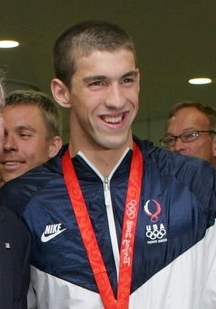
Does Michael Phelps have Marfan syndrome?

Michael Phelps holds the record for the most gold medals won at a single Olympics, a total of eight, and is arguably the best Olympic athlete ever.

With all NBC ads about "giant feet" and the highly publicized facts about his physical features, some of my colleagues pointed out that Mr. Phelps has quite a few features of Marfan syndrome.

His height is 6'4" and his arm span of 6'7" is greater than his height. According to Cleveland Leader, "that is a ratio of 1.04, which is just shy of the clinical cutoff of 1.05. He is also said to have hypermobile joints in his knees, shoulders and ankles." Mr. Phepls also has large hands and feet. Marfan syndrome is an inherited connective-tissue disorder which presents with tall stature, ectopia lentis, mitral valve prolapse, aortic root dilatation, and aortic dissection.

In his book, "Michael Phelps: Beneath the Surface" written by both Phelps and Brian Cazeneuve, he writes about the scare of the possible diagnosis of Marfan syndrome:
"My heart rate was accelerating and Bob suggested I see the doctor. Because I was very flexible and had long hands and feet. I had some early symptoms of Marfan Syndrome, a disease that affects connective tissues and can be fatal if there is leakage to the vessels that lead to the heart. If you reach out your arms and form a T and your wingspan is longer than your height, you can be at risk. In my case, those measurements have always been very close. I didn't know at the time why the doctor decided to look into this. My mom and Bob didn't want me to freak out, so they told me it was simply a good idea for young athletes to have an EKG test in order to look at the heart.

Fortunately everything was, and still is, okay. I have been tested once a year ever since at John's Hopkins under the direction of Dr. Peter Roe and the tissues are strong, the aortic rout is clear and my heart is in good shape - as long as my Baltimore Ravens are winning."
From page 66, Michael Phelps: Beneath the Surface, Google Books.

From the description above, it looks like Michael Phelps does not fulfill the criteria of a full-blown Marfan syndrome according to his doctors. If he were to have Marfan syndrome however, strenuous exercise would be generally contraindicated according to the American Heart Association.

The Age/Yahoo comments on "another bodily trait might also have helped transform Phelps into the perfect, indefatigable swimming machine. In sixth grade, the Maryland native was diagnosed with Attention Deficit and Hyperactivity Disorder and prescribed Ritalin to curb his near boundless energy.

After growing frustrated with the drowsiness caused by the drug, Phelps turned to sport, where the symptoms that so agitated teachers greatly impressed coaches.

"I had so many outlets for energy release. I'd go from a lacrosse game to a baseball game to swim practice," he wrote."

We all want our heroes to be perfect but they never are. Their biggest strength however lies in overcoming their own shortcomings and giving inspiration for millions around the world to do the same.

Image source: Wikipedia, public domain.

Related reading:
Joint hypermobility syndrome: Easily Missed? BMJ, 2011.
Phelps: Since age 7, "I've spent 20 years in the pool". He will retire after 2012 Olympics, plans to avoid water http://goo.gl/Rjzzm

Friday, August 15, 2008

A Surgeon and Genetics: "What I cannot see does not exist. So forget about genetics!"

Berci Mesko is a 6th year medical students in Hungary with a passion for genetics and Web 2.0. He reports mini-impressions of his surgery rotation on Twitter:

One of the surgeons told me tonight: "What I cannot see does not exist. So forget about genetics!"

Well, I'm not so sure -- consider this link:

Colorectal Cancer Gene Mutation Found. Odds of Developing Colorectal Cancer May Be 9 Times Higher for Mutation Carriers. WebMD.

"The mutation, which lies in a gene called TGFBR1, was found in about 10% to 20% of the 242 colorectal cancer patients the researchers studied, compared to 3% of 195 adults without colorectal cancer.

The researchers aren't recommending TGFBR1 gene tests just yet. But such tests "may become part of clinical practice when evaluating a patient's colon cancer risk."

There is a relationship between genetics and surgery after all.

Disclaimer: The author greatly respects surgery and surgeons.

Image source: Stomach diagram, Wikipedia.