Showing posts with label Perioperative. Show all posts

Wednesday, August 22, 2012

Managing perioperative risk in patients undergoing elective non-cardiac surgery - BMJ review

Non-cardiac surgery has a low overall mortality but is associated with a large number of deaths because so many procedures are performed (250 million major surgical procedures worldwide per year).

Assuming a hospital mortality rate of 1%, non-cardiac surgery will be associated with 2.5 million deaths worldwide each year and complication rates at least five times this figure.

15% of people who undergo inpatient surgery are at high risk of complications, such as pneumonia or myocardial infarction.

Most deaths occur in a group of patients who are at high risk because of:

- advanced age
- comorbid disease
- major surgery

High risk surgical patients account for 80% of all perioperative deaths.

Further research is needed to identify the most effective approaches to perioperative medicine for high risk patients.

References:

Managing perioperative risk in patients undergoing elective non-cardiac surgery. BMJ 2011; 343 doi: 10.1136/bmj.d5759 (Published 5 October 2011), Cite this as: BMJ 2011;343:d5759

Image source: Wikipedia

Monday, April 2, 2012

Blood Management Summit and App - Transfuse 2012

Announcement: Blood Management Summit - Transfuse 2012 will be held on April 19-20, 2012 at the JW Marriott in Scottsdale, Arizona.

This conference has been developed with collaboration between Mayo Clinic and Hartford Hospital, building upon the success of three previous national conferences. "Transfuse 2012" is a unique multi-disciplinary conference focused on exploring the current state-of-the-art techniques and programs to reduce allogeneic blood utilization in hospitals. This international conference will feature national and international blood management experts from China, New Zealand and Australia along with a unique iPad app launch and one-of-a-kind hands-on animal lab.

Mayo Clinic's Mark H. Ereth, M.D. introduces the conference and the iPad app in this 3-minute video:


This conference is designed for all physicians, including surgeons and anesthesiologists, perfusionists, nurses and leaders in quality and patient safety. The conference is a CME accredited activity for physicians, nurses and perfusionists.

The Conference Website is: http://www.mayo.edu/cme/anesthesiology-2012r780

One of the course directors is Dr. Ajay Kumar, Chief of Division of Hospital Medicine at Hartford Hospital, and a good friend of mine. Another friend from the time I worked at Cleveland Clinic is also on faculty, Dr. Moises Auron.

It should be a great conference. Go check it out.

Monday, June 7, 2010

Oral factor Xa inhibitor apixaban - more effective than enoxaparin for thromboprophylaxis after knee replacement

Low-molecular-weight heparins such as enoxaparin are preferred for prevention of venous thromboembolism after major joint replacement. Apixaban, an orally active factor Xa inhibitor, might be as effective, have lower bleeding risk, and be easier to use than is enoxaparin.

The primary outcome in this Lancet study was the composite of asymptomatic and symptomatic deep vein thrombosis (DVT), non-fatal pulmonary embolism (PE), and all-cause death during treatment. The primary outcome was reported in 15% of apixaban patients and 24% of enoxaparin patients (relative risk 0·62), absolute risk reduction 9·3%.

Major or clinically relevant non-major bleeding occurred in 4% of patients receiving apixaban and 5% of treated with enoxaparin.

The authors concluded that apixaban 2·5 mg twice daily, starting on the morning after total knee replacement, offers a convenient and more effective orally administered alternative to 40 mg per day enoxaparin, without increased bleeding.

References:
Image source: Apixaban, Wikipedia, public domain.

Wednesday, April 7, 2010

Eradication of nasal colonization with S. aureus associated with a decrease in postoperative surgical-site infections

Nasal carriers of Staphylococcus aureus are at increased risk for health care–associated infections with this organism.

Eradication of colonization with S. aureus by screening at admission and subsequent decolonization (with intranasal mupirocin and chlorhexidine skin washes) were associated with a decrease in postoperative surgical-site infections.

In a randomized, double-blind, placebo-controlled trial, S. aureus nasal carriers were treated with mupirocin nasal ointment and chlorhexidine soap.

A total of 6771 patients were screened on admission, 1270 nasal swabs from 1251 patients were positive for S. aureus. All the S. aureus strains identified on PCR assay were susceptible to methicillin and mupirocin.

The rate of S. aureus infection was 3.4% in the mupirocin–chlorhexidine group, as compared with 7.7% in the placebo group (relative risk of infection, 0.42). The effect of mupirocin–chlorhexidine treatment was most pronounced for deep surgical-site infections (relative risk, 0.21).

References:
Preventing Surgical-Site Infections in Nasal Carriers of Staphylococcus aureus. NEJM, 1/2009.
GIANTmicrobes in Toys & Games section of Amazon.com http://goo.gl/gMrf

Wednesday, March 31, 2010

Anesthesia 2.0: Web 2.0 in anesthesia education

Educators in all specialties of medicine are increasingly studying Web 2.0 technologies to maximize postgraduate medical education.

Web 2.0 technologies include:

- microblogging
- blogs
- really simple syndication (RSS) feeds
- podcasts
- wikis
- social bookmarking and networking

Although direct practice and observation in the operating room are essential, Web 2.0 technologies hold promise to innovate anesthesia education and clinical practice such that the resident learner need not be in a classroom for a didactic talk, or even in the operating room to see how an arterial line is properly placed.

Web 2.0 and advanced informatics resources will be part of physician lifelong learning and clinical practice.

References:
Anesthesia 2.0: Internet-based information resources and Web 2.0 applications in anesthesia education. Chu LF, Young C, Zamora A, Kurup V, Macario A. Curr Opin Anaesthesiol. 2010 Jan 19. [Epub ahead of print]
http://www.ncbi.nlm.nih.gov/pubmed/20090518
Image source: Wikipedia.

Thursday, March 4, 2010

The 2010 Annual Perioperative Medicine Summit Starts Today

The annual Perioperative Medicine Summit 2010 starts on March 4 in Miami:

http://periopmedicine.org and @PeriopSummit

I maintain their website for the University of Miami and Cleveland Clinic, and help with the Twitter account, hosting of PDF handouts, videos, etc.

Dr. Jaffer, Chief of Division of Hospital Medicine and Summit Director will text his own tweets at http://twitter.com/PeriopSummit

Expect multiple free handouts posted on the front page of the summit website during March 4-6, 2010 and clinical pearls and discussions on Twitter: http://periopmedicine.org and @PeriopSummit

Program and Abstracts of the 5th Annual Perioperative Medicine Summit 2010

Summit Brochure


Summary

Dr. Amir K. Jaffer and Dr. Franklin Michota, the founding Summit Directors, in collaboration with Dr. David Hepner, will direct the 5th Annual Perioperative Medicine Summit in Miami, Florida.

The course is co-sponsored by the University of Miami Miller School of Medicine and the Cleveland Clinic in collaboration with the Society for Perioperative Assessment and Quality Improvement (SPAQI).

The goal of the Summit is to enable clinicians who are actively engaged in perioperative medical care to incorporate the latest findings from clinical research into their practices so that they can improve the quality and safety of their medical care.

Map of the Meeting Location


View Larger Map
Map of Eden Roc Resort

Friday, February 5, 2010

Perioperative Practice: Time to Throttle Back?

From the Annals of Internal Medicine:

The United States spends more on health care than other nations, yet our health outcomes remain inferior to those of many countries.

Many "accepted" perioperative practices conflict with the evidence, for example:

- Routine perioperative stress testing provides no diagnostic yield in patients at low risk for cardiac events
- Indiscriminate perioperative therapy with β-blockers can increase mortality in otherwise stable patients

Perioperative tests and treatments improve outcomes only when targeted at specific patient subsets. Implementation of the American College of Cardiology/American Heart Association perioperative guidelines ensures cost-effective management and promises the greatest benefit for patients.

References:
Perioperative Practice: Time to Throttle Back. Chopra, V., Flanders, S. A., Froehlich, J. B., Lau, W. C., Eagle, K. A. Ann of Int Med, 2009.
Image source: Wikipedia, public domain.

Friday, April 3, 2009

Presentations on Topics in Perioperative Medicine

You may be aware that I am the editor of the website of the annual Perioperative Medicine Summit by the University of Miami, Cleveland Clinic and Society for Perioperative Assessment and Quality Improvement.

The presentations below are authored by my good friend Dr. Auron from the Cleveland Clinic. The huge building in the slide background is the new cardiac center - "the largest single-use medical building in the world."


Wednesday, September 17, 2008

Anouncement: 4th Annual Perioperative Medicine Summit

The Annual Perioperative Summit is one of the premier educational conferences in the field of perioperative medicine. Since the first 3 summits were hosted at the Cleveland Clinic, Dr. Amir Jaffer, the conference founder, accepted a leadership position at the University of Miami last year, and is happy to announce that the 4th Annual Perioperative Medicine Summit will take place at Eden Roc Resort in Miami Beach, Florida, February 5-7, 2009.

The summit is a collaborative project between the University of Miami, Cleveland Clinic and the Society for Perioperative Assessment and Quality Improvement (SPAQI).

I am the webmaster of the summit website PeriopMedicine.org where you can find more information regarding the event and check photos and videocasts from the previous summits. The proceedings and abstracts published in the Cleveland Clinic Journal of Medicine are also linked on the website.

My experience as a faculty and committee member, and as a participant in the summit has always been excellent and I would highly recommend it.

Click here for the information brochure in PDF format (1.6 MB). Register at the CME website of the University of Miami.

Map of the Meeting Location


View Larger Map
Map of Eden Roc Resort

Photos from 3rd Annual Perioperative Medicine Summit at Cleveland Clinic


Click on the photos for full-size images.

Related:
Photos from 3rd Annual Perioperative Medicine Summit at Cleveland Clinic
Cleveland Clinic Perioperative Medicine Summit. CasesBlog, 2006.
Available Online: Proceedings of Cleveland Clinic Perioperative Medicine Summit in CCJM. CasesBlog, 2007.
Clinical Cases and Images: Preoperative Care of Patients with Kidney Disease.

Thursday, June 26, 2008

Oral Rivaroxaban signals the beginning of the end of Lovenox use for DVT prophylaxis

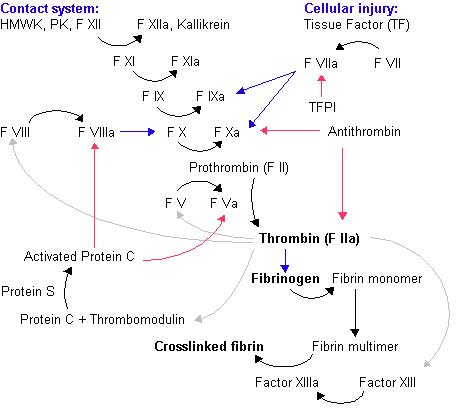
Rivaroxaban is an oral anticoagulant under development by Bayer; it will be marketed as Xarelto. It acts by inhibiting the active form of coagulation factor X (factor Xa).


Fig 1. The coagulation cascade. Legend: Black arrow = conversion/activation of factor. Red arrows = action of inhibitors. Blue arrows = reactions catalysed by activated factor. Grey arrow = various functions of thrombin. Image source: Wikipedia

According to 2 NEJM studies, a once-daily, 10-mg oral dose of rivaroxaban was significantly more effective for extended thromboprophylaxis than a once-daily, 40-mg subcutaneous dose of enoxaparin (Lovenox) in patients undergoing elective total and knee and hip arthroplasty. The two drugs had similar safety profiles.

Due to the decreased need for monitoring, rivaroxaban is likely to be used to replace warfarin for a number of indications, such as atrial fibrillation.

A related drug, ximelagatran, a direct thrombin inhibitor, was not marketed further due to its potential side-effects, mainly liver toxicity.

Oral rivaroxaban is non-inferior to standard therapy for symptomatic pulmonary embolism (PE) and DVT (NEJM, 2012).

References:

Rivaroxaban versus Enoxaparin for Thromboprophylaxis after Total Knee Arthroplasty. NEJM, 06/2008.
Rivaroxaban versus Enoxaparin for Thromboprophylaxis after Hip Arthroplasty. NEJM, 06/2008.

Related:

An oral anticoagulant in the pipeline. Notes from Dr. RW: Was Lovenox dose intentionally too low (40 mg sq qd instead of 30 mg sq bid)?

Wednesday, April 2, 2008

Mnemonic for Revised Cardiac Risk Index: 4CD

The ACC/AHA 2007 Guidelines on Perioperative Cardiovascular Evaluation and Care for Noncardiac Surgery replaced the intermediate-risk category for patient risk with the factors from the Revised Cardiac Risk Index. I had to adjust my PAST mnemonic accordingly - generally speaking, there are 4 major variables in the preoperative evaluation, remembered by the mnemonic PAST:

Patient risk
Activity level - measured in METs
Surgical risk
Test (stress test) or Treat (beat-blocker)?

Revised Cardiac Risk Index (Circulation. 1999;100:1043-1049):

High-risk type of surgery
Ischemic heart disease
History of congestive heart failure
History of cerebrovascular disease
Insulin therapy for diabetes
Preoperative serum creatinine >2.0 mg/dL

4CD is a mnemonic to remember the risk factors in RCRI:

CAD
CHF
CVA
CKD
DM

References:
ACC/AHA 2007 Guidelines on Perioperative Cardiovascular Evaluation and Care for Noncardiac Surgery: Executive Summary. Circulation, 2007.
Preoperative Care of Patients with Kidney Disease. Clinical Cases and Images.
Medical Mnemonics

Tuesday, February 12, 2008

Does atelectasis cause postoperative fever?

Postoperative fever is very common and occurs in 14-90% of surgical patients depending on how fever was defined in different studies and patient population. The incidence of infection in patients with postoperative fever is less than 10%. Fever on postoperative day 1 is most often a nonspecific response to the injury at the surgical site. Trauma leads to release pyrogenic cytokines, such as interleukins, tumor necrosis factor, and interferon-γ.

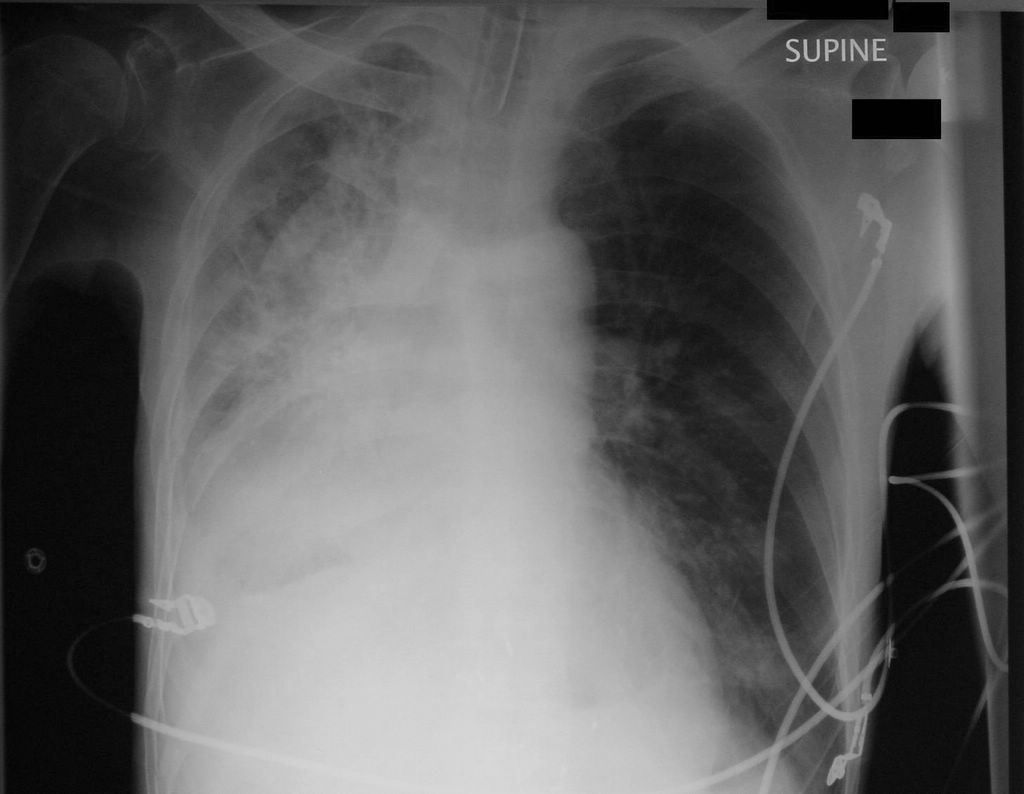
Atelectasis is defined as a state in which the lung, in whole or in part, is collapsed or without air (see the CXR below). Etymology: from Greek atelēs, incomplete, defective (telos, end) and ektasis, extension, from ekteinein to stretch out.


Right lung atelectasis with mediastinal shift. ETT ends at the level of clavicles. The optimal position is in the middle between the clavicles and the carina. This ETT needs to be advanced 2 cm. Image source: Atelectasis due to Hypoventilation and Mucus Plug. Clinical Cases and Images.

Does atelectasis cause postoperative fever?

Atelectasis does not cause fever, despite common misconception to the contrary. A study of 100 cardiac surgery patients evaluated them for 2 days after surgery with daily portable CXRs and continuous temperature measurements. During the study period, the incidence of fever progressively decreased while that of atelectasis increased, showing a negative correlation between them. Atelectasis and fever occur frequently after surgery, but their concurrence is probably coincidental rather than causal.

Incentive spirometry is used to prevent or treat atelectasis after surgery.

When evaluating postoperative fever, a helpful mnemonic is the “5 Ws”:
  • Wind (pulmonary causes: pneumonia, aspiration, and pulmonary embolism, but not atelectasis)
  • Water (urinary tract infection)
  • Wound (surgical site infection)
  • Walking limited (deep vein thrombosis or pulmonary embolism)
  • “What did we do?” (iatrogenic causes: drug fever, blood product reaction, infections related to intravenous lines)
References:
1. Evaluating postoperative fever: A focused approach. J. Pile. Clev Clin J Med. Vol. 73, Suppl. 1, Mar 2006.
2. Postoperative fever. H. Weed, L. Baddour. UpToDate 2006, Version 14.2, Sep 15, 2005.

Thursday, November 8, 2007

POISE trial seems poised to change perioperative guidelines for beta blocker use

According to the trial, perioperative beta blockers may decrease the incidence of myocardial infarction but the survival benefits are offset by the increase in strokes.

The study principal investigator, Dr Philip J Devereaux (McMaster University, Hamilton, ON), said he was unable to determine who would be at risk and who would benefit from perioperative beta-blocker use at this stage, but added, "I certainly would not recommend it to my mother."

There was a decrease in nonfatal MI ( 3.6% versus 5.1%) but there were more strokes in the beta-blocker group ( 1.0% versus 0.5%) and a greater total mortality in the treatment arm (3.1 % versus 2.3 %).

Our current practice at Cleveland Clinic is to start long-acting beta-blockers 2-4 weeks prior to noncardiac surgery in patients with Revised Cardiac Risk Index (RCRI) score higher than 2-3 and continue for 2-4 weeks after surgery. We may need to reevaluate practice in the light of the new data from the POISE trial.

Andy Auerbach of UCSF describes how he would change his prescribing pattern regarding perioperative beta-blockers in a post on Wachter's World:

"How is my practice today different than it was before last week? I’ll continue the beta blockers for my patient who was on them previously, I’m more likely to recommend starting beta blockers a couple of weeks before surgery in high risk patients, and I’m less likely to prescribe perioperative beta blockers in the intermediate risk pre-op patient (in whom I might now perform some testing to better define the true risk). I’m also less likely to use a high dose to start, or to titrate up the beta blocker dose for tachycardia unless I am certain that I’m not treating tachycardia due to hypovolemia, bleeding, or infection first."

What other medications can be used to decrease cardiovascular risk in the perioperative period?

Statins looks promising. Researchers from Cleveland Clinic just presented an abstract on the topic at the AHA meeting where the POISE trial results were announced. The retrospective study included more than 5,200 patients who underwent coronary bypass (CABG). Treatment with statins after CABG seemed to reduces a stroke risk.

One of the co-authors of the study is Dr. Peter Zimbwa with whom I am lucky to share an office here at Cleveland Clinic. Peter is a remarkable physician and researcher, and his resume is as impressive as his titles -- he has MD, MSc, PhD, MRCP, DTM (just to name a few).

Dr. R.W. Donnell has commented on the projected benefits of statin use in the perioperative period: "look for statins to emerge as the “next beta blockers” for perioperative treatment in the coming years."

References:
POISEd to change the guidelines on perioperative use of beta blockers? The Heart.org.
AHA: Surgery with Beta-Blockers Onboard May Be Risky. MedPage Today.
Peri-operative beta-blockers- A quality indicator or a bad idea? Retired doc's thoughts.
Peri-operative Beta-blockers: Much room for evidence still exists! BMJ.
Perioperative beta blockers may not benefit patients with diabetes (if not used properly)
Case 2: Does this patient need a beta-blocker?
Continue statins as seamlessly as possible before and after vascular surgery. Notes from Dr. RW.
Perioperative beta blockers: not so fast! Notes from Dr. RW.
Three Remarkable Articles Last Week. Wachter's World, 11/2007.
Perioperative Beta Blockers, Redux. Wachter's World, 11/2007.
Image source: OpenClipArt.org, public domain.

Updated 11/16/2007

Saturday, October 6, 2007

Photos from 3rd Annual Perioperative Medicine Summit at Cleveland Clinic


Click on the photos for full-size images.

The 3rd Annual Perioperative Medicine Summit took place at the main campus of the Cleveland Clinic, September 10-12, 2007 and was a remarkable success. Proceedings from the summit were published in a supplement of the Cleveland Clinic Journal of Medicine and are indexed by Pubmed.

The 4th Annual Perioperative Medicine Summit will take place in Miami Beach, Florida, February 5-8, 2009. The summit will be a collaborative project between University of Miami, Cleveland Clinic and Society for Perioperative Assessment and Quality Improvement.

I made the web site for summit earlier this year -- PeriopMedicine.org, and was on the abstract committee during the last 2 summits.

The new guidelines for perioperative evaluation for noncardiac surgery were published last week: ACC/AHA 2007 Guidelines on Perioperative Cardiovascular Evaluation and Care for Noncardiac Surgery: executive summary and full text.

Related:
Cleveland Clinic Perioperative Medicine Summit. CasesBlog, 2006.
Available Online: Proceedings of Cleveland Clinic Perioperative Medicine Summit in CCJM. CasesBlog, 2007.
Clinical Cases and Images: Preoperative Care of Patients with Kidney Disease.

Monday, August 13, 2007

Should mesalamine be stopped prior to noncardiac surgery to avoid bleeding complications?

A 53-year-old Caucasian male with a past medical history of Crohn's disease, hypertension, hypercholesterolemia, osteoarthritis and atrial fibrillation takes mesalamine (Asacol) to control his diarrhea. His other medications include atenolol, warfarin and simvastatin. He also takes oxycodone and acetaminophen prn for hip pain. The physical examination is normal apart from irregularly irregular cardiac rhythm. The electrocardiogram shows atrial fibrillation with heart rate of 67 beats per minute. His exercise tolerance corresponds to 6 METs.

The patient is seen by an internal medicine physician for preoperative evaluation one week prior to surgery for total knee replacement for osteoarthritis of the left hip.

The patient inquires whether she should stop mesalamine to avoid bleeding complications during surgery. His primary care physician told him that non-steroidal anti-inflammatory drugs (NSAIDs) may increase the bleeding risk.

Should we stop mesalamine to avoid bleeding complications during surgery?

No.

Mesalamine (Asacol) does not affect platelets the same way aspirin and other NSAIDs do.

According to one study, there was not effect on platelet aggregation during normal treatment with 5-aminosalicylic acid when given at a dose of 1.5 gm po qd or even after IV administration. All in vivo and in vitro tests were negative for inhibition of platelet aggregation in contrast to the inhibition seen with aspirin (acetylsalicylic acid). Authors concluded that treatment with mesalazine does not constitute a hazard to patients with IBD in regard to prolonged bleeding time caused by an influence on platelet aggregation or fibrinolytic activity.

This is one of the series of perioperative questions I will answer on this web site. They will be submitted as clinical vignettes to the Cleveland Clinic Annual Perioperative Summit next year. This year's summit is in September and several of the perioperative cases in nephrology will be presented as posters and published as abstracts in the Cleveland Clinic Journal of Medicine.

References:
Lack of effect of 5-aminosalicylic acid on platelet aggregation and fibrinolytic activity in vivo and in vitro. Winther K, Bondesen S, Hansen SH, Hvidberg EF. Eur J Clin Pharmacol. 1987;33(4):419-22.
Image source: Wikipedia, Free Documentation License.

Updated: 12/14/2009

Thursday, August 2, 2007

Clinical case: Should we stop raloxifene (Evista) prior to surgery?

A 69-year-old Caucasian female with a past medical history of hypertension, hyperlipidemia, osteoarthritis and severe osteoporosis takes the oral selective estrogen receptor modulator raloxifene. Her other medications include hydrochlorothiazide and atorvastatin. The patient takes ibuprofen and the combination of oxycodone and acetaminophen prn for knee pain.

She is seen by an internal medicine physician for preoperative evaluation three weeks prior to surgery for total knee replacement for osteoarthritis of the right knee. Physical examination reveals decreased range of motion of the right knee but is otherwise normal. The electrocardiogram recorder in her primary care physician's office shows normal sinus rhythm.

The patients and her primary care physician want to know whether she should stop taking raloxifene prior to surgery.

Should we stop Evista prior to surgery?

Yes.

Indications for use of selective estrogen receptor modulators (SERMs) such as tamoxifen and raloxifene (Evista) have expanded beyond breast cancer treatment to prevention and treatment of osteoporosis. Both tamoxifen and raloxifene increase the risk of VTE (DVT and PE).

A review in UpToDate recommends tamoxifen and raloxifene be discontinued for 4 weeks before surgeries associated with a moderate or high risk of venous thromboembolism (VTE).

If the patient takes those drugs for breast cancer treatment, a consultation with an oncologist is recommended.

This is one of the series of perioperative questions I will answer on this web site. They will be submitted as clinical vignettes to the Cleveland Clinic Annual Perioperative Summit next year. This year's summit is in September and several of the perioperative cases in nephrology will be presented as posters and published as abstracts in the Cleveland Clinic Journal of Medicine.

References:
Should selective estrogen receptor modulators be discontinued prior to noncardiac surgery? UpToDate (paid subscription required).
Hormone therapy and thromboembolic disease. Hemostasis and thrombosis. Current Opinion in Hematology. 14(5):488-493, September 2007.
The World Health Organization has an online Fracture Risk Assessment Tool.
Image source: Flickr, a Creative Commons license.

Updated: 12/14/2009

Wednesday, July 5, 2006

Perioperative beta blockers may not benefit patients with diabetes (if not used properly)

BJM editorial note: "The DIPOM Trial randomized 921 diabetic patients to either 100 mg metoprolol (Toprol XL) or placebo, given from the day before surgery and continued for up to eight days. During a median follow-up of 18 months, all cause mortality, acute MI, unstable angina, or CHF occurred in 21% of the metoprolol group and 20% of the placebo group."

I took the liberty to add "if not used properly" to the title because the study did not follow the protocol for optimal use of beta blockers in the perioperative period of noncardiac surgery.

According to the protocol used at the Cleveland Clinic, beta blockers should be started at least 2 weeks before the surgery and continued for at least 2 weeks after the surgery.

In addition, as Dr. Aneja from the Section Hospital Medicine pointed out before, we believe that beta-blockers appear most likely to be beneficial in patients with a high RCRI (Relative Cardiac Risk Index >2) , i.e. not all patients will benefit from beta blockade in the perioperative period. Indeed, for some patients at low risk, beta blockers may even be harmful.

Revised Cardiac Risk Index (RCRI, Circulation. 1999;100:1043-1049):

Ischemic heart disease
History of congestive heart failure
History of cerebrovascular disease
Insulin therapy for diabetes
Preoperative serum creatinine >2.0 mg/dL

4CD is a mnemonic to remember the risk factors in RCRI:

CAD
CHF
CVA
CKD
DM

In the UK news: Beta-blockers not to be used to treat hypertension in most patients

The National Institute for Health and Clinical Excellence (NICE) and the British Hypertension Society (BHS) have issued new recommendations NOT to use beta-blockers to treat hypertension, except in a few specific cases. The rationale for the recomenndation was that beta-blockers are not more effective than ACEi and CCB and can carry a higher risk (up to 30%) of provoking type 2 diabetes. Beta-blockers should still be used in hypertensive patients with a previous MI or CHF.

References:
Perioperative blockade may not benefit patients with diabetes. BMJ.
Effect of perioperative blockade in patients with diabetes undergoing major non-cardiac surgery: randomised placebo controlled, blinded multicentre trial. BMJ.
Q&A: Beta-blockers. BBC.
Perioperative Beta-Blocker Therapy for Noncardiac Surgery. Medscape.com.
Image source: OpenClipArt.org, public domain

Updated: 03/31/2008

Wednesday, August 10, 2005

Perioperative Evaluation for Noncardiac Surgery

AHA/ACC Guidelines

The most authoritative guidelines are from the AHA/ACC and they have a very useful website aimed at educating physicians. Check out the following features:

- The guidelines are available online or as a PDF file

- Teaching slides - you can view them online or download the PowerPoint file

- Download the Pocket PC version

You can check out the other guidelines available from AHA/ACC here. All files are free downloads.


Perioperative Guidelines for PDA

You have to download the Pocket PC (or Palm) version from Skyscape. The downloaded file is the standard installer, used by the other Skyscape applications, like Archimedes.

The universal algorithm makes the preoperative evaluation a breeze. It guides you step-by-step, using a simple question and answer approach, simplifying the process. You can bookmark the most commonly used parts of the guidelines like:

- conditions-predictors of cardiovascular risk in different patients - high, intermediate and low risk

- calculating the METs (metabolic equivalents, i.e. energy requirement for various activities)

- levels of risks for different surgical procedures - high, intermediate and low

- the main step-by-step algorithm


"PASS" the Preoperative Evaluation

There are 4 variables in the preoperative evaluation, remembered by the mnemonic PASS:

Patient risk
Activity level - measured in METs
Surgical risk
Select the tests to perform

1. Patient risk - a patient with CAD S/P CABG with CHF is clearly at a higher risk than a patient who has only HTN.

2. How well is the patient prepared for surgery? What is his activity level (measured in METs)? The most useful question is "do you have stairs in your house?". If yes, "can you climb a flight of stairs without SOB or CP?" Going up and down stairs will give the patient a MET of 4, which is the dividing point in the algorithm to consider cardiac testing. Just remember "stairs = MET 4".

3. Surgical risk - a high risk procedure, like AAA repair vs. a low risk procedure, like breast biopsy.

4. Select the tests to perform. EKG is almost always indicated. Follow the algorithm to decide which patient needs a stress test.

After you look into these 4 variables (PASS), you have to follow the AHA/ACC algorithm. Of course, there are many other things to address, like when to stop and restart certain medications, etc. This is the basic approach which is the backbone of the perioperative evaluation.


Three Stress Tests

Choose one of the 3 stress test modalities. The mnemonic is EDD:

- Exercise stress testing - without imaging or pharmacologic induction (both are used in the other 2 stress tests below)
- Dipyridamole-thallium imaging (DTI)
- Dobutamine stress echo (DSE)

Exercise stress testing limitations:
- OA patient who is unable to exercise
- Resting EKG abnormalities

DTI prognostic accuracy is 81%.

DSE has the additional advantage of showing the systolic function, the accuracy is similar to DTI.


Cut-off Numbers in the Algorithm

Remember the cut-off numbers 2-4-5 in the algorithm:
- 2 years of the last catheterization or a stress test - safe to proceed with surgery, if no symptoms
- 4 METs
- 5 years of the last coronary revascularization - safe to proceed with surgery, if no symptoms


Take the "HIP" Shortcut

The majority of patients have intermediate or minor clinical predictors, and you can use the following shortcut to determine who needs a stress test.

The shortcut to noninvasive testing is remembered by the mnemonic HIP:

- High risk surgery - vascular surgery
- Intermediate clinical predictors - old MI, DM 2
- Poor functional class

If a patient has 2 out of 3 of the above variables, he or she will need a stress test before the surgery.

Note: The "HIP" shortcut is valid for patients who are scheduled to have high risk or intermediate risk surgery. Patients scheduled for low risk surgery can usually proceed with the operation without the need to have a stress test first.


The Cleveland Clinic Perioperaive Medicine Summit
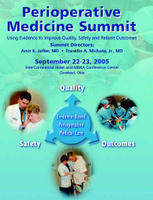
The summit, conducted on September 22-23, 2005 included more than 200 physicians, and was a resounding success.

Summit directors were Dr. Jaffer and Dr. Michota. Several members of the hospitalist team presented lectures and case discussions during the two-day event.

Lectures will be published in a special supplement of the Cleveland Clinic Journal of Medicine.

Reference:
AHA/ACC Clinical Statements/Guidelines
Online Calculator - MedCalc: Perioperative Cardiac Evaluation
Patient Education: PreOp.com

Preoperative evaluation - 2010 National Guideline Clearinghouse.
Image source: Wikipedia, CCF (used with permission)