Watch this About.com video to learn how to properly dispose of your medications, and protect the environment at the same time.
For more information, check the selected references below:
FDA Consumer Updates > How to Dispose of Unused Medicines http://1.usa.gov/16yTnIf
Safe Disposal of Medicines > Disposal of Unused Medicines: What You Should Know http://1.usa.gov/16yTqnh
Showing posts with label Medications. Show all posts
Showing posts with label Medications. Show all posts
Saturday, March 16, 2013

Wednesday, April 11, 2012
87% of people older than 50 took one or more drug, according to Australian survey
 A postal survey included a random sample of 4,500 Australians aged ≥ 50 years between in 2009-2010 and the response rate was 37%.
 Medications use was very common, 87% of participants took one or more drug (called medicines in Australia) and 43% took five or more in the previous 24 hours.
Complementary medicines were used by 46% of participants.
The most commonly used medications were:
- antihypertensive agents, 43% of participants
- natural marine and animal products including fish oil and glucosamine, 32%
- lipid-lowering agents, 30%
Doctors recommended 79% of all medications and 93% of conventional medications.
Much medicines use was to prevent future disease by influencing risk factors.
In a 2011 study, 4 medication classes were linked to 67% of drug-related hospitalizations:
- warfarin, 33%
- insulins, 14%
- oral antiplatelet agents, 13%
- oral hypoglycemic agents, 11%
High-risk medications were implicated in only 1.2% of hospitalizations.
50% of these hospitalizations were among adults 80 years of age or older. 65% of hospitalizations were due to unintentional overdoses.
Classification of adverse reactions to drugs: "SOAP III" mnemonic (click to enlarge the image):
Adverse drug reactions (ADRs) affect 10–20% of hospitalized patients and 25% of outpatients.
Rule of 10s in ADR:
10% of patients develop ADR
10% of these are due to allergy
10% of these lead to anaphylaxis
10% of these lead to death
References:
A national census of medicines use: a 24-hour snapshot of Australians aged 50 years and older. Tessa K Morgan, Margaret Williamson, Marie Pirotta, Kay Stewart, Stephen P Myers and Joanne Barnes. MJA 2012; 196 (1): 50-53, doi: 10.5694/mja11.10698
4 medication classes linked to 67% of drug-related hospitalizations
Image source: Wikipedia, public domain.
Thursday, February 16, 2012
4 medication classes linked to 67% of drug-related hospitalizations
Adverse drug events are important preventable causes of hospitalization in older adults.4 medications linked to 67% of drug-related hospitalizations
Four medications or medication classes were implicated alone or in combination in 67% of hospitalizations:
- warfarin, 33%
- insulins, 14%
- oral antiplatelet agents, 13%
- oral hypoglycemic agents, 11%
High-risk medications were implicated in only 1.2% of hospitalizations.
50% of these hospitalizations were among adults 80 years of age or older. 65% of hospitalizations were due to unintentional overdoses.
Classification of adverse reactions to drugs: "SOAP III" mnemonic (click to enlarge the image):
Adverse drug reactions (ADRs) affect 10–20% of hospitalized patients and 25% of outpatients.
Rule of 10s in ADR:
10% of patients develop ADR
10% of these are due to allergy
10% of these lead to anaphylaxis
10% of these lead to death
Insulin is one of the top 10 high risk medications
Insulin has been identified as one of the top 10 high risk medicines worldwide. Errors are common - the first national audit in England and Wales showed prescribing errors in 19.5% of cases.
Not only are mistakes common, they often lead to harm - 3% of medication errors are related to insulin, but these errors were also twice as likely to cause harm as errors for other prescribed drugs.
Over 20 different types of insulin are in use, in various strengths and forms, and with a range of delivery devices, including insulin syringes (from vials), insulin pens (prefilled or reusable), or infusion pumps.
Top 10 most prescribed medications
According to a report from the IMS Institute for Healthcare Informatics, the top 10 most-prescribed drugs in the U.S. are:
- hydrocodone (combined with acetaminophen)
- simvastatin
- lisinopril
- levothyroxine
- amlodipine
- omeprazole
- azithromycin
- amoxicillin
- metformin
- hydrochlorothiazide
References:
Emergency Hospitalizations for Adverse Drug Events in Older Americans. Daniel S. Budnitz, M.D., M.P.H., Maribeth C. Lovegrove, M.P.H., Nadine Shehab, Pharm.D., M.P.H., and Chesley L. Richards, M.D., M.P.H. N Engl J Med 2011; 365:2002-2012, November 24, 2011.
Insulin is one of the top 10 high risk medications worldwide for prescription errors
Top 10 Most Prescribed Medications
Drug Allergy: Introduction and Epidemiology
Drug Allergy
Image source: Wikipedia, public domain.
Comments from Google Plus and Twitter:
Wendy Hemken - I noticed that opioids weren't on that list. All the talk seems to be about how deadly they are. Is this not the case?
Aaron Sparshott @IVLINE: An important one for #medstudents
Sunday, May 22, 2011
Top 10 Most Prescribed Medications
According to a report from the IMS Institute for Healthcare Informatics, the top 10 most-prescribed drugs in the U.S. are:- hydrocodone (combined with acetaminophen)
- simvastatin
- lisinopril
- levothyroxine sodium
- amlodipine besylate
- omeprazole
- azithromycin
- amoxicillin
- metformin
- hydrochlorothiazide
The top 10 best-selling drugs are:
- Lipitor, $7.2 billion
- Nexium, 6.3 billion
- Plavix
- Advair Diskus, $4.7 billion
- Abilify
- Seroquel
- Singulair, $4.1 billion (it will be generic in 2012)
- Crestor
- Actos
- Epogen
References:
The 10 Most Prescribed Drugs. WebMD.
Image source: Wikipedia, public domain.
Tuesday, March 22, 2011
When physicians prescribe a new medication... confusion ensues
According to a 2006 study of physician-patient communication during primary care visits, when physicians prescribed a new medication they:- did not tell the patient the name of the new medication in 26% of the cases (the other way to look at the data is that the physicians stated the specific medication name for 74% of new prescriptions)
- did not explain the purpose of the medication to patients in 13% of cases (explained the purpose of the medication for 87%)
- did not tell patient about adverse side effects of the medication in 65% of cases
- did not describe to patients how long to take the medication in 66% of cases
- did not tell patients the number of pills to take in 45% of cases
- did not tell patients about medication dosing and timing in 42% of cases
References:
Physician Communication When Prescribing New Medications. Arch Intern Med. 2006;166:1855-1862.
Image source: Wikipedia, public domain.
Monday, November 8, 2010
Liraglutide (Victoza) superior to sitagliptin (Januvia) for reduction of HbA1c in diabetics
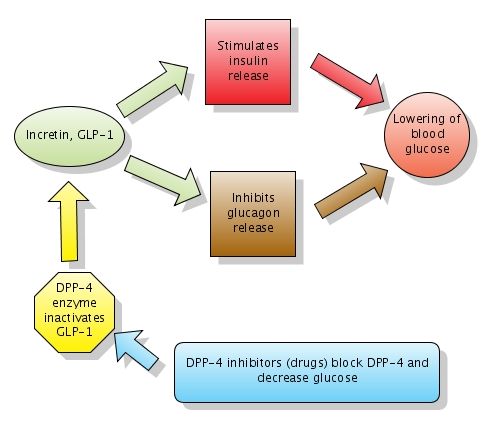
Action of DPP-4 inhibitors. Note that DPP-4 normally inactivates GLP-1. DPP-4 inhibitors block DPP-4 which in turn leaves GLP-1 active. Click to enlarge the figure. Created with Gliffy.
What is Glucagon-like peptide-1 (GLP-1)?
Glucagon-like peptide-1 (GLP-1) is a GI peptide that stimulates insulin secretion (similar to sulfonylureas). GLP-1 also inhibits glucagon release, gastric emptying and food absorption. GLP-1 and another similar peptide are called incretins. As noted above, incretins have a dual action which leads to lowering blood glucose:
1. Stimulate insulin release
2. Inhibit glucagon release
Exenatide (Byetta) is a GLP-1 receptor agonist approved for adjunctive therapy for patients with DM 2 who are not well controlled on oral agents. It is available only as injections and has to be administered twice daily.
DPP-4 inhibitors, or gliptins, increase GLP-1 levels by blocking the enzyme which inactivates GLP-1. The enzyme is called DPP-4 (dipeptidyl peptidase-4). They act similarly to Byetta (see figure above) but have the big advantage to be available in oral form (pills). Gliptins used for treatment of DM2 include sitagliptin (Januvia) and vildagliptin (Galvus).
What is Liraglutide?
Liraglutide (Victoza) is a long-acting glucagon-like peptide-1 (GLP-1) analog that was developed by Novo Nordisk for the treatment of type 2 diabetes. Liraglutide has a half-life after subcutaneous injection of 11–15 hours, making it suitable for once-daily dosing (in contrast to Byetta's twice daily).

Liraglutide. Image source: Wikipedia, public domain.
Liraglutide (Victoza) is a long-acting glucagon-like peptide-1 (GLP-1) analog that was developed by Novo Nordisk for the treatment of type 2 diabetes. Liraglutide has a half-life after subcutaneous injection of 11–15 hours, making it suitable for once-daily dosing (in contrast to Byetta's twice daily).

Liraglutide. Image source: Wikipedia, public domain.

Liraglutide (Victoza) superior to sitagliptin (Januvia) for reduction of HbA1c in diabetics
This Lancet study assessed the efficacy and safety of the human GLP-1 analogue liraglutide versus the DPP-4 inhibitor sitagliptin, as adjunct treatments to metformin, in individuals with type 2 diabetes who did not achieve adequate glycaemic control with metformin alone.
More than 600 participants (aged 18—80 years) with type 2 diabetes mellitus who had inadequate glycaemic control (glycosylated haemoglobin [HbA1c] 7·5—10·0%) on metformin (more than 1500 mg daily) were enrolled.
Participants were randomly allocated to receive 26 weeks' treatment with 1·2 mg or 1·8 mg subcutaneous liraglutide once daily, or 100 mg oral sitagliptin once daily.
Greater lowering of mean HbA1c (8·5% at baseline) was achieved with 1·8 mg liraglutide (−1·50%) and 1·2 mg liraglutide (−1·24%) than with sitagliptin (−0·90%).
Nausea was more common with liraglutide (27%) on 1·8 mg. Minor hypoglycaemia was recorded in about 5% of participants in each treatment group.
Liraglutide was superior to sitagliptin for reduction of HbA1c, and was well tolerated with minimum risk of hypoglycaemia. These findings support the use of liraglutide as an effective GLP-1 agent to add to metformin.
More than 600 participants (aged 18—80 years) with type 2 diabetes mellitus who had inadequate glycaemic control (glycosylated haemoglobin [HbA1c] 7·5—10·0%) on metformin (more than 1500 mg daily) were enrolled.
Participants were randomly allocated to receive 26 weeks' treatment with 1·2 mg or 1·8 mg subcutaneous liraglutide once daily, or 100 mg oral sitagliptin once daily.
Greater lowering of mean HbA1c (8·5% at baseline) was achieved with 1·8 mg liraglutide (−1·50%) and 1·2 mg liraglutide (−1·24%) than with sitagliptin (−0·90%).
Nausea was more common with liraglutide (27%) on 1·8 mg. Minor hypoglycaemia was recorded in about 5% of participants in each treatment group.
Liraglutide was superior to sitagliptin for reduction of HbA1c, and was well tolerated with minimum risk of hypoglycaemia. These findings support the use of liraglutide as an effective GLP-1 agent to add to metformin.
References:
Liraglutide versus sitagliptin for patients with type 2 diabetes who did not have adequate glycaemic control with metformin: a 26-week, randomised, parallel-group, open-label trial. The Lancet, Volume 375, Issue 9724, Pages 1447 - 1456, 24 April 2010.
Tuesday, October 5, 2010
Beyond statins: Thyromimetic eprotirome decreases LDL
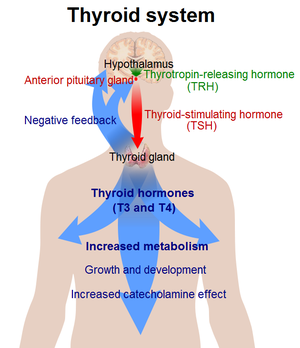 Dyslipidemia increases the risk of atherosclerotic cardiovascular disease and is incompletely reversed by statin therapy alone in many patients. Thyroid hormones lower levels of serum low-density lipoprotein (LDL) cholesterol and has other potentially favorable actions on lipoprotein metabolism. Consequently, thyromimetic drugs hold promise as lipid-lowering agents if adverse effects can be avoided.
In this 12-week trial, the thyroid hormone analogue eprotirome was associated with decreases in levels of atherogenic lipoproteins in patients receiving treatment with statins.
Similar reductions were seen in levels of serum LDL, apolipoprotein B, triglycerides, and Lp(a) lipoprotein. No change in levels of serum thyrotropin or triiodothyronine was detected, although the thyroxine level decreased in patients receiving eprotirome.
References:
References:
Image source: Wikipedia, public domain.

Tuesday, September 14, 2010
"Professional Guinea Pigs" in Clinical Trials - TIME video
Human subjects are paid in Phase 1 clinical trials to test the toxicity levels of new drugs. Some make a profession out of it, but researchers worry about health risks.
References:
Clinical Trials: Professional Guinea Pigs. TIME.
Monday, July 19, 2010
Mipomersen - antisense technology to lower LDL cholesterol
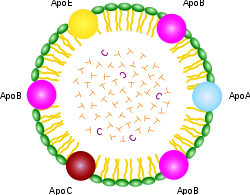 Homozygous familial hypercholesterolaemia is a rare genetic disorder in which both LDL-receptor alleles are defective, resulting in very high concentrations of LDL cholesterol in plasma and premature coronary artery disease. This study investigated the use of an antisense inhibitor of apolipoprotein B synthesis, mipomersen, to lower LDL cholesterol.
Patients aged 12 years and older who were already receiving the maximum tolerated dose of a lipid-lowering drug, were randomly assigned to mipomersen 200 mg subcutaneously every week or placebo for 26 weeks.
34 patients were assigned to mipomersen and 17 to placebo. Mean concentrations of LDL cholesterol at baseline were 11·4 mmol/L in the mipomersen group and 10·4 mmol/L in the placebo group. The mean percentage change in LDL cholesterol concentration was significantly greater with mipomersen (−24·7%) than with placebo (−3·3%).
The most common adverse events were injection-site reactions in 76% of patients in mipomersen group vs 24% in placebo group. 12% of patients in the mipomersen group had increases in alanine aminotransferase of three times or more the upper limit of normal.
Inhibition of apolipoprotein B synthesis by mipomersen represents a novel, effective therapy to reduce LDL cholesterol concentrations in patients with homozygous familial hypercholesterolaemia who are already receiving lipid-lowering drugs, including high-dose statins.
References:
Mipomersen, an apolipoprotein B synthesis inhibitor, for lowering of LDL cholesterol concentrations in patients with homozygous familial hypercholesterolaemia: a randomised, double-blind, placebo-controlled trial. The Lancet, Volume 375, Issue 9719, Pages 998 - 1006, 20 March 2010.
Lipoprotein structure (chylomicron) (left). Image source: Wikipedia, GNU Free Documentation License.

Sunday, May 2, 2010
Tiotropium for COPD: A good foundation therapy for most patients
 From a BMJ Editorial:
Clinical trials have consistently shown that these physiological effects translate into improvements in:
- lung function
- exercise tolerance
- health related quality of life
- fewer exacerbations
References:
References:
Tiotropium and chronic obstructive pulmonary disease. BMJ, 2010.
http://www.bmj.com/cgi/content/short/340/feb19_1/c833
http://www.bmj.com/cgi/content/short/340/feb19_1/c833
Image source: Wikipedia, public domain.
Monday, April 26, 2010
Fish out of pills - Pharmaceuticals in drinking water
Fish out of pills - Pharmaceuticals in drinking water, NationalGeographic, April 01, 2010. Design Editor Oliver Uberti shows what went into the making of an information graphic about pharmaceuticals that make their way into our watersheds and end up in fish. Click here to see the full-size illustration.
A vast array of pharmaceuticals — including antibiotics, anti-convulsants, mood stabilizers and sex hormones — have been found in the drinking water supplies of at least 41 million Americans. The concentrations of these pharmaceuticals are tiny, far below the levels of a medical dose but the long-term consequences to human health are unknown.
The pharmaceutical industry points out the amount of medication in the water supply is the equivalent of a single pill in an Olympic-size swimming pool. Still, if you a have glass of water in Philadelphia, you are drinking tiny amounts of at least 56 medications.
Antibiotics, anticonvulsants, antidepressants and sex hormones in drinking water of 41 million Americans http://goo.gl/HiXa
AP Probe Finds Drugs in Drinking Water. Associated Press.
Drugs in water causing troubling problems to fish, wildlife. CNN.
In U.S., bottled water lacks drug safeguards. CNN.
Pollution: Fish Pharm. NGM Blog Central.In U.S., bottled water lacks drug safeguards. CNN.
Fishing For Answers: How To Choose Fish and Seafood | Summer Tomato http://goo.gl/0OBf
Something in the water - fluoxetine in this river, antihypertensives in that lake - BMJ, 2011.
Something in the water - fluoxetine in this river, antihypertensives in that lake - BMJ, 2011.
Sunday, April 25, 2010
FDA: High-dose simvastatin increases risk of muscle injury - caution with lower doses plus Amiodarone, Verapamil, Diltiazem
 Based on review of data from a large clinical trial and data from other sources, the U.S. Food and Drug Administration (FDA) is informing the public about an increased risk of muscle injury in patients taking the highest approved dose of the cholesterol-lowering medication, Zocor (simvastatin) 80 mg, compared to patients taking lower doses of simvastatin and possibly other drugs in the "statin" class.
The muscle injury, also called myopathy, is a known side effect with all statin medications. The most serious form of myopathy is called rhabdomyolysis. Patients with myopathy generally have muscle pain, tenderness or weakness, and an elevation of a muscle enzyme in the blood (creatine kinase). The higher the dose of statin used, the greater the risk of developing myopathy. The risk of myopathy is also increased when simvastatin, especially at the higher doses, is used with certain drugs (see Simvastatin Dose Limitations below).
The data come from the SEARCH study, in which myopathy was seen in nearly 1% of patients taking the 80 milligram dose of Zocor but in only 0.02% of patients taking the 20 milligram dose of Zocor.
Update 6/2011: FDA Restricts Use of Simvastatin 80 mg, due to increased risk of muscle damage http://goo.gl/K9O5v
Rhabdomyolysis was rare in the SEARCH study. It happened in only 11 of 6,031 patients (0.02%) in group taking the 80 milligram dose of Zocor, but was not seen in patients taking the 20 milligram dose.
New data also suggest that people of Chinese descent should not take Zocor at the 80 milligram dose -- and should be careful even when taking lower doses -- if they also take niacin-containing products.
Simvastatin Dose Limitations
These limitations apply to ALL patients taking simvastatin.
Do not use simvastatin with these medications:
Itraconazole
Ketoconazole
Erythromycin
Clarithromycin
Telithromycin
HIV protease inhibitors
Nefazodone
Do not use more than 10mg of simvastatin with these medications:
Rhabdomyolysis was rare in the SEARCH study. It happened in only 11 of 6,031 patients (0.02%) in group taking the 80 milligram dose of Zocor, but was not seen in patients taking the 20 milligram dose.
New data also suggest that people of Chinese descent should not take Zocor at the 80 milligram dose -- and should be careful even when taking lower doses -- if they also take niacin-containing products.
Simvastatin Dose Limitations
These limitations apply to ALL patients taking simvastatin.
Do not use simvastatin with these medications:
Itraconazole
Ketoconazole
Erythromycin
Clarithromycin
Telithromycin
HIV protease inhibitors
Nefazodone
Do not use more than 10mg of simvastatin with these medications:
Gemfibrozil
Cyclosporine
Danazol
Do not use more than 20mg of simvastatin with these medications:
Cyclosporine
Danazol
Do not use more than 20mg of simvastatin with these medications:
Amiodarone
Verapamil
Do not use more than 40mg of simvastatin with this medication:
Verapamil
Do not use more than 40mg of simvastatin with this medication:
Diltiazem
References:
References:
FDA Drug Safety Communication: Ongoing safety review of high-dose Zocor (simvastatin) and increased risk of muscle injury. FDA.
FDA Warns of Zocor Risk to Muscles. WebMD.
FDA Warns of Zocor Risk to Muscles. WebMD.
FDA Restricts Use of Simvastatin 80 mg, due to increased risk of muscle damage http://goo.gl/K9O5v
Image source: Simvastatin. Wikipedia, public domain.

Tuesday, April 20, 2010
AskaPatient.com - Medication Ratings and Health Care Opinions
 This website "reports patient ratings and rankings of pharmaceuticals and prescription drug side effects. Database includes FDA-approved pharmaceuticals."
http://www.askapatient.com
You can Search by Drug Name:
http://www.askapatient.com/rateyourmedicine.htm
You can add ratings for the medications you take or look at ratings and comments from other patients.
For example:
cetirizine
http://www.askapatient.com/viewrating.asp?drug=19835&name=ZYRTEC
simvastatin (scores rather low)
http://www.askapatient.com/viewrating.asp?drug=19766&name=ZOCOR
You can add ratings for the medications you take or look at ratings and comments from other patients.
For example:
cetirizine
http://www.askapatient.com/viewrating.asp?drug=19835&name=ZYRTEC
simvastatin (scores rather low)
http://www.askapatient.com/viewrating.asp?drug=19766&name=ZOCOR
Please note that I am not sure how useful the site is, and obviously, this post is not an endorsement or recommendation.
Related readings:
How reliable are those patient driven rating sites? Notes from Dr. RW, 2010.
Analysis of 4,999 Online Physician Ratings: most patients gave positive reviews (2011 study) http://goo.gl/LgG5L - It begs the question: couldn't researchers add 1 more for a round number 5,000?
Analysis of 4,999 Online Physician Ratings: most patients gave positive reviews (2011 study) http://goo.gl/LgG5L - It begs the question: couldn't researchers add 1 more for a round number 5,000?
Image source: AskaPatient.com.
Saturday, March 20, 2010
FDA: Plavix does not work in 2-14% of patients
 The FDA has put a new "black box" warning on the anti-clotting drug Plavix, the second best-selling drug in the world.
The new label warns that normal doses of Plavix have a potentially deadly lack of effect in 2% to 14% of patients.
Such patients are so-called "poor metabolizers" who carry a variant CYP2C19 gene affecting the enzyme that converts Plavix into its active form. The frequency is about 2% of Caucasians, 4% of blacks, and 14% of Chinese.
However, a 2010 study published in the NEJM contradicted the statement above:
It has been suggested that clopidogrel may be less effective in reducing the rate of cardiovascular events among persons who are carriers of loss-of-function CYP2C19 alleles that are associated with reduced conversion of clopidogrel to its active metabolite.
Among patients with acute coronary syndromes or atrial fibrillation, the effect of clopidogrel as compared with placebo is consistent, irrespective of CYP2C19 loss-of-function carrier status.
References:
New Plavix Warning: Lack of Effect in Many People. WebMD.
Effects of CYP2C19 Genotype on Outcomes of Clopidogrel Treatment. NEJM, 2010.
Image source: A box of Plavix. Wikipedia, Trounce, Creative Commons Attribution-Share Alike 2.5 Generic license.
Updated: 10/27/2010

Updated: 10/27/2010
Wednesday, February 17, 2010
People on statins are 9% more likely to develop diabetes according to a meta-analysis
From Reuters:
This small risk is outweighed by the drugs' heart-protecting properties but it could prompt a rethink among those with low cardiovascular risk factors who are tempted to take statins to prevent future heart disease.
"It will stop us putting statins in the water, as it were, and mean we give them when appropriate for the right reasons."

Statins are among the most successful drugs of all time and have been credited with preventing millions of heart attacks and strokes.
This Lancet meta-analysis included 13 large randomised controlled trials involving more than 91,000 patients.
Treating 255 patients with statins for 4 years would result in only one extra case of diabetes.
Giving statins to the same group would avoid 5.4 deaths or heart attacks over 4 years, and nearly the same number of strokes.
Clinical practice in patients with moderate or high cardiovascular risk or existing cardiovascular disease should not change.
References:
http://www.thelancet.com/journals/lancet/article/PIIS0140-6736(09)61965-6/fulltext
http://www.reuters.com/article/idUSTRE61G00P20100217
Related:
Statins Don't Cause Diabetes. Dr. Mintz' Blog.
This small risk is outweighed by the drugs' heart-protecting properties but it could prompt a rethink among those with low cardiovascular risk factors who are tempted to take statins to prevent future heart disease.
"It will stop us putting statins in the water, as it were, and mean we give them when appropriate for the right reasons."
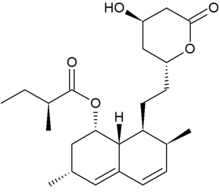
Lovastatin, a compound isolated from Aspergillus terreus, was the first statin to be marketed for lowering cholesterol. Image source: Wikipedia, public domain.
Statins are among the most successful drugs of all time and have been credited with preventing millions of heart attacks and strokes.
This Lancet meta-analysis included 13 large randomised controlled trials involving more than 91,000 patients.
Treating 255 patients with statins for 4 years would result in only one extra case of diabetes.
Giving statins to the same group would avoid 5.4 deaths or heart attacks over 4 years, and nearly the same number of strokes.
Clinical practice in patients with moderate or high cardiovascular risk or existing cardiovascular disease should not change.
References:
http://www.thelancet.com/journals/lancet/article/PIIS0140-6736(09)61965-6/fulltext
http://www.reuters.com/article/idUSTRE61G00P20100217
Related:
Statins Don't Cause Diabetes. Dr. Mintz' Blog.
Monday, October 19, 2009
Combination of ACE inhibitors and ARBs appeared no better than ACE inhibitor therapy alone and increased harms
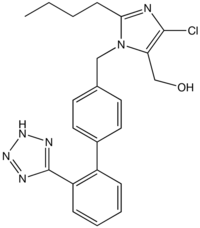 From the Annals of Internal Medicine:
Ischemic heart disease (IHD) is the leading cause of death of both men and women in the U.S.
Angiotension-converting enzyme (ACE) inhibitors or angiotensin II receptor blockers (ARBs) are typically introduced when patients have heart failure or a heart attack with ventricular dysfunction.
Researchers reviewed 41 published studies to compare the benefits and harms of using ACE inhibitors, ARBs, or a combination of these treatments in adults with stable IHD and preserved ventricular function.
The researchers found that adding ACE inhibitors to standard treatment improves clinical outcomes in these types of patients. However, a combination of ACE inhibitors and ARBs appeared no better than ACE inhibitor therapy alone and increased harms.
Image source: Losartan, the first ARB. Wikipedia, GNU Free Documentation License.
Sunday, October 4, 2009
Decreasing risk of death by 80% at the cost of $12 per month
High-risk patients who took 3 older drugs - statin, lisinopril, aspirin - cut risk of a heart attack or stroke by 80% (source: Reuters).
All of those are on the Walmart's $4 list which means you can decrease your risk of death by 80% for $12 per month (if you have the risk factors).
"Even in people who took it less than half the time, they got over a 60 percent drop in heart attacks and strokes," said Dr. R. James Dudl of Kaiser Permanente in California, whose study was published in the American Journal of Managed Care. "Those who took it more than half the time -- they got more like an 80 percent drop."It also suggests that people do not need to take a name-brand statin drug -- which Dudl said costs up to eight times more than a generic -- to achieve a major reduction in risks.
From Twitter:
 doctorlinguist hey, lisinopril and lovastatin are $4 drugs at WalWart. cheap!
 DrVes Yes. Pravachol (Pravastatin) is also $4.
doctorlinguist and benazepril! especially because in CA the 40mg lisinopril is *not* $4, for some reason .
References:
Cheap three-drug combination helps cut heart risks. Reuters.
All of those are on the Walmart's $4 list which means you can decrease your risk of death by 80% for $12 per month (if you have the risk factors).
"Even in people who took it less than half the time, they got over a 60 percent drop in heart attacks and strokes," said Dr. R. James Dudl of Kaiser Permanente in California, whose study was published in the American Journal of Managed Care. "Those who took it more than half the time -- they got more like an 80 percent drop."It also suggests that people do not need to take a name-brand statin drug -- which Dudl said costs up to eight times more than a generic -- to achieve a major reduction in risks.
From Twitter:
doctorlinguist hey, lisinopril and lovastatin are $4 drugs at WalWart. cheap!DrVes Yes. Pravachol (Pravastatin) is also $4. doctorlinguist and benazepril! especially because in CA the 40mg lisinopril is *not* $4, for some reason .References:
Cheap three-drug combination helps cut heart risks. Reuters.
Monday, April 27, 2009
Antibiotic eye drops for bacterial conjunctivitis: which one to choose?
 According to the current clinical evidence, 64% of cases of acute bacterial conjunctivitis improve spontaneously and do not require local antibiotic therapy with eye drops.
When antibiotic therapy is indicated for bacterial conjunctivitis, the most cost-effective options are the eye drops listed below that are included in the Walmart $4 prescription medication program:
- Sulfacet Sodium 10% op. solution
- Tobramycin 0.3% op. solution
Tobramycin is better tolerated because it causes less local irritation, often described as stinging and burning. This improves the compliance especially in younger children.
Sulfacetamide 10% has a better gram-positive than gram-negative coverage.
Antibiotic-containing eye medications available in the $4 Prescription Program by Walmart:
- Bacitracin op. ointment
- Erythromycin op. ointment
- Gentamicin 0.3% op. solution
- Neomycin/Polymyxin/Dexamethasone 0.1% op. ointment
- Neomycin/Polymyxin/Dexamethasone 0.1% op. suspension
- Polymyxin Sulfate/TMP op. solution
- Sulfacet Sodium 10% op. solution
- Tobramycin 0.3% op. solution
Gentamicin is used for gram-negative bacterial coverage but tends to be toxic to epithelia and retards healing. Aminoglycoside antibiotics include Gentamicin, Neomycin and Tobramycin.
Ciprofloxacin 3% is a broad-spectrum antibiotic with good gram-positive and gram-negative coverage (not included in the $4 program).
Gatifloxacin ophthalmic solution 0.3% (Zymar) is fourth-generation fluoroquinolone ophthalmic indicated for bacterial conjunctivitis.
References:
Conjunctivitis. AFP, 1998.
$4 Prescription Program. Walmart, PDF.
Should We Prescribe Antibiotics for Acute Conjunctivitis? AFP, 2002.
Image source: Conjunctivitis, Wikipedia, public domain.

Wednesday, March 11, 2009
'Time-bending drug' for jet lag tasimelteon helps transient insomnia
Tasimelteon is a drug used for the treatment of insomnia and other sleep disorders. It is a selective agonist for the melatonin receptors MT1 and MT2 in the suprachiasmatic nucleus of the brain, similar to older drugs such as ramelteon.
Suprachiasmatic nucleus
The suprachiasmatic nucleus is a tiny region on the brain's midline in a shallow impression of the optic chiasm responsible for controlling circadian rhythms.

The left optic nerve and the optic tracts, suprachiasmatic nucleus not labeled, but diagram illustrates region. Image source: Wikipedia, public domain.
G protein-coupled receptor (GPCR)
A melatonin receptor is a G protein-coupled receptor (GPCR) which binds melatonin. Three types of melatonin receptor have been cloned in humans: MT1 and MT2.
According to the American Chemical Society, "If you had to make a wild guess about the target of a certain drug, your best odds are with “G-protein coupled receptor.” Drugs targeting members of this integral membrane protein superfamily, which transmit chemical signals into a wide array of different cell types, represent the core of modern medicine. They account for the majority of best-selling drugs and about 40% of all prescription pharmaceuticals on the market."
Melatonin receptors agonists
Melatonin receptors ligands (agonists) include:

A bottle of melatonin OTC supplement. Image source: Wikipedia, Ged Carroll, Creative Commons Attribution 2.0 License.
Products containing melatonin have been available as a dietary supplement in the United States since 1993.

Tasimelteon. Image source: Wikipedia, public domain.

Ramelteon, marketed as Rozerem. Image source: Wikipedia, public domain.
Rozerem is the first in a new class of sleep agents that selectively binds to the MT1 and MT2 receptors. Ramelteon caused hyperprolactinaemia 2-3x more often than placebo in clinical trials.
Ramelteon does not bind to GABA receptors, thus it has not been shown to produce dependence, withdrawal and rebound insomnia that is typical with GABA modulators.
Tasimelteon Studies
Circadian rhythm sleep disorders are common causes of insomnia for millions of individuals.
Two recent studies evaluated the efficacy of the melatonin agonist tasimelteon for treatment of transient insomnia associated with shifted sleep and wake time.
Tasimelteon reduced sleep latency and increased sleep efficiency compared with placebo. The frequency of adverse events was similar between tasimelteon and placebo.
The BBC labeled tasimelteon a 'time-bending drug' for jet lag because it can "reset" the body's natural sleep rhythms. Findings would be welcomed by millions of people - "shift-workers, airline crew, tourists, football teams, etc.
Tips for avoiding jet lag
References:
Melatonin agonist tasimelteon (VEC-162) for transient insomnia after sleep-time shift: two randomised controlled multicentre trials. The Lancet, Volume 373, Issue 9662, Pages 482 - 491, 7 February 2009.
Tasimelteon, from Wikipedia, the free encyclopedia.
Melatonin receptor, from Wikipedia, the free encyclopedia.
It's a GPCR world. Filmore, David (2004). Modern Drug Discovery (American Chemical Society) 2004 (November): 24–28.
'Time-bending drug' for jet lag. BBC, 2008.
Suprachiasmatic nucleus
The suprachiasmatic nucleus is a tiny region on the brain's midline in a shallow impression of the optic chiasm responsible for controlling circadian rhythms.

The left optic nerve and the optic tracts, suprachiasmatic nucleus not labeled, but diagram illustrates region. Image source: Wikipedia, public domain.

G protein-coupled receptor (GPCR)
A melatonin receptor is a G protein-coupled receptor (GPCR) which binds melatonin. Three types of melatonin receptor have been cloned in humans: MT1 and MT2.
According to the American Chemical Society, "If you had to make a wild guess about the target of a certain drug, your best odds are with “G-protein coupled receptor.” Drugs targeting members of this integral membrane protein superfamily, which transmit chemical signals into a wide array of different cell types, represent the core of modern medicine. They account for the majority of best-selling drugs and about 40% of all prescription pharmaceuticals on the market."
Melatonin receptors agonists
Melatonin receptors ligands (agonists) include:
- Melatonin
- Ramelteon
- Tasimelteon

A bottle of melatonin OTC supplement. Image source: Wikipedia, Ged Carroll, Creative Commons Attribution 2.0 License.

Products containing melatonin have been available as a dietary supplement in the United States since 1993.

Tasimelteon. Image source: Wikipedia, public domain.


Ramelteon, marketed as Rozerem. Image source: Wikipedia, public domain.

Rozerem is the first in a new class of sleep agents that selectively binds to the MT1 and MT2 receptors. Ramelteon caused hyperprolactinaemia 2-3x more often than placebo in clinical trials.
Ramelteon does not bind to GABA receptors, thus it has not been shown to produce dependence, withdrawal and rebound insomnia that is typical with GABA modulators.
Tasimelteon Studies
Circadian rhythm sleep disorders are common causes of insomnia for millions of individuals.
Two recent studies evaluated the efficacy of the melatonin agonist tasimelteon for treatment of transient insomnia associated with shifted sleep and wake time.
Tasimelteon reduced sleep latency and increased sleep efficiency compared with placebo. The frequency of adverse events was similar between tasimelteon and placebo.
The BBC labeled tasimelteon a 'time-bending drug' for jet lag because it can "reset" the body's natural sleep rhythms. Findings would be welcomed by millions of people - "shift-workers, airline crew, tourists, football teams, etc.
Tips for avoiding jet lag
- Sleep well before you travel
- Shift your watch to your destination time zone as soon as you board the plane
- Avoid alcohol
- Spend plenty of time outdoors in the daylight
References:
Melatonin agonist tasimelteon (VEC-162) for transient insomnia after sleep-time shift: two randomised controlled multicentre trials. The Lancet, Volume 373, Issue 9662, Pages 482 - 491, 7 February 2009.
Tasimelteon, from Wikipedia, the free encyclopedia.
Melatonin receptor, from Wikipedia, the free encyclopedia.
It's a GPCR world. Filmore, David (2004). Modern Drug Discovery (American Chemical Society) 2004 (November): 24–28.
'Time-bending drug' for jet lag. BBC, 2008.
Related reading:
Jet-lagged and forgetful? Memory, learning problems persist long after periods of jet lag http://goo.gl/EPWW6
Coping with Jet Lag. Life in the Fast Lane, 2011.
Jet lag and shift work sleep disorders - CCJM 2011 review.
Jet lag and shift work sleep disorders - CCJM 2011 review.
Wednesday, March 4, 2009
Liraglutide as initial pharmacological therapy for type 2 diabetes mellitus
New treatments for type 2 diabetes mellitus are needed to retain insulin—glucose coupling and lower the risk of weight gain and hypoglycemia.
What is Liraglutide?
Liraglutide, which if approved, will be marketed under the brand-name "Victoza", is a long-acting glucagon-like peptide-1 (GLP-1) analog that is being developed by Novo Nordisk for the treatment of type 2 diabetes. Liraglutide has a half-life after subcutaneous injection of 11–15 hours, making it suitable for once-daily dosing (in contrast to Byetta's twice daily).
Liraglutide. Image source: Wikipedia, public domain.
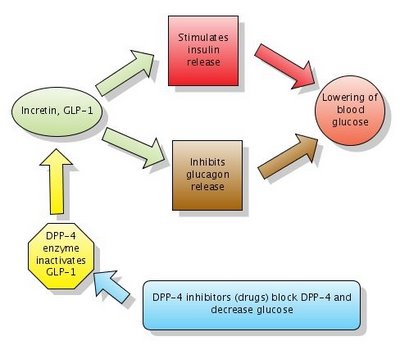
Figure 1. Action of DPP-4 inhibitors. Note that DPP-4 normally inactivates GLP-1. DPP-4 inhibitors block DPP-4 which in turn leaves GLP-1 active.
Click to enlarge the figure. Created with Gliffy.
What is Glucagon-like peptide-1 (GLP-1)?
Glucagon-like peptide-1 (GLP-1) is a GI peptide that stimulates insulin secretion (similar to sulfonylureas). GLP-1 also inhibits glucagon release, gastric emptying and food absorption. GLP-1 and another similar peptide are called incretins. As noted above, incretins have a dual action which leads to lowering blood glucose:
1. Stimulate insulin release
2. Inhibit glucagon release
Exenatide (Byetta) is a GLP-1 receptor agonist approved for adjunctive therapy for patients with DM 2 who are not well controlled on oral agents. It is available only as injections and has to be administered twice daily.
DPP-4 inhibitors or gliptins
Two new medications increase GLP-1 levels by blocking the enzyme which inactivates GLP-1. The enzyme is called DPP-4 (dipeptidyl peptidase-4) and the new medications are called DPP-4 inhibitors or gliptins.
They act similarly to Byetta (see figure above) but have the big advantage to be available in oral form (pills). These 2 new medications for treatment of DM2 are:
- Sitagliptin (Januvia) is taken once a day and it costs about $ 4.50 per pill
- Vildagliptin (Galvus) is waiting for FDA approval but it is already speculated to be at a competitive disadvantage to Januvia because it has to be taken twice a day
New Liraglutide Study
In a double-blind, double-dummy, active-control, parallel-group study, 746 patients with early type 2 diabetes were randomly assigned to once daily liraglutide or glimepiride 8 mg for 1 year.
HbA1c decreased by 0·51% with glimepiride, compared with 0·84% with liraglutide 1·2 mg and 1·14% with liraglutide 1·8 mg. Six patients in the liraglutide groups discontinued treatment because of vomiting.
The authors conclude that liraglutide is safe and effective as initial pharmacological therapy for type 2 diabetes mellitus and leads to greater reductions in HbA1c, weight, hypoglycaemia, and blood pressure than does glimepiride.
References:
Liraglutide versus glimepiride monotherapy for type 2 diabetes (LEAD-3 Mono): a randomised, 52-week, phase III, double-blind, parallel-treatment trial. The Lancet, Volume 373, Issue 9662, Pages 473 - 481, 7 February 2009.
Liraglutide, from Wikipedia, the free encyclopedia.
DPP-4 Inhibitors for Treatment of Diabetes
What is Liraglutide?
Liraglutide, which if approved, will be marketed under the brand-name "Victoza", is a long-acting glucagon-like peptide-1 (GLP-1) analog that is being developed by Novo Nordisk for the treatment of type 2 diabetes. Liraglutide has a half-life after subcutaneous injection of 11–15 hours, making it suitable for once-daily dosing (in contrast to Byetta's twice daily).
Liraglutide. Image source: Wikipedia, public domain.
Figure 1. Action of DPP-4 inhibitors. Note that DPP-4 normally inactivates GLP-1. DPP-4 inhibitors block DPP-4 which in turn leaves GLP-1 active.
Click to enlarge the figure. Created with Gliffy.
What is Glucagon-like peptide-1 (GLP-1)?
Glucagon-like peptide-1 (GLP-1) is a GI peptide that stimulates insulin secretion (similar to sulfonylureas). GLP-1 also inhibits glucagon release, gastric emptying and food absorption. GLP-1 and another similar peptide are called incretins. As noted above, incretins have a dual action which leads to lowering blood glucose:
1. Stimulate insulin release
2. Inhibit glucagon release
Exenatide (Byetta) is a GLP-1 receptor agonist approved for adjunctive therapy for patients with DM 2 who are not well controlled on oral agents. It is available only as injections and has to be administered twice daily.
DPP-4 inhibitors or gliptins
Two new medications increase GLP-1 levels by blocking the enzyme which inactivates GLP-1. The enzyme is called DPP-4 (dipeptidyl peptidase-4) and the new medications are called DPP-4 inhibitors or gliptins.
They act similarly to Byetta (see figure above) but have the big advantage to be available in oral form (pills). These 2 new medications for treatment of DM2 are:
- Sitagliptin (Januvia) is taken once a day and it costs about $ 4.50 per pill
- Vildagliptin (Galvus) is waiting for FDA approval but it is already speculated to be at a competitive disadvantage to Januvia because it has to be taken twice a day
New Liraglutide Study
In a double-blind, double-dummy, active-control, parallel-group study, 746 patients with early type 2 diabetes were randomly assigned to once daily liraglutide or glimepiride 8 mg for 1 year.
HbA1c decreased by 0·51% with glimepiride, compared with 0·84% with liraglutide 1·2 mg and 1·14% with liraglutide 1·8 mg. Six patients in the liraglutide groups discontinued treatment because of vomiting.
The authors conclude that liraglutide is safe and effective as initial pharmacological therapy for type 2 diabetes mellitus and leads to greater reductions in HbA1c, weight, hypoglycaemia, and blood pressure than does glimepiride.
References:
Liraglutide versus glimepiride monotherapy for type 2 diabetes (LEAD-3 Mono): a randomised, 52-week, phase III, double-blind, parallel-treatment trial. The Lancet, Volume 373, Issue 9662, Pages 473 - 481, 7 February 2009.
Liraglutide, from Wikipedia, the free encyclopedia.
DPP-4 Inhibitors for Treatment of Diabetes
Subscribe to:
Posts (Atom)