Showing posts with label history. Show all posts

Wednesday, February 29, 2012

A look at the history of U.S. health care and health insurance

Health insurance in the U.S. has some of its roots in the World War II shipyards of Henry J. Kaiser, who built 747 vessels for the Navy. The war made workers scarce, so Kaiser needed a way to attract them and, once there, keep them healthy. He couldn't pay them more because wages were frozen, so he offered them health care, which was provided by doctors at company clinics and hospitals. In turn, he asked employees to kick in 50 cents a week for the benefit. (Photo: Kaiser Shipyards in Richmond, Calif., courtesy of SanPedro.com/Permanente Metals Corporation)

"The war ended, the workers quit the shipyards, leaving behind hospitals and doctors but no patients," Bob Rosenblatt reports for the Los Angeles Times. "So the company decided to open the system to the public — and that's how generations of Californians who never heard of Kaiser shipyards have since gotten medical care."

Kaiser's story is just one example of how America's health insurance system developed, Rosenblatt writes. As at the shipyards, most people still get coverage through their jobs and, unlike the rest of the industrialized world, not from the government.

In fact, there has long been a fight against having the government in charge of providing care, Rosenblatt contends. In 1918, when California proposed a constitutional amendment that would have organized a state-run program, doctors said "compulsory social health insurance" was "a dangerous device invented in Germany." The amendment lost, but many presidents pursued the issue. Franklin D. Roosevelt "flirted with the idea but never threw political muscle behind it," Rosenblatt reports. Harry S. Truman asked Congress to provide national health insurance, but could not bring it to a vote.

It was the model exemplified in the shipyards that was adopted, and "health insurance became a standard feature in labor contracts," Rosenblatt writes.

Things changed in 1965, when President Lyndon B. Johnson pushed through a heavily Democratic Congress what Rosenblatt calls "a legislative three-layer cake:" Medicare Part A, Medicare Part B, and the federal-state Medicaid program. The legislation was controversial, with fears that doctors would refuse to see Medicare patients and hospitals would refuse to dismantle segregated wards. "The doctors didn't strike," Rosenblatt writes. "And the hospitals were immediately integrated without protest."

In 1993, President Bill Clinton wanted to extend national health insurance to everyone, but Rosenblatt says "Congress felt excluded and insulted, and the plan never came to a floor vote in the House or Senate."

President Obama did the opposite and relied on the congressional process. "Key to the plan was a mandate that everyone buy into the system; it was the best way to spread out the costs of illness," Rosenblatt writes. It's that mandate up for debate in the Supreme Court next month, but even if the Affordable Care Act is subsequently thrown out, "people already enjoy some benefits and won't want to give them up," Rosenblatt writes.

"It seems a safe bet that some provisions in the Affordable Care Act will stay on the law books," Rosenblatt concludes. "This places a few more patches on the national healthcare quilt. That's the American way." (Read more)

Tuesday, July 26, 2011

Medicine's first Nobel laureate

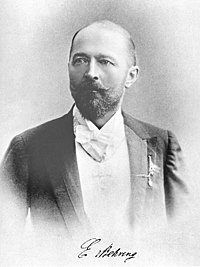
Medicine's first Nobel laureate was Emil von Behring (1854-1917). He was the discoverer of diphtheria antitoxin in 1890 and attained a great reputation in his lifetime but also was a subject of controversy:

Behring’s unabashed pursuit of financial rewards for his efforts — unusual in that era—drew much criticism. One of the first modern medical entrepreneurs, he aggressively sought to patent his discoveries, and profited handsomely from their applications. This conflicted with the more genteel notions that prevailed at the time, which venerated physicians as selfless servants of mankind.

For all his accomplishments, Behring was a deeply troubled man. He suffered from frequent bouts of profound depression, and was institutionalised several times.

The great discoverer of serum therapy died of pneumonia in Marburg on March 31, 1917.

References:
Emil von Behring (1854-1917): Medicine's first Nobel laureate. Singapore Med J. 2011 Jan;52(1):1-2 (free full text PDF).
Image source: Emil Adolf von Behring, Wikipedia, public domain.

Thursday, May 19, 2011

Book Review:: Wheels of Change by Sue Macy

Do you remember the freedom you felt once you were old enough to get a two-wheeled bike and allowed to zoom around your neighborhood? Wheels of Change: How Women Rode the Bicycle to Freedom (With a Few Flat tires Along the Way) by Sue Macy recalls when women first got their own set of wheels and set off unescorted into the world.

And that whole unescorted thing really ticked off conservatives at the time. As Macy notes in chapter 2, The Devil's Advance Agent, in the late 1800s women and men dated while being chaperoned by adults, sually in the home of the young woman. With the advent of the bicycle and society's approval for women to jump on board with this new fad, the reach of chaperones was cut. Thus begins the spiral to fogged up car windows on a Friday night. One has to remember that this was at the same time most physical activity, especially sporting activities, was seen as bad for women's bodies and especially their reproductive systems.

One also must remember that in the late 1800s women were wearing HUGE dresses. How is a lady supposed to ride a bicycle? Macy shows photos of bicycles that were designed for side-saddle as well as with contraptions so that dresses wouldn't get caught in the wheels or gears. Then the young women of the late 1800s rediscovered Amelia Bloomers invention - Lady Pants!  - or bloomers.

This is a fun trip through the joint history of the bicycle and women's rights. From wheels to bloomers to votes for women, it's all interconnected. You'll be amazed at how similar the conversations we are having today about women's rights sound a lot like the ones in the late 1800s about women riding bicycles.

This a National Geographic book for kids. But don't let that stop those without kids from not buying this book from IndieBound or Powells.

Disclaimers: A publicist offered me a copy for review for women's history month. Obviously, I'm late writing this baby up.

* Book links are affiliate links. If you buy your book here I could make a very small amount of money that goes towards this blog.

Monday, May 16, 2011

Book Review: A Strange Stirring by Stephanie Coontz

I've described A Strange Stirring: The Feminine Mystique & American Women at the Dawn of the 1960s by Stephanie Coontz to others as a historical look at the women who read The Feminine Mystique, the impact of the book on their lives and a look at the myth of Betty Friedan. For a women's history nerd like me, this book was awesome. Admittedly, the semester took it's toll on how quickly, or rather how slowly, I read this book as this review was supposed to be included in Girl w/Pen's salon back in February.

I also have to admit that I've never read The Feminine Mystique. I know, I know...but Coontz also talked to women who didn't read the book either! The mythology surrounding TFM is so strong that it has touched most of our lives whether we have read it or not. I believe the mythology of TFM is simply put that Betty Friedan, a 1950s housewife, wrote a book about how she discovered that her boredom of caring for the kids and cleaning the house lead her to single-handedly revive the feminist movement in the USA. This includes founding the National Organization for Women. The critiques focus on how the book and the mainstream feminist movement (NOW) were too focused on middle-class white women. Coontz painstakingly proves and disproves these myths.

She also puts all the realities into historical perspective. Coontz is a historian and while some may think she is making excuses for how Friedan frames the issues in the book as well as tweaks Friedan made to her own backstory. Coontz outlines the often ignored/hidden feminist movement of the post-WW II era before the second wave officially begins with facts such as:
...by 1955, a higher percentage of women worked for ages than ever had during the war. In fact, women's employment rate grew four times faster than men's during the 1950s.The employment of wives tripled and the employment of mothers increased fourfold. (page 59)
The emotion that Friedan tapped into with TFM, according to Coontz, wasn't that being married and a mom was a terrible thing, but that by having marriage & motherhood as THE goal in life, for most women in the 1950s, their life goals were achieved by 25. "..a few years after having children [they] found that they had no compelling goal left to pursue. As Cam Stivers said, it felt as if her life was already over (page 86)." 

The myth that Friedan was anti-marriage was explored and Coontz finds evidence that yes, some of the women who read TFM eventually divorced. But she also found that many of those women remarried and loved their second marriages. Coontz also talked with men who had read the book. Those men recounted how it helped them reframe how they saw marriage as more of a partnership.

As for the whiteness of TFM, Coontz acknowledges this fact. She spends one chapter to answer this critique directly while educating readers on the often unacknowledged history of African-American women in the civil rights movement as well as their leadership in "balancing" work and family. Coontz interviewed African-American women who wrote to Friedan who were upset that Friedan thought working would solve housewives problems as well as those who said it steeled them against the "prejudices in graduate school or medical school (126)."

I loved the chapter where Coontz lets Ruth Rosen's working class critique take center stage. So many white working class women wrote to Friedan with essentially a "wah..wah..wah..." message. Women who were working their butts off at the office and at home and did not feel liberated. And the even-handedness of Coontz also shows us working-class women who used TFM as their only ally in their quest to attend college and postpone the marriage & baby carriage.

Coontz ends the book with a look at how women are faring today. Did feminism kill marriage? Nope. The more education a woman gets, the more likely they are to marry. Did feminism kill sexiness? Nope. The more men contribute to housework, the happier they are in the bedroom! It's not all fun and roses, but it's not the gloom and doom that anti-feminists want us to believe.

And lastly, does feminism hate mothers? Hell no! Coontz wrote an excellent op-ed in the NYTimes for Mother's Day outlining how feminism has helped mothers by pushing for women to make their own choice about staying home with the kids, working outside the home or both depending on the family's need. Most pressure on women to be a certain kind of mother usually comes from non-feminist talking heads.

I really hope that everyone who has any opinion of what TFM did to our culture will read this book. It won't convert those who fiercely opposes feminism, but those who hold moderate views or hesitate to call themselves feminists based on any of the myths this books debunks, will be moved to reexamine those beliefs. It will also allow for a re-examination of Friedan herself. For those of us who are fiercely feminist, this is a must read book. One who doesn't know her history is bound to repeat it. And we all know how that turns out in the feminist movement. *wink*

Get your copy from IndieBound or Powells.

Disclaimers: I requested a copy from the author and am a big fan of her previous work.

* Book links are affiliate links. If you buy your book here I could make a very small amount of money that goes towards this blog.

Friday, April 1, 2011

Three great events coming up soon!

(1) The hilarious, whip smart and BFF of Viva la Feminista, Jennifer Pozner will be at Women and Children First on Sunday at 4:30 pm. Come hear Jennifer talk about her book Reality Bites Back. Considering that $nooki gets paid $32,000 to give a talk, come hear Jennifer for bus fare!

(2) She'll also be at NEIU on Monday at 4:15 pm.

(3) Thursday, April 7th the Working Women's History Project will will pay homage to the 100th anniversary of the Triangle Shirtwaist Factory Fire with an in-depth panel discussion and an original production.


6-8:30 pm "The Triangle Shirtwaist Fire at 100 and the Fight for Worker Safety and Justice Now"
6:00 - 7:00 Registration and Light Refreshments
7:00 - Program

Roosevelt University, 430 S Michigan, Congress Lounge 2nd Floor
Tickets held at door advance $25, at door $30, students free with ID

The play: "The Ninth Floor Door: Blocked Justice of the Triangle Fire" by Mary Bonnett. Performed by Mary Bonnett, Brigid Duffy*, Paul Odell, Andreah Santos, Alma Washington*, Ken Morris on guitar (*member of Actors' Equity)

The panel:
Moderator: Maribeth Anderson, Regional VP of ASSE
Louise Carr: OSHA Compliance Officer
Jo Ann E. Argersinger: author The Triangle Fire: A Brief History with Documents
Susan Hurley: Executive Director: Jobs with Justice
Q&A to follow

Co-Sponsors: Roosevelt University, Center for New Deal Studies, Roosevelt University SPEED, Chicago CLUW and the American Society of Safety Engineers.

Information: jackie@wwhpchicago.org or 773-667-4690

Wednesday, March 23, 2011

100th Anniversary of the Triangle Shirtwaist Factory Fire

My friend, Alida Brill, and her friend, artist Susan Springer Anderson, have collaborated on a project to commemorate the 100th Anniversary of the Triangle Shirtwaist Factory Fire, and which they call simply:

11.03.25.11

The show A League Of Our Own, with both Susan and Alida interviewed by Fran Spencer will air Thursday, March 24th from 6 pm to 6:30 pm EST. It can be heard on 88.7 FM in Nassau and western Suffolk and some parts of Manhattan, but it can be heard worldwide at WRHU.org. Here is the exact link to listen online: http://live.streamwrhu.net/

A "virtual event" will happen on Alida's website on Thursday before the radio show and will remain up throughout the weekend and throughout next week.

Susan's piece is a creative reinterpretation of a shirtwaist of the time, using Tyvek, a building material. Her choice of "fabric" has special meaning and is discussed by Susan in the radio interview and will be described fully on the website Thursday.

What appears to be floral embroidery designs on the piece are actually the individual names of each of the 146 victims. Susan used an embroidery calligraphy style pen to sign each and every one of the names of those killed that day. The shirtwaist is the style the girls and women would have been wearing, but none of them would have had embroidery or embellishment on their garments. Those were reserved for the women who could afford them, and indeed, resemble closely what the women were making for the wealthy and more privileged women of 1911.


They will be updating with live photographs on Friday the 25th from a variety of memorials as well as photographs of the CHALK project names.

There was also a HBO documentary earlier this week that is awaiting me on my DVR. 

Sunday, March 13, 2011

Some quick book reviews of books I'm still reading

I've gotten to a point where the number of books I'm "currently" reading has overwhelmed me. This is because I've been trying to read for "fun" in between reading for class. So instead of waiting another year or three to review this great books, I'm just going to tell you to go get a copy now. I think I've read enough of each of these to give my thumbs up. So what am I trying to read?


I love Coontz. She's written some of my fave books and this is certainly going to join them as a favorite. Coontz visits with women and a few men who read "The Feminine Mystique" to see how the book touched their lives. She also revisits the facts Friedan uses in the book as well as the reality that was the 1960s. I'm only a few chapters in and it's fascinating. I'm not only a fan of women's history, but a fan of re-examining that history to peel back a few layers to figure out what really went down. Coontz takes a bold stand to say the feminist revolution would have happened without "The Feminine Mystique" and I'm sure there are those who will say she is wrong. But so far, Coontz is making her case quite well. A must read.


I met Mary over the summer and have taken time here and there to connect with her passionate and strong character Nonna. This YA fiction book takes us on a journey where Nonna is a young woman gifted with amazing art skills, yet she lives in a time where young women only aspire to their arranged marriages. When we meet Nonna, she was disguising herself as a young man in order to apprentice under a great artist. When her secret is revealed she somehow finds another artist to take her under his wing. It's a tale we all are familiar with, but it's the journey you want to invest in. Imagine that, a YA book with a smart and strong young woman as the main character!? While I stalled half-way through this book, I did peek at the end and was fairly happy with it. This will be a great summer re-read.


Jane Addams is a huge figure in Chicago, but many of us only know Addams after she arrived in Chicago. Knight walks us through the youth and education of Addams. What I most identified with was her yearning for a path not taken. She spent most of her early life considering "what if..." a lot. I'm sure most of us have done or still do that. I like to be reminded that even the mightiest of our heroes didn't walk a well plotted out path. Knight also shows us the intellectual journey Addams struggled with. As a woman of means, she struggled with her place in the working class fight. When she settled in Chicago, she had one point of view. With each meeting, event and incident, Addams reexamines her beliefs, strengthens some and adjusts others. Knight presents them all in a manner that asks the reader to do the same.


This book just arrived and due to my backlog (see above) know I won't get to anytime soon. This YA book is organized in small chapters about 26 women who fought against the Nazis during World War II in their own way. So I picked a few random women, read their stories and was blown away. The bravery and courage was expected, but the manner their stories were told was not. The introduction does an excellent job at discussing how the stories are not of names that should all be in history books, but are a sample of the every day women who did what they could to resist the hate that swept across the world. While some may say that they should be in history books, I prefer to take this as an example for the young people in our lives that they don't need to be President of the USA or leading an army to make a difference.

My apologies to the authors for not doing a full scale review of your books, alas my schedule has been so chaotic that your books did not get the attention they deserved.

Disclaimers: In order of appearance, I requested a copy from the author, the author requested a review, the author offered a review copy and a publicist offered a copy.

* Book links are affiliate links. If you buy your book here I could make a very small amount of money that goes towards this blog.

Wednesday, October 6, 2010

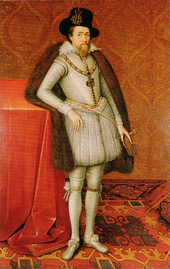
First official antismoking campaign was launched in 1604 by James I of England

From the BMJ:

Monarchs and their heirs are not always noted for their rational medical advice. But James VI of Scotland, who became James I of England in 1603, was different.

Published anonymously in 1604 but immediately credited to the king, A Counterblaste to Tobacco flew in the face of prevailing medical opinion by outlining some of the chief health risks of smoking more than three centuries before scientists made the connection.

Possibly the first official antismoking campaign, the royal pamphlet highlighted cost and passive smoking as two of the most powerful arguments against tobacco, while it lamented that addiction, peer pressure, and fashion were among the most difficult obstacles to overcome.


A Counterblaste to Tobacco is written in Early Modern English and refers to medical theories of the time (e.g. the four humours). In it, King James I blames Native Americans for bringing tobacco in Europe, complains about passive smoking, warns of dangers to the lungs, and decries tobacco's odour as "hatefull to the nose."

James's dislike of tobacco led him to authorize an excise tax and tariff of six shillings and eight pence per pound of tobacco imported, or £1 per three pounds, a large sum of money for the time.

References:
Royal insights on smoking - Moore 340: c1408 - BMJ.
Image source: James I, VI by John de Critz, c.1606, Wikipedia, public domain.
A Counterblaste to Tobacco. Wikipedia.

Twitter comments:

@CardioNP: 400+ yrs later I still wade thru smoke to enter the hospital.

Wednesday, August 25, 2010

Happy Women's Equality Day!

Today marks 90 years of women in the USA having the right to vote!

Because I've been running around like a fool this past week, I'm giving ya a graphical post made of things not of my creation. Enjoy!

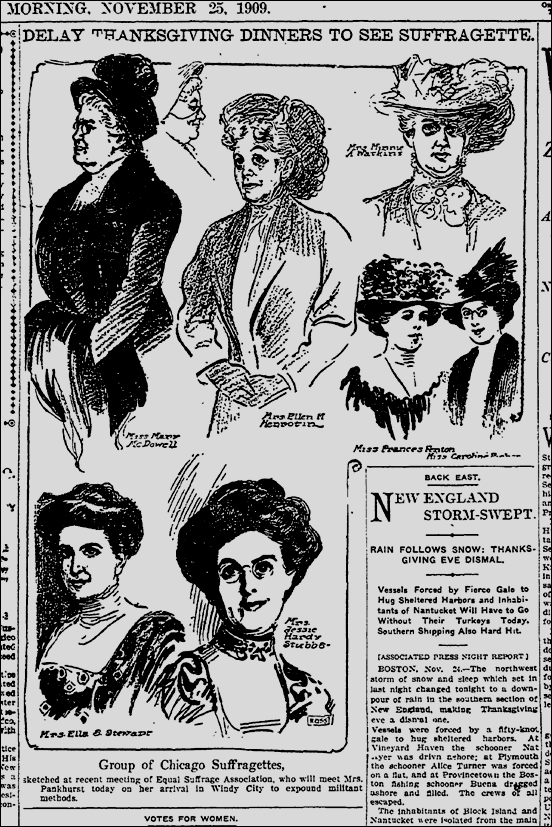
What to Chicago women do when a British suffragist is in town? Postpone Thanksgiving dinner!  Image from The Society Pages. One of the awesome things about living in Chicago is that I know I'm raising hell in a city that has a long history of women raising hell. Click over to see the newspaper account of this postponed dinner.


Have you received the email about women & voting? Kinda surprised it hasn't found a new life in recent weeks. Either way, enjoy these images from that email and two that I took myself:

Sunday, March 28, 2010

Women's History Month: Traveling into women's history

Today's Women's History Tidbit:
Amy Sedaris, Lucy Lawless and Jennifer Capriati were born.*


This was originally posted on the AWEARNESS blog. 
USA Today ran an excellent piece...called, "10 great places to honor our foremothers." It was a nice surprise as I took that short plane trip from Cleveland to Chicago.

Despite the fact that I read about the ten places on a plane, I am actually quite the road trip gal. I like having time to stare out the window, read a good book or knit another scarf. I love checking off one more state visited, even if most of the time I spend is in a family restaurant eating pancakes. The Arizona Women's Heritage Trail fits my definition of a dream vacation.

I'm lucky to have been in Jane Addams' Hull House many a time. No matter how often I go there for an event, I am still awed at the history of the place.

And the one trip I want to make out of all of them is up to Seneca Falls, to where it all started...the Women's Rights National Historical Park. That one will be a family vacation, as my daughter is named after Elizabeth Cady Stanton and the Baseball Hall of Fame is just a quick trip away. Oh and you know we'll pay homage to the women of the All-American Girls Professional Baseball League, even if USA Today didn't include them.

Where else would you suggest a women's history junkie take a stop? Is there a little-known tribute to a great woman from history in your neck of the woods?

* Source: Wikipedia

Thursday, March 18, 2010

Women's History Month: The Fly Girls are Finally Golden!

Today's Women's History Tidbit:
1989: Japan's Midori Ito captures the Ladies World Figure Skating Championship in Paris. She is the first woman to land a triple axel in international competition.*


This originally was posted at the AWEARNESS blog.

My third, last and happiest update on the women of the WASPs...They finally got their gold:

WASPS-gold.jpg

Can you pass a tissue? Look at that photo...those hands. Delicate as my late grandmother's, yet you know the history behind them. Those hands are representative of "1,100 young women, all civilian volunteers, [who] flew almost every type of military aircraft -- including the B-26 and B-29 bombers -- as part of the WASP program." Some women were too short for the program but somehow slipped through by standing tip-toe.

Yet because the women were civilian volunteers working to support the government, the government did little to support the 38 who died in the line of duty:
[26-year-old Mabel Rawlinson from Kalamazoo, Mich. ] was coming back from a night training exercise with her male instructor when the plane crashed...the military was not required to pay for her funeral or pay for her remains to be sent home. So -- and this is a common story -- her fellow pilots pitched in.
"They collected enough money to ship her remains home by train," says Pohly. "And a couple of her fellow WASPs accompanied her casket."

And, because Rawlinson wasn't considered military, the American flag could not be draped over her coffin. Her family did it anyway.

Now we know where the women got all their moxie from, eh?

But whether or not they lived to receive their Congressional Gold Medals, scores of us who learned all about how the Greatest Generation was composed of sacrificing baseball players and Rosie the Riveters, now know that there were also a group of Fly Girls who did things like tow "targets to give ground and air gunners training shooting -- with live ammunition."

And to have the awarding of their medals happen in March, Women's History Month, whose theme this year is "Writing Women Back into History," well, it's a little too much for this writer to comprehend without another box of tissues.

[Image: Columbia Missourian]


* Source: 2010 Women Who Dare Engagement Calendar from the Library of Congress

Sunday, February 28, 2010

Women's History Month: Chicago Calendars


I really, really want to blog every single day this month!

In honor of March 1, 2010, I will point you to all the Chicago area Women's History Month calendars I can get my grubby hands on. If you know one I missed, just let me know & I'll add it.
To find out more about Women's History Month, head on over to the National Women's History Project. 

Sunday, January 24, 2010

Feminist Parenting: Teaching History

As many of you know, I named my daughter after Elizabeth Cady Stanton. This wasn't in pure ignorance of Stanton's racist and classist argument for women getting the vote before Black men. It was rather in recognition of her igniting a movement that still lives today and brought us, women & men, so much. This spring she had to pick a topic for a research project. She picked three topics and her teacher chose Elizabeth Cady Stanton.

This weekend we were filling out the information sheets that make up her project and reading through the two books she has on Stanton & suffrage when she asked the $64,000 question. "She wanted everyone to be equal right?"

I've never had any thought of telling her about Stanton thru rose colored glasses. Far from it. I guess I didn't think she'd bring up the equality question. But I should have known better.

Luckily one of the books she has is If You Lived When Women Won Their Rights by Anne Kamma. In it one of the questions is about why Stanton and others were upset after the Civil War and the Constitution would be changed only for men. It handles it pretty well by previously discussing how most of the suffragists were also abolitionists and how Sojourner Truth was upset as well. I added in that Stanton also felt it wasn't right that uneducated men would be allowed to vote before educated women like her.

The kid was shocked.

And I didn't even think to touch on Stanton & Anthony's partnership with racists in the West. But we did discuss, after her daddy mentioned it, that back in that time, the only people who really could afford to be educated were people with money. She was then quite offended that she was named after Stanton and said, "I think I'll just think that I was named after the Queen Elizabeth."

Her dad & I laughed as I said, "Oh, mija, if you think what Elizabeth Cady Stanton did was bad, just wait till you learn about Queens."

I went into how everyone, Mom and Dad, Elizabeth Cady Stanton and Martin Luther King Jr. are all human beings. No one is perfect. 

I don't remember how we got back to her actual homework assignment, but we did. I know while the conversation is over for now, she's thinking about what she discovered.

And then I started to ponder how much harder it might be to tell her about my own failings one day.

This parenting thing is hard peeps. Really.

Clarification:  Other reasons that went into choosing the name Elizabeth included Elizabeth Bradford from Eight is Enough (yes, seriously), that Elizabeth is a versatile name, that Elizabeth is a strong name and that Elizabeth can be shortened to Buffy.

Wednesday, December 23, 2009

Saturday, December 12, 2009

Happy Jane Addams Day!

This was originally posted on the AWEARNESS blog.

Jane Addams was the first American woman to win a Nobel Prize - the Peace Prize in 1931. Since 2007, Illinois has marked her receiving the Nobel Peace Prize with a statewide holiday (although no school is canceled and people still have to go to work).

I actually like holidays where kids have to be in school, and it's not just because I want to get my daughter out of the house so I can go to work. Rather, I would hope that on Jane Addams Day (December 10th of each year), students are taught about the many amazing things she did in Chicago that still impact lives across the world.

Addams not only transformed the field of social work, she was also a founder and the first president of the Women's International League for Peace and Freedom, a founder of the American Civil Liberties Union (ACLU), a founder of the National Association for the Advancement of Colored People (NAACP) and she campaigned against World War I.

Addams didn't do her work alone. Far from it, as she was a resident of Chicago's Hull House:
The residents of Hull-House formed an impressive group, including Jane Addams, Ellen Gates Starr, Florence Kelley, Dr. Alice Hamilton, Julia Lathrop, Sophonisba Breckinridge, and Grace and Edith Abbott. From their experiences in the Hull-House neighborhood, the Hull-House residents and their supporters forged a powerful reform movement. Among the projects that they helped launch were the Immigrants' Protective League, the Juvenile Protective Association, the first juvenile court in the nation, and a Juvenile Psychopathic Clinic (later called the Institute for Juvenile Research). Through their efforts, the Illinois Legislature enacted protective legislation for women and children in 1893. With the creation of the Federal Children's Bureau in 1912 and the passage of a federal child labor law in 1916, the Hull-House reformers saw their efforts expanded to the national level.

Many organizations schedule events to mark the occasion of Jane Addams Day. On Tuesday I attended a portrayal of Addams performed by Annette M. Baldwin. I'm a women's history geek, so I really enjoyed it. Baldwin not only told Addams' story as Addams, but took questions (including one from a man who had met Addams) and showed a biographical slide show - with real slides, old school style. She travels around the country doing her shows, so do catch her if she shows up in your town.

Jane Addams was an amazing woman and continues to be a role model for us all, so whether you live in Illinois or not, take some time out to celebrate her life today. Happy Jane Addams Day!

Thursday, December 3, 2009

Hysteria: Historical Perspective


"Women under hysteria" from Wikipedia. D.M. Bourneville and P. Régnard, public domain.

From The Lancet:

The changing meanings of hysteria have mirrored the preoccupations of the societies that used the term:

Ancient Egyptians, and subsequently Greeks, blamed a displaced hystera, or womb, for many women's afflictions, including choking, mutism, and paralysis, although the term hysteria was not applied until later.

Hippocratic writings speak of a dry womb rising towards the throat in search of moisture, thereby impeding breathing.

As anatomical knowledge increased, such notions became untenable and Galen instead blamed blocked menstrual flow and sexual abstinence.

Galen suggested that retained sperm could contribute to male hysteria, igniting a debate which was to run for centuries over whether men could indeed suffer hysteria.

Psychiatrists have gradually replaced the term "hysteria" with "somatization disorder". In 1980 the American Psychiatric Association officially changed the diagnosis of "hysterical neurosis, conversion type" to "conversion disorder".

References:
Hysteria, Perspectives. The Lancet, Volume 374, Issue 9702, Page 1669, 14 November 2009.
Hysteria. Wikipedia.
Somatoform Disorder: Conversion. eMedicine Specialties > Pediatrics: Developmental and Behavioral > Medical Topics.

Wednesday, June 17, 2009

Death by mosquito - BMJ history video


"For this installment of our series we travel to the tropics to look at the beginning of our understanding of malaria. In 1900 Patrick Manson wrote a seminal paper in the BMJ Experimental Proof of the Mosquito malaria Theory he worked closely with Ronald Ross, who went on to win the Nobel Prize for medicine for his work on malaria."