Observers there was an assumption that in the near future we can expect to see a 7-inch tablets n / a Windows 8, as well as digital "reading» Microsoft Reader.
Such a conclusion is made on the basis of the experts that Microsoft has simplified the minimum system requirements for installing Windows 8. According to ZDNet, now a partner to install the software giant called OS devices may be fitted with screens with a resolution of at least 1024 x 768 pixels, not 1366 x 768, as previously.
Such a change in the minimum screen resolution for devices with Windows 8 speaks of course Microsoft to segment 7-inch tablets .
By the way, in the most popular tablet - iPad Mini is used by Apple's 1024 x 768. A little above this parameter in such known devices like Nexus 7 on Google and the Kindle Fire HD (1280 x 800).
It is important that the resolution of 1024 x 768 Aspect ratio assumes a 4:3, and 1366 x 768 - as 16:9. Since Soup 4:3 more comfortable for portrait mode, which is especially popular for reading e-books, for Microsoft partners with the new requirements a good chance to enter the market of digital readers on the basis of Windows 8.
It is possible that the release of such a device may be included in the plans of most Microsoft, signed in May 2012, a partnership with the largest U.S. bookstore chain Barnes & Noble. Under the terms of the treaty obligations Microsoft is investing 605 million dollars in the business partner for over 5 years.
Mary Jo Foley (by ZDNet), known for repeated reports about future software corporation, said the possibility of issuing company's own tablet based on Windows is quite real. In support of his hypothesis Foley provided a link to the resource, which published the full text of the contract between Microsoft and B & N, which refers to the probability of release of Microsoft Reader - Reader connected to the online Bookstore B & N.
In today's Virtual Era, the role of IT has changed due to the speed at which technology is evolving, and it requires the same evolution of our IT teams. In order for the teams to support, and carry out the goals of their organizations, they need the infrastructure to grow while becoming more agile and efficient. However, there are some challenges that come with these changes. Many companies, especially smaller ones that are just getting started, lack the resources with which they can use to make these changes. Additionally, it can be difficult to manage the outdated hardware and software which is used.
It's important that we begin working towards streamlining processes and making better use of the cloud in order to gain an edge over our competition, while fulfilling our company's objectives. There are five imperatives that we must follow in order to accomplish a smooth transition to the cloud. Each of these will help to transform IT as we know it and will help to reduce the costs and complexity. On their own, they each aid in self-funding and reduce costs and overhead expenses. Together, these five imperatives help IT become more agile, efficient and allow the IT team to use their time, energy and financial resources to focus on other areas of innovation and growth for the company. Let's take a look at the five imperatives:
Leverage the Power of Virtualization
The first thing that should be done is to virtualize data in order to boost efficiency. By removing touch points, silos and servers, costs are dramatically reduced. This task can prove challenging for companies who have an inflexible system that won't allow for full integration at the present. But since technology is ever-changing, more and more resources are becoming available which will help you be able to unify everything seamlessly.
Manage Your Data
Today, data is being created at unprecedented levels and it's difficult to manage due to it being relatively unorganized and inefficiently stored. We need to have it organized so that we can find what we want, when we want it with little effort. Our data needs to be able to be moved around easily and transferred to the device on which we want it, at the moment we want it. While it may seem reasonable to just add more storage devices to organize and handle the vast volume of data, the better choice is to virtualize it so that it can be everywhere, all the time. Virtual storage that is optimized and automated is the answer. Our data needs to be protected, able to be recovered and archived so that it can be integrated with our organization's existing infrastructure.
Enable Mobility
Many of us do our work virtually, working from home, around town or even while travelling the world. We may have team members that we seldom see face-to-face, if we've ever met them at all. It's essential to be able to have access to data and applications from anywhere there's a wi-fi connection, at any hour of the day. Our teams also work with a variety of devices, such as tablets and smart phones, so it's important that they have safe connections that allow employees access to the information which they need to get their work done.
Consumerize IT
As our workforce becomes more tech-savvy, IT needs to be made accessible to everyone in order to enable our employees to work remotely with their own devices of choice. There's a vast array of devices, operating systems, hardware and software that our team members are comfortable using, so the IT organizations need to put systems in place to ensure that our data is monitored, protected, secure and backed-up, while still remaining accessible to everyone in the company.
Transition To the Cloud
In order to leverage our resources, work more efficiently, reduce costs and streamline management, we need to make the move to the cloud. A remote server and nas storage make this possible. Each company has its unique needs and will go about their transition differently. However, getting into the cloud paves the way for a more advanced, efficient working environment.
As we make move forward into this Virtual Era, and transition to a more mobile work environment, we must keep these five things in mind. Not only will it help with the transition, but it will ensure our data is secure, yet available to the people that need it.
Was the announcement of ultrabook ThinkPad T431s Lenovo with a clear (for its size) display. This is the thinnest model in the ThinkPad T with strength, complying with the standard Mil-SPEC 8. The device operates on 3G and 4G-network.
Device is based on a chip Intel Core i5-3337U (optional proposed processor Core i7). Resolution 14-inch screen - 1600x900 pixels (matte finish), Brightness - 250 nits. The display tilts 180 degrees. Has 4 GB of RAM and a hard disk with a capacity of at least 320 GB or SSD.
Not without Wi-Fi, Bluetooth 4.0 and WWAN, and connectors Ethernet, two USB 3.0, 3,5-mm composite input / output, VGA and Card Reader 4-in-1. As an operating system is Windows 7 or Windows 8. Optional features backlit keyboard.
Dimensions of the gadget: 330h226h20 mm and weighs about 1630 ThinkPad T431s Home sales scheduled for April at a price of 949 dollars. The plans includes the release Lenovo 12-inch analog of this device.
ASUS , already famous for its Transformers, a date for the start of an unusual release monoblock Transformer AiO based on Windows 8, which is easily converted into a tablet n / a Windows or Android. announcement of this gadget was held in June 2012.
The model is built on the processor model Intel Core i5 (or i7), equipped with a port USB 2.0, USB 3.0-cheryrmya ports, Bluetooth 4.0 (for keyboard and mouse), and Wi-Fi modules, hard disk with a capacity of at least 1 TB card reader and Ethernet- port.
Display 18.4-inch diagonal and a resolution of 1920 by 1080 can turn into a tablet by "otschelkivaniya" from the main unit. His native OS is Android 4.1 JB, but it can also function under Windows 8, playing the role of Remote Desktop to the main unit.
In monoblock provides connectivity via HDMI external monitor, which can display the desktop Windows 8, while on your own candy bar display will be "streamed» Android.
Endowed with a huge plate of 4-core processor NVIDIA Tegra 3, front camera 1 megapixel, 2 GB of RAM and 32 GB of user memory and microSD-slot. His weight (2.4 kg) did not have to use "in the hands", so the gadget is endowed with a special pull-out stand.
Admission unusual devaysa ASUS Transformer AiO availability is expected on April 12 at a price (in dollars) of $ 1,300.
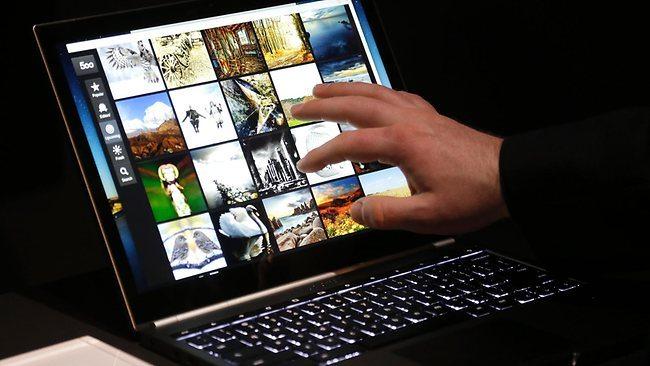
Google's Chrome OS is still a small player in the PC market, unlike Android's dominance of mobile. However, the search giant is making moves to improve its position. This month it has revealed the first touch screen Chromebook, but is it any good?
Touches Of Chrome More and more modern laptops are taking advantage of touchscreen technology in order to help this traditional portable PC form factor take the fight to the booming tablet market.
Microsoft's Windows 8 operating system (OS) is explicitly designed to work well in a touch-based technological environment, although even this latest offering from one of the world's largest companies is having a tough time holding onto the market share established by its forebears.
Google has the smartphone and tablet industries wrapped up with the finger-friendly Android, but it remains a very minor player when it comes to the laptop market.
Here its Chrome OS is facing an uphill struggle to convince consumers that it is worth picking over Windows or Apple's OS X, largely because it is based almost entirely in web connectivity and the cloud, which renders it almost useless if you happen to lack broadband at home.
Google is hoping to convince people that Chrome OS is still a viable alternative with the introduction of a new Chromebook device that is already being compared with Apple's MacBook Air.
The new laptop is known as the Pixel, which is a reference to the fact that its touchscreen display has allegedly been endowed with the highest pixel density of any portable PC currently on the market.
Google's Linus Upson helped to reveal the Pixel and said that it has a ppi rating of 239. That is not quite as impressive as the iPhone 5's 326ppi, but of course users will not be holding the Pixel quite so close to their faces.
The screen is also of course touch sensitive, which is why Upson went all out in promoting the tactile intuitiveness of the Chrome OS when interacted with via fingers rather than a keyboard and mouse.
Users can swipe between open applications, change tabs on the browser and generally engage with most aspects of the OS without having to use anything else other than their digits.
The screen measures 12.85 inches across the diagonal and has a native resolution of 2560x1700, whilst its Gorilla Glass surface gives its a premium glossy finish and should also make it durable, which is important for something that is going to constantly come into contact with a user's hands.
The Pixel is powered by an Intel Core i5 processor and uses solid state storage to keep everything running quickly, as well as minimising boot times.
Connectivity is also impressive, with both Wi-Fi and 4G LTE antennas housed within its slender chassis.
Laptops with touch screens still have a long way to go if they are going to fight back against tablet rivals, so this Chromebook still has a lot to prove.
AUTHOR BIO Maria is a blogger and tech specialist who reports for a number of outlets both online and off. She has used touch screens for PC interaction for many years and is pleased to see OS platforms finally adapting to fit in with tactile advances made by hardware manufacturers.
When the iPad made its debut in 2010, some consumers thought it was a bridge between smartphones and laptops. At the time, tablets were known for their mobility, but also their distinct lack of computing power. In the last few years, the mobile devices have gained functionality, and they now rival many laptops in terms of available features.
With the rise of ultrabooks and other slim computer models, tablets and laptops have found themselves on somewhat equal footing. As manufactures shrunk their computers, they stripped away features like optical drives, and now the only distinguishing feature between the two devices is the built-in keyboard.
That could be changing soon as convertible tablets become more popular. Windows 8 seems to have motivated manufactures to create hybrid gadgets that combine the computing power of laptops and tablets. With fully integrated keyboards, the devices could be the next step in personal computing technology and might replace laptops. Below are some of the best models that could be ushering the next digital age.
Lenovo ThinkPad X230
Lenovo is well-known for its products' excellent performance, and the ThinkPad X230 continues this positive tradition. According to Laptop Magazine, the battery lasts a full day. Additionally, the keyboard is sturdy and responsive and doesn't add too much weight to the device.
The news source points out that one of the few drawbacks is touchscreen's lack of functionality. While the device responds to most commands, it sometimes can be difficult to make selections and navigate between multiple windows without a touchpad or mouse.
HP EliteBook 2760p
Convertible tablets must be durable so users can switch between the laptop and tablet modes without risking damage. The HP EliteBook 2760p is as durable as it is functionable, with a sturdy hinge that can endure regular wear and tear as well as major accidents.
You should note that this model runs on Windows 7. Unlike Windows 8, the older operating system doesn't have an interface that has been optimized for tablets, so it may be difficult to use it as a mobile device.
ASUS VivoTab RT
The VivoTab RT is a tablet that boasts a detachable keyboard as its main feature. With the keyboard, the device only weighs 1.5 pounds, which is less than most ultrabooks and on par with many tablets.
The gadget runs on Windows 8 RT and has two separate menus for tablet and laptop mode. Also, the Gorilla Glass display is scratch-resistant and features wide viewing angles so colors aren't distorted.
These are only three of the convertible tablets that represent the next wave in computing technology. Do you plan on leaving your laptop behind for a hybrid device?
Those wishing to purchase tablets Surface Windows 8 Pro with Intel will have to wait a bit. Corporation Microsoft has appointed start selling model in the U.S. and Canada on February 9. It can be purchased through the company stores Microsoft (online and retail), as well as in large retail chains.
Underlying Surface Windows 8 Pro is 22-nanometer Core i5 processor third generation. The touch screen has ClearType Full HD resolution of 1920 × 1080 pixels, and diagonal size 10.6 inches. There are Mini DisplayPort and USB 3.0-interface, two cameras and a slot for MicroSDXC-cards.
The thickness of the device - 13.5 mm, weight - 903 grams. The cost of the version with 64 GB of memory is set at $ 899, and the version with the memory of 128 GB - $ 999. Scope of supply implies pen Surface Pen.
Separate accessory for $ 120 will be offered cover with keyboard Touch Cover, for $ 130 - with Type Cover, as well as approximately 70 - Wireless Mouse with Touch Control - Wedge Touch Mouse Surface Edition.
Dell company has intended to break the stereotype of the prohibitive cost of tablets based on the operating system Windows 8 from Microsoft - CES 2013 at the event, she showed tablet Latitude 10, the approximate price of which does not exceed 500 U.S. dollars. Specify that the device is based on x86 processors from Intel, and not on a regular ARM-solving, that is, and Windows 8, put on it, is full.
The official announcement of the tablet Dell Latitude 10 accompanied by listing all of its specifications and comparisons with model Latitude 10 Essentials (release took place, the price starts at 650 dollars - approx. MobileDevice). The basis of the Tablet PC Dell Latitude 10 will become Intel Atom Z2760 processor with two 1.8 GHz cores. He supervises the work of memory, 2 GB of way here, and handles graphics. Picture supplied by 10.1-inch multi-touch screen with a resolution of 1366x768 pixels, which, plus everything is based on a matrix of IPS.
Unlike Latitude 10 Essentials, a new tablet from Dell has a much more modest amount of internal memory. However, it will be enough most users, because to score all 32 gigabytes of information will not be easy, especially given the availability of slots for cards SD. That is a decrease of storage and reduced the cost of Latitude 10 to $ 500. On the computer cover removed ports microUSB, miniHDMI, USB 2.0, and the delivery includes a docking station with additional connectors, including those with Ethernet. Release Dell Latitude 10 as it became known, is scheduled for March.
Company Micro-Star International introduced a new device - ultrabook tablet MSI Slidebook S20 , which was shown at Computex 2012.
Technical equipment of the gadget can be designated as "advanced", preinstalled OS - Windows 8. MSI is positioned novelty as the perfect solution for business and leisure. In the unfolded state the novelty can be used as a laptop when closed - as a tablet computer.
Specifications MSI Slidebook S20 :
Processor: Intel Core i5 (third generation);
OS: Windows 8;
Memory: RAM - up to 8 GB DDR3 (1333 MHz), built-in - 64 GB or 128 GB, mSATA SSD, you can connect an external 2.5-inch HDD;
Ports: RJ-45, miniHDMI, two USB 3.0, audio output 3.5 mm;
Communication: LAN (Gigabit Ethernet), Bluetooth 4.0, Wi-Fi 802.11 b / g / n;
Battery: 3800 mAh 3-cell;
Dimensions: 300 × 196,5 × 19,8 mm, weight - 1,6 kg.
Chinese company Lenovo , producing tablets, smartphones and laptops, still taking orders for its new and highly original device - the tablet IdeaPad Yoga, running on OS Windows RT. Novelty is equipped with two screens: when closed the gadget can be used as a plate, cover folded it becomes a regular Windows-laptop.
If the buyer decides to make an order for the plate, the presence of coupon code Cybermonday reduce the initial price to $ 679.20. According to the manufacturer, delivery of the tablet can take the whole month, so by ordering now, you can get the Lenovo IdeaPad Yoga 11 in time for the New Year (if you're lucky).
The basis of the tablet - a quad-core NVIDIA Tegra 3 (1.4 GHz). The gadget is equipped with two 11.6-inch screen (resolution - 1366 × 768 pixels), RAM - 2GB.
For $ 679 you can buy a tablet with 32 GB of internal memory (about half of which will be occupied by the OS Windows RT and pre-installed applications), 64 GB tablet will cost $ 759.20.
Both devices are equipped with modules Bluetooth 4.0, Wi-Fi 802.11n, two cameras and output HDMI (video format can record 720p).
Since Lenovo IdeaPad Yoga 11 runs on Windows RT, then the preinstalled software is present the free version Microsoft Office. Must be borne in mind that the process for other versions of Windows on this device will not work, which limits the range of the user's choice app store Windows (very scarce).
Lenovo has released another tablet with two screens - a 13-inch IdeaPad Yoga 13, which is based on a hardware processor Ivy Bridge. This device works on the "adult" version of Windows 8, the initial price of the device - $ 999.
Main mobile hit from Microsoft is now the system of Windows Phone 8, more powerful and functional than its predecessor, the seventh version. All first-generation smartphones will soon be upgraded to Windows Phone 7.8 with an interface similar to the eighth platform. The developer says that the upgrade process will start early next year.
The update will be released for the maximum number of devices, that is, almost all of the previous generation of smartphones will be able to work with the old system when the new interface, version 7.8 is a cross between which have already become classics of Mango and the new Microsoft Windows Phone 8. Recall, the first generation of smart phones will not be able to upgrade to the eighth version of the system.
Vice-President of Microsoft and the department supervisor Windows Phone Terry Meyerson (Terry Myerson), said that in many countries around the world are starting to appear the first generation of smart phones preloaded with Windows Phone 07/08 . This means that you can buy them already before the new year, but the update is available smartphone to get this version a little later, right after the holidays. A full list of updated features promised with the official release of the system.
As previously reported, ASUS VivoTab TF810C - a tablet on Windows 8, made on the basis of processor Intel Atom Z2760 Clover Trail. The device is equipped with 11.6-inch Super IPS screen (resolution - 1366 × 768 pixels), as well as a docking keyboard, battery which prolongs battery life of your computer.
In addition, the tablet ASUS VivoTab TF810C has an active digitizer Wacom, the presence of which makes it possible to use active digital pen. The new tablet by ASUS Windows 8 is already being sold in the U.S. starting price - $ 799.
ASUS VivoTab TF810C equipped with 2 GB of RAM and a solid state drive to 64 GB. This is one of the most expensive tablets based on Intel Atom commercially available today, as the tablet is worth $ 799 as it is. Docking keyboard sold separately, the price - $ 200.
According to the manufacturer, the tablet without the keyboard can be used in techenie10 hours, connect the dock extends that period to 19 hours. In addition, the device has Wi-Fi adapter and Bluetooth, as well as two cameras front (2MP) and major (8 MP).
Since VivoTab TF810C equipped with an X86, then it uses a full version of Windows 8. This means that at this gadget, you can run any applications written for earlier versions of Windows. This feature is absent in the Tablet PC ASUS VivoTab RT , which is equipped with ARM-processor NVIDIA Tegra 3 and the operating system Windows RT. But the price of this tablet is much lower - only $ 599.
If the buyer believes that the $ 799 for the tablet - it's too much, it can be recommended to that wait for the start of sales of "tablet" Lenovo ThinkPad Tablet 2 , which is also equipped with a digitizer, 2 GB of RAM and 64 GB of internal memory, and operating system Windows 8. The price of the device starts at $ 649.
Was the announcement of a tablet computer from the company VivoTab ASUS based on the Intel. Novelty is based on the Atom Z2760 processor with two cores at up to 1.8 GHz with graphics controller Graphics Media Accelerator (frequency up to 533 MHz) and is equipped with a touch screen type Super IPS + with a 11.6-inch diagonal and a resolution of 1366 by 768 pixels.
"Multi-touch" screen is protected by glass Corning Fit and supports management through fingers, and an electronic pen. In the presence of 8-megapixel camera and a sound system ASUS SonicMaster, guaranteeing high quality sound. Battery that provides up to 10.5 hours device battery life.
The connection of the dock Mobile Dock, equipped keyboard, touchpad and optional battery pack (with it while the tablet away from the wall up to 19 hours). Product size in thickness of 8.7 mm and weighs 675 grams.
Management is based on Windows 8 . New priced at $ 800.
Representation of Lenovo published on the page of the company's Facebook picture concept Pocket Yoga . The gadget is positioned as a miniature version of a corporate laptop IdeaPad Yoga . In the illustration, we see a small wide-screen display, which leans on the base unit with a QWERTY-keyboard.
On the case of Lenovo Pocket Yoga has two full-size port USB, the similarities with laptops and desktop computers to an end. Mobile computer is equipped with a small screen diagonal of about 7 inches, Pocket Yoga can work on the basis of processor Intel Atom series and managed a full version of Windows 8.
If Lenovo will continue to work on the project Pocket Yoga and actually release something like this on the market, the success of a computer will be provided, because the alternatives to this ultra compact computer yet. Who in his time almost cult mobile phone Nokia Communicator under the present power of the processor would have been a really interesting proposal. But we can just say that the battery life Lenovo Pocket Yoga is unlikely to be impressive, no more than four to six hours, I suppose.
Most computers Lenovo running the new Windows 8 focused on the middle segment, but this time the Chinese manufacturer introduced a line of budget computers, the new nettop, which is positioned as a HTPC, as well as a collection of candy bars for all occasions.
Multimedia PC Lenovo IdeaCentre Q190 HTPC compact size, body thickness of only 23 mm, but in contrast to the traditional nettop is not installed a series of low-power processor Atom, and "adult" chip Core i3, which included up to 8 gigabytes of RAM. Amateur new compact computers Lenovo IdeaCentre Q190 will cost at least $ 349, it's not much.
As for the new candy bars, the new line of solutions are extremely modest. Computers Lenovo C240 and C245 are working on chips Intel Celeron and AMD E2 and manufactured in unregulated housing with 18.5-inch screens.
Adjustable, installed on their 20-inch counterparts C340 and C345 with the same processor, and a 21.5-inch C440 and C445 are available Intel Core i3. The flagship in the line stands Lenovo C540 with a 23-inch screen and a processor Core i3. The prices are quite modest, $ 479 for the C345 and $ 549 for the Lenovo C540.
Our old friends from Twitter-account @ evleaks continue to please interesting leaks, and this time, they excelled with press photos of the latest smartphone Samsung ATIV Odyssey (SCH-i930), designed for LTE-network operator Verizon Wireless and operates under the operating system Windows Phone 8 .
Available in showrooms Verizon smartphone Samsung ATIV Odyssey to appear in the next month, and she novelty, according to previously leaked information applies to decisions fairly high class and holds a 4.8-inch Super AMOLED touchscreen display with a resolution of 1280 x 720 pixels and chip Qualcomm Snapdragon S4.
The composition of the SoC includes a CPU with two cores and a clock speed of 1.5 GHz plus Adreno 225 graphics, which, coupled with 1 GB of RAM should provide acceptable performance gadget. In addition, the rumored Samsung ATIV Odyssey features include 16 GB of internal memory for storage of content, and an 8-megapixel camera on the back capable of recording Full HD video.
Microsoft is not new to the tablet, but the OS and Windows RT Surface device the company hopes to reach its first significant success in this market segment. Processor borrowed from the mobile phone industry, as well as using a simplified version of Windows 8 in combination with a special high-quality piece of hardware, Microsoft, at first glance, it was possible to do exactly what you need.
Microsoft Surface with Windows RT
For Microsoft - Windows-based processor ARM - undeveloped territory. Together with Windows RT provides a wide range of activities of companies such as NVIDIA, Qualcomm, Texas Instruments, and others, to promote affordable variety of chipsets, which are often found in the tablets with Android.
In the case of Model Surface, Microsoft chose a quad-core Tegra 3 from NVIDIA with the RAM to 2 GB. This chip is known to us for smart phones and tablets based on Android - most features almost identical Surface mobile gadgets. You can choose from 32 GB or 64 GB of internal memory (available microSDXC slot). Issue 16 GB version is planned.
As expected, the device has two stereo speakers (pretty quiet, even when running at full capacity), dual digital microphones, HD-video output, which is an electronic key for $ 39.99 is connected to HDMI and VGA. In addition, a set of sensors: light, accelerometer, gyroscope and digital compass, but no GPS. Microsoft also does not offer a tablet with network support 3G/4G, referring to the results of the consumer survey, which showed that the majority of devices, similar to the Surface, are not used outside of the home or office.
Unlike its competitors, Microsoft has equipped the tablet Surface full-port USB 2.0, with which the gadget can connect peripheral devices such as a printer, keyboard, mouse and other accessories. Besides, there is also a Cover port, working with magnetic keyboard-cover Microsoft. Finally, there is a front and rear cameras - LifeCam, each of them can shoot HD-format video 720 p.
Microsoft currently offers three versions of the model: Surface tablet entry level price of U.S. $ 499 - with 32 GB of memory for storing data and a holster, for $ 599 you can buy a Surface to 32 GB with a black keyboard cover-Touch Cover; over 699 dollars you can become the owner of Surface with 64 GB and black Touch Cover.
Design and construction
We must pay tribute to Microsoft on the design of the devices and their design: the hardware division of the company primarily known for its range of simple peripherals - keyboard, mouse, trackpad, and the Xbox, but the tablet Surface has a completely different level of material selection. If Microsoft and you had something to learn from Apple, it is - the attention to detail, and while the Surface significantly different in design and suitable for portable computers on iPad, both gadget characterized demanding and rigorous concept.
Tablet clearly, accurately and beautifully done: the weight - 676 grams - is uniformly distributed throughout the body, so when you hold it in your hands, regardless of the position, you do not feel over-or center of gravity. «VaporMg» - the name of a specially treated magnesium alloy, which uses Microsoft - housing made of it, at the same time smooth and reliable capture hand. Experience in the first days showed that the tablet is quite resistant to scratches. This also means that there is not enough and fingerprints.
Surface - from Windows RT - intended primarily for use in landscape mode, so Microsoft has supplied a single tablet features - support extension at the rear. Stand runs the entire width of the device and takes up most of his height. The plate is carefully processed metal snaps during the opening, which is nice, and at the hearing, and feeling. Thus, Surface rises to the level of 22 degrees for easy typing or watching video. Close the stand is also nice, hidden magnets ensure that no vibration or fluctuations in the housing.
The idea was originally a stand in the project design. Thus, the camera on the back, has the same angle as the stand - 22 degrees, when Surface is vertical - the camera facing forward, not down - on the table. At the same time, the front camera plate is straight, it is assumed that the user is in any case looking at her, even when the tablet is worth.
Screen In addition to direct Windows RT, the display is the most controversial aspect of the Surface. Microsoft chose the 10.6-inch screen, which is best suited for the size of the keyboard and multitasking split panel Windows 8/RT, in contrast to typical display sizes from other manufacturers - 10.1 and 11.1 inches. What the company has done - so it's not out of the ordinary resolution of 1366 x 768, not striving for a resolution of the third-generation Apple iPad called Retina.
So, while other tablets are intended to accommodate as many pixels that are unlikely to be needed under normal circumstances, Microsoft refused to join the race pixel weapons. Although, it seems, the corporation went on a compromise - in a few months will Surface running Windows 8 Pro, resolution of which will be 1920 x 1080. Instead, Microsoft relies on ClearType HD - its latest version of sub-pixel rendering.
ClearType actually dates from the end of 1998, although first introduced in Windows, when the released version Vista. The essence of this method is to use three separate sub-pixels (red, green and blue) for each full pixels to smooth fonts. Thus, the text resolution is tripled. So, instead of processing each individual LCD-pixel, ClearType can include or incorporate any of the sub-pixels, providing a more fine-tuning.
Not surprisingly, the ClearType met a mixed reaction. On the one hand, with the help of increased levels of detail, in contrast to that which gives the traditional definition screen, however, due to the fact that each pixel has a different color, there is color fringing. Depending on what kind of subpixel is active, it can be red, blue or green. Some users believe that the bezel makes the text more visible, while others complain of its vagueness. During the reading of the text, at least one person who used the Surface to read large amounts of text, a headache.
Fortunately, other aspects of processing display more successful: for example, optical communication LCD-screen and cover the glass - reducing the distance between the two surfaces increases the transmission of light and prevents internal reflections that cause glare. This technique is widely used in smartphones, but for larger devices, such as, for example, tablets, rarely used, this is due to the high cost and complexity of the process of layering.
In general, mixed impressions. If your vision and ClearType HD match, then, together with the associated display panel do without the help of high resolution, which offers Apple and Samsung in their plates. Still, it is worth remembering that the more pixels requires significant illumination, and therefore of more batteries (which increases the weight, size and charge time tablet.)
But you need only increase the scale of graphics in the browser Surface and compare it to the iPad 3, as will be clear on the difference in resolution. The same can be observed when viewing the photos in the gallery: Microsoft loses screen tablet Apple.
Touch Cover and Type Cover Surface and its keyboard are designed together: one of the reasons that Microsoft was designed to make the screen more than the 10.1 inches in the fact that with this amount decreases the width of the tablet, and the ability for the keyboard is lost.
Already, you can select 2 Keyboard and Touch Cover Type Cover. The Touch Cover - the most subtle of the two - a thickness of only 3 mm, made of sensory structures and plastic, is attached to the bottom of the Surface and also acts as a protective cover for the front panel, a In addition, the method is also fast typing. Microsoft announces months of experiments to make absolutely sure that the magnetic clasps are strong enough and will not allow the tablet to fall out from the case, but at the same time, they should be easy to open - so that a child of three, and to deal with it.
On the keyboard, no moving parts, only the outlines of the buttons, made by laser on plastic. Inside - pressure sensors that track every movement of the fingers. Thus, the pressure should be about 40 g, although Surface also uses sensory acuity to track the key sequence, extending them to register even if you do not finish the planned action.
Naturally, this is not an ideal alternative to traditional keyboard, but due to its functionality, this device is capable of providing high speed printing, than the screen itself. The combination of a small level of compliance and the reverse textured connection provides increased the number of words to be printed in one minute. Microsoft claims that to become familiar with a new keyboard take a little less than a week, and over time can achieve double speed, as opposed to a set of on-screen. And although we did not go to that level, but the preparation of bulk e-mail and other types of messages to be comfortable.
For those who can not get used to the keyboard, so-called zero-profile, fits Type Cover. Accessory twice as thick - 6 mm, and has a mechanical keys, though, and with a minimum speed. In this case, the total weight of the tablet is added 250 g (as opposed to 200 g Touch Cover). Thus, you get a full keyboard plus a set of function keys, media control and navigation, in addition there is the trackpad. Just as with Touch Cover, closing the screen keyboard automatically switches to standby mode Surface.
Even with increased depth keyboard does not look like a traditional analog. Feeling when typing akin to those that make use of modern ultrabooks. Wide gap - special privilege.
Surface modification of the basic platform Windows RT with 32 GB of memory offered for $ 499, and with accessory Touch Cover (black) - for $ 599. For the version with 64 GB of memory, complete with Touch Cover will have to pay $ 699.
Cover of Touch Cover can be purchased separately as an accessory for $ 119.99 in a variety of colors, including white, blue, red and purple. Case Keyboard - Type Cover for $ 129.99 is available in black only.
Battery Microsoft claims that 31.5 watt-hour battery, used in Surface, has the charge, which is enough for day use. We extensively use the tablet all day, combining the work of a web browser, some applications, local and streaming media, as well as testing the operation of the camera. Microsoft tablet proved to be very reliable.
The most significant is the power consumption in the standby mode. While we are used to charge the smartphone every night, with plates such a process can be irregular. Expected that the charge lasts for a long period of time, respectively, the device should work in any time when he will not need one.
From this point of view, Surface loses its competitors. If the iPad can not enjoy a few days and still be confident that he will be a certain level of charge, the Surface is too wasteful standby. Leaving him with a charge of 30% without the active use, after 6 hours, we found that he had passed out.
Microsoft can still improve power management. It is possible that some corrections in the software will increase battery life. We do not seem so intractable problem, users simply have to consider this nuance battery in daily use.
Conclusion After all, the whole point of the question in the ecosystem. If you're already using the products Microsoft - Windows Phone, Xbox 360, or simply on your computer is Windows 7, then a tablet Surface fits your world than iPad or tablet running Android. Moreover, if you are subscribed to Xbox Music, a streaming audio service for Microsoft, it will also purchase Surface justified, given the more cross-platform applications and those that are just getting ready to launch.
The usefulness of ClearType HD pointless to argue, it's a private matter, but still relatively difficult to criticize Microsoft hardware. Team of creators Surface, taking the concept of increased attention to detail in Apple, significantly rethink it. The result is a perfectly designed tablet with a really useful design elements, for example, stand. We can argue about Touch Cover and Type Cover, how about trying Microsoft abandon a separate keyboard. But Surface is certainly practical gadget without these accessories, although their use of the same Office provides a comfortable fit.
As for Windows RT, then the operating system will be a real stumbling block. Taken for granted the fact remains that the number of applications it loses its competitors. In addition, some users Windows in principle is not perceived. But it is difficult to explain the invisible at first glance the difference between RT and Windows 8, so it will take time until the Surface take its place in the world of tablets. It will happen, but with some difficulty, perhaps with the advent of Surface Pro, having a high-resolution display and a digital pen, tablet Microsoft finally gets the respect it deserves. Source SlashGear.com
ASUS has with Microsoft held a press conference dedicated to the market tablet-Transformers and ultrabook on Windows 8. We are talking about devices such as tablet computers ASUS Vivo Tab and Tab Vivo ASUS RT , ultrabook-transformer ASUS Transformer Book, ultrabook ASUS TAICHI, laptops ASUS Vivo Book (X202, S400, U38), ASUS ZENBOOK Prime UX31A Touch - ultrabook, equipped multitouch display and ASUS ET2220 - Series 21.5-inch one-piece computers.
The 11.6-inch tablet computer Vivo Tab is perfect for working on the go, and Vivo Tab RT - a lightweight multimedia tablet.
ASUS Vivo Tab (ASUS TF 810) equipped with the latest processor Intel Atom, 2GB of memory and user memory to 64 GB. A key feature of the device is a mobile docking station, through which Vivo Tab can be converted into a compact netbook with a keyboard and touchpad. In addition, the docking station adds a pair of USB-ports, and increased battery life due to the additional battery. ASUS Vivo Tab will be available in late November - early December at a price of $1,266.64 USD.
The structure of the hardware platform ASUS Vivo Tab RT (ASUS TF600) includes 4-core NVIDIA Tegra 3 processor with integrated graphics core, 2 GB RAM and 64 GB of user memory. As Vivo Tab, it can be used in conjunction with the mobile dock, which offers the keyboard, touchpad, USB-port and an extra battery. Tablet ASUS Vivo Tab RT is already available at a price of $949.66 USD.
ASUS Transformer Book is a laptop that can quickly transform into a tablet PC - just remove the screen from the keyboard. In the hardware component Transformer Book is the Intel Core i7 third generation solid-state drive and a hard disk. Built-in speaker system with ASUS SonicMaster audio technology provides clear sound with deep, rich bass. ASUS Transformer Book will be available in mid-December at a price of $1,899.96 USD.
Opening the cover ASUS TAICHI looks like any other ultrabook with a full size keyboard and touchpad. But as soon as the lid is closed, the device turns into a tablet PC with multi-touch screen and stylus support. Although both screens are connected to the same hardware configuration, they operate independently of each other, allowing two users to work directly with TAICHI simultaneously. Performance provided by Intel Core processor third-generation, fast SSD and dual-band wireless module Wi-Fi 802.11n. ASUS TAICHI will be in stores in early December and will be sold at a price of $1,646.63 USD.
Among the features of the series laptops ASUS VivoBook (X202, S400, U38) manufacturer said quality materials, wide choice of colors and, most importantly, easy touch screen. X202 series laptops are already on sale at a price of $569.99 USD. Ultrabooks S400 series will be available this month at a price of $1,044.98 USD, and the U38 series notebooks will be available in early December at a price of $886.65 USD.
ASUS ZENBOOK Prime UX31A Touch - this is the first model in the ZENBOOK, equipped with a multitouch display. Novelty has a powerful hardware configuration that includes an Intel Core third-generation solid-state drive up to 256 GB. As for the other characteristics ZENBOOK Prime UX31A Touch, we can note the Super IPS + screen with wide viewing angles (178 °), high-speed interface USB 3.0, as well as dual-band wireless adapter Wi-Fi 802.11n. The appearance on the market ASUS ZENBOOK Prime UX31A Touch is expected in mid-December. The device will be available at major retailers and electronics at a price of $2,026.31 USD.
Monobloc 21.5-inch ASUS ET2220 Series computer in a compact package. ET2220 Series models have a powerful enough for any daily tasks configuration that includes an Intel Core i5 third generation and up to four ports USB 3.0, a multi-touch screen models of the ET2220 is a suitable means of interaction with the user interface of the new operating system Windows 8. ASUS ET2220 device appear on the market at the end of December and will be sold at a price of $791.65 USD.
Windows 8 officially announced, and the next exit and mobile computers based on it. At Acer - Aspire S7 is in 11 and 13-inch format. Both have touch IPS-screen, aluminum body and accompanied by a powerful advertising campaign with Megan Fox in the lead role. We met with the news at an event in London. What they can to really catch on?
A new era is said about the release of Windows 8 at Microsoft, has started only recently. But equipment manufacturers have begun to actively advertise any gadgets with this system. The new operating system from Microsoft is quite different. So different that to underscore its capabilities had to redefine the concept of conventional computers. Even a few months before the release of "Eight" the Internet is replete with images of something strange - hybrids laptops and candy bars to the plates.
It is understandable - after all it is necessary to somehow justify the transition to Windows 8. Of course, working with a "magic tile" of Windows 8, and can be a mouse, but the irrepressible human mind can not resist the deadly difficult question "why?". Here also we have a lot of devices with touch screens that fold and bend, so that they feel comfortable poking fingers.
Like many others, Acer has decided to strike at the most compact computers, which for the second year as presented ultrabook. Acer was the first at the Aspire S3 , after about six months, he added Aspire S5 , and now we come to the Aspire S7. Its release is timed to coincide with the release of Windows 8, and all the new features of the operating systems are supported from and to.
But not enough to take one of the old ultrabooks, insert the touch screen to draw on the key [Windows] logo eights and salable. There was a lot of work and on the design of the device. The design of appearance, ergonomics, the cooling system. Acer, like many other companies, tried to completely change the feel of use. This not only allows you to conveniently work with Windows 8, but also attracts customers. Finally in the notebook segment, there was something new!
Aspire S7 - honest ultrabook new generation. The difference between him and the S3 or S5 is very significant and is manifested primarily in the design. The novelty is somewhat similar to the first Aspire S3, something on ultrabooks ASUS, but something - and the MacBook Air. However, neither of which the secondary can not be considered.
Acer tried to bring the design to modern Aspire S7 flagship smartphone. Last today tend to be the most thin case and a screen with a higher resolution. That is what we see in the new ultrabook. The thickness of the 11.6-inch S7 is only 12.2 mm (less than half an inch), and the 13.3-inch and even less - 11.9 mm. With these parameters they can be put on a par with tablets, not to mention a ultrabook. Weight is also very light - 1.04 kg for younger model and 1.30 kg in the older.
The main idea of the exterior Aspire S7 - this is perhaps the harmony between the curvy body and the "direct rigor" of the main surfaces of the laptop. Sharp pointed edge of the case, without the smooth bevel. According to Kant laptop circled chrome metal strip. In general, the entire body is made of anodized aluminum and glass Gorilla Glass. Emphasize - any resemblance to the MacBook Air, but the design of the Aspire S7 no less stylish.
Even the keyboard is not from the general concept. The keys are painted in the same color as the body, and seem to be too large for such a compact ultrabook, especially for the 11.6-inch model.
However, if you look closely, are immediately visible, as this has been achieved. Yes, the keys are really big and comfortable. Even move them no less than most ultrabooks, despite an incredibly slim body. But block the function keys [F1] - [F12] to be removed completely. We have become used to the fact that they are assigned to all sorts of additional features such as volume and screen brightness, the call of an application, and so on. But to take away completely the series - it is really something new. However, the "reach" of their functions can still be holding [Fn] and pressing the right key of the top row, which is dominated by numbers.
Where is the [Esc]? In place of the tilde or "E". Tilda was also the right of the [Caps Lock], which for the occasion fairly "thin." Interesting experiment. Is this a new era? For UMPC - perhaps.
Keyboard back light after such a drastic change the layout does not seem unusual. However, it is made to match the design - with style and taste. Turned herself, relying on a light sensor. They have a choice, and its brightness.
The touchpad, thank God, not abandoned. Radical transition to the touch screen on a laptop would be too risky. Pleased that Acer has not followed the example of Sony VAIO Duo and 11, which is more like a tablet with a keyboard. Nominally, the touchpad on the Aspire S7 present. As it should be in the fashion, it besknopochnaya and quite big.
But, of course, all the attention was given to the screen. Screen - this is "our everything" in Windows 8. Aspire S7 in this respect did not disappoint and came out with IPS-matrix and a resolution FullHD. This is equally true for the 11 - and 13-inch model. In the first case received almost screen class is already on edge nabivshego Retina. For comparison - the younger Aspire S7 pixel density of 190 PPI, while the MacBook Pro 13.3 "Retina - 227 PPI.
Speaking in human terms, the picture on the screen Aspire S7 is very clear, the colors are true and generally wonderful. For a complete set of the 13.3-inch ultrabook closed glass Gorilla Glass 2. Downright hefty plate is obtained. But the 11.6-inch S7 this somehow does not.
Expands the display 180 degrees, completely lying on the table. It simplifies the work with him? Only if you expand it to itself, removing the barrier of the keyboard. A fold out like the Lenovo IdeaPad Yoga ultrabook from Acer can not. Yet, despite all the innovative ideas embodied in it, the novelty is nothing more than the classic version of a laptop, made in accordance with modern trends.
Acer is not shy about telling and a special cooling system Aspire S7. It is known that metal thin laptops often suffer unnecessary heating. Unpleasant it, especially if you have to put the computer to its knees, and sometimes the abdomen. Aspire S7 so strongly heated. Acer has named its decision TwinAir - a special cooling system, which involves two fans. One deals with the cold air intake, and the other blows hot. One confused in this scheme. According to the statement itself, Acer, and the little fans rotate at a decent speed - 10,000 rpm. So that the noise from them is to be honest. Not surprisingly, the word «silent» (quiet) in the description TwinAir is encountered.
Here we come to the end of the story about ultrabooks Acer Aspire S7. It remains to say a few words about the iron component and, of course, Megan Fox. But Megan leave "for dessert", and while some of the gland.
If you look at the key features of Aspire S7, is surprising we do not see. In the role of the primary storage - SSD with 128 or 256 GB. But the disk subsystem running in RAID 0, which gives a noticeable speed boost.
The architecture ARM Acer experiment did not (and sorry), and therefore use the new Aspire S7-based dual-core Intel Core i5-3317U and Core i7-3517U. RAM is 4 GB, but neither reduce nor increase this amount can not. Video card, of course, the built - Intel HD Graphics 4000. Wi-Fi 802.11a/b/g/n and Bluetooth 4.0 on the spot. Ethernet as thin ultrabook is not allowed. 3G-module also graced us with his presence. Good thing there was a place for a couple of USB 3.0 connectors and HDMI. There is even a card reader. True, only the 13.3-inch model.