Thursday, November 30, 2006

Correct Anemia in Chronic Kidney Disease Up To a Point

Moderation in practice of medicine is just as important as it is in life. Too much of a good thing can sometimes kill you.

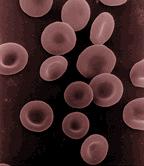
In this case, the "good thing" are the recombinant erythropoetins -- Epogen, Procrit, and the latest one, Aranesp. They are used to treat anemia in patients with chronic kidney disease (CKD). Anemia is due to decreased production of erythropoetin by the failing kidneys.

According to NYTimes, "dialysis patients should have a target hemoglobin level of 10 to 12 grams per deciliter of blood. In its most recent guideline, the panel of doctors overseen by the kidney foundation said a target of 11 to 13 grams was appropriate.

In practice, almost all dialysis patients receive the drugs, and almost none have hemoglobin levels below 11 grams after treatment. About half have levels of more than 12 grams, almost 20 percent of patients have levels above 13 grams.

The differences may seem small, but one of the studies published in The New England Journal found that patients treated to an average hemoglobin level of 12.6 grams had a 34 percent higher risk of death or serious heart problems than those treated to a level of 11.3 grams."

The first author of the NEJM study was a "star" lecturer at one the lunch symposia at the 2006 ASN Renal Week.

In conclusion, it makes sense to correct anemia in CKD up to a point. Currently, this point seems to be 11 g/dL.

Update 03/09/2007:
FDA will add a black box warning to the label of erythropoiesis-stimulating agents (ESAs) due to increase in serious side effects and greater number of deaths in patients treated with these agents.

Update 3/28/2007:
FDA added a black box warning to the labels of all currently available Erythropoiesis Stimulating Agents (ESAs). Source: ASN.

Targeting higher hemoglobin levels in CKD increases risks for stroke, hypertension, and vascular access thrombosis and probably increases risks for death, serious cardiovascular events, and end-stage renal disease. The mechanisms for harm remain unclear.

References:
Treatment of Anemia Questioned. NYTimes.
Correction of Anemia with Epoetin Alfa in Chronic Kidney Disease. NEJM.
Normalization of Hemoglobin Level in Patients with Chronic Kidney Disease and Anemia. NEJM.
American Society of Nephrology (ASN) Renal Week 2006
Amgen, J&J anemia drugs to carry new warning: FDA. Scientific American, March 09, 2007.
Anemia Drugs: How Much Is Too Much? WSJ Health Blog, 4/17/2007.
Image source: Wikipedia, public domain.

Updated: 07/06/2010

Sunday, November 26, 2006

"Grand Rounds" of Medical Blogs Multiply

Grand Rounds was conceived as a weekly hosting event which features the best posts in the medical blogosphere. Several outgrowths of the "original" Grand Rounds have appeared recently, arranged mainly by subspecialty or location. I do not think that they will dilute the Grand Rounds "brand" and they may be interesting to follow. A list is compiled below:

Grand Rounds (original). I have hosted it twice, it was fun and an eye-opening experience.

Radiology Grand Rounds

Change of Shift: A Nursing Blog Carnival

Pediatric Grand Rounds

The BritMeds - this is the latest carnival. Dr Crippen would like "this round-up to be be strictly British. Otherwise, the criteria will be relaxed. British blogs written by anyone working in healthcare or anyone receiving health care in this country."

BlogCarnival.com has a longer list of many health-related carnivals.

Thursday, November 23, 2006

American Society of Nephrology (ASN) Renal Week 2006

The American Society of Nephrology (ASN) Renal Week 2006 in San Diego, California was a big event attended by more than 12,000 nephrologists from all over the world. The conference was at the Convention Center at the beautiful bay of downtown San Diego.


Downtown San Diego

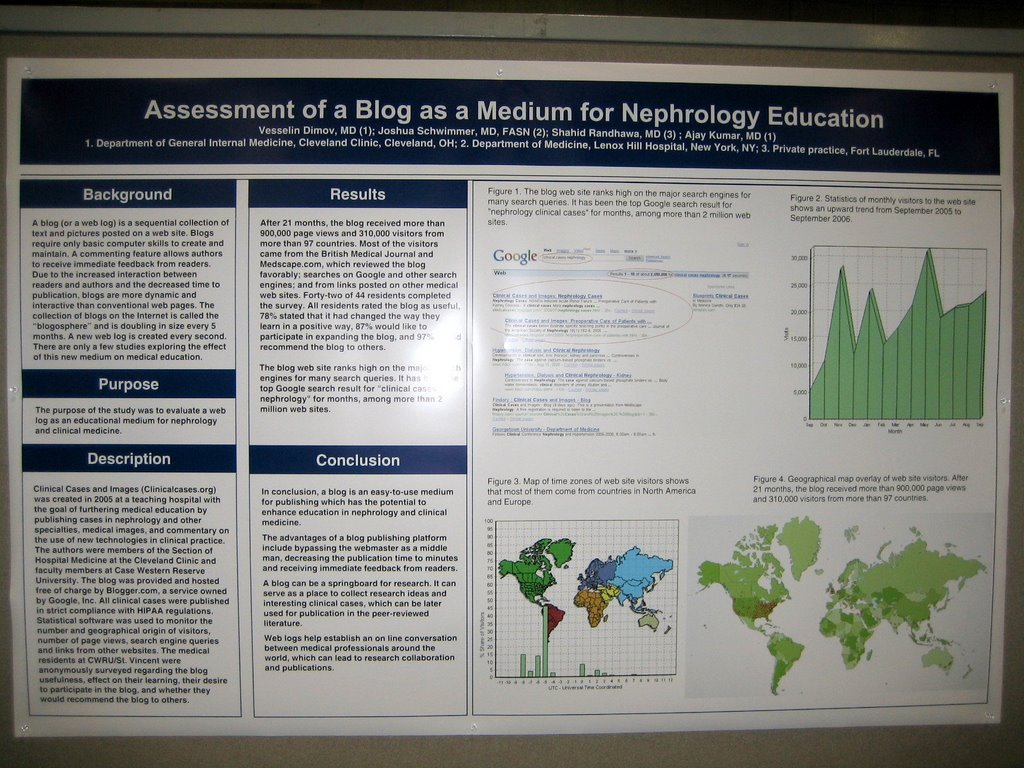
Joshua Schwimmer and I submitted the abstract Assessment of a Blog as a Medium for Nephrology Education which was accepted for poster presentation. The abstract was based on the idea behind the ClinicalCases.org project and was met with significant interest (and curiosity) at the conference. My other poster was in the much more traditional format of a case report: Dermatomyositis-induced Rhabdomyolysis as a Rare Cause of Acute Renal Failure.


Our poster Assessment of a Blog as a Medium for Nephrology Education

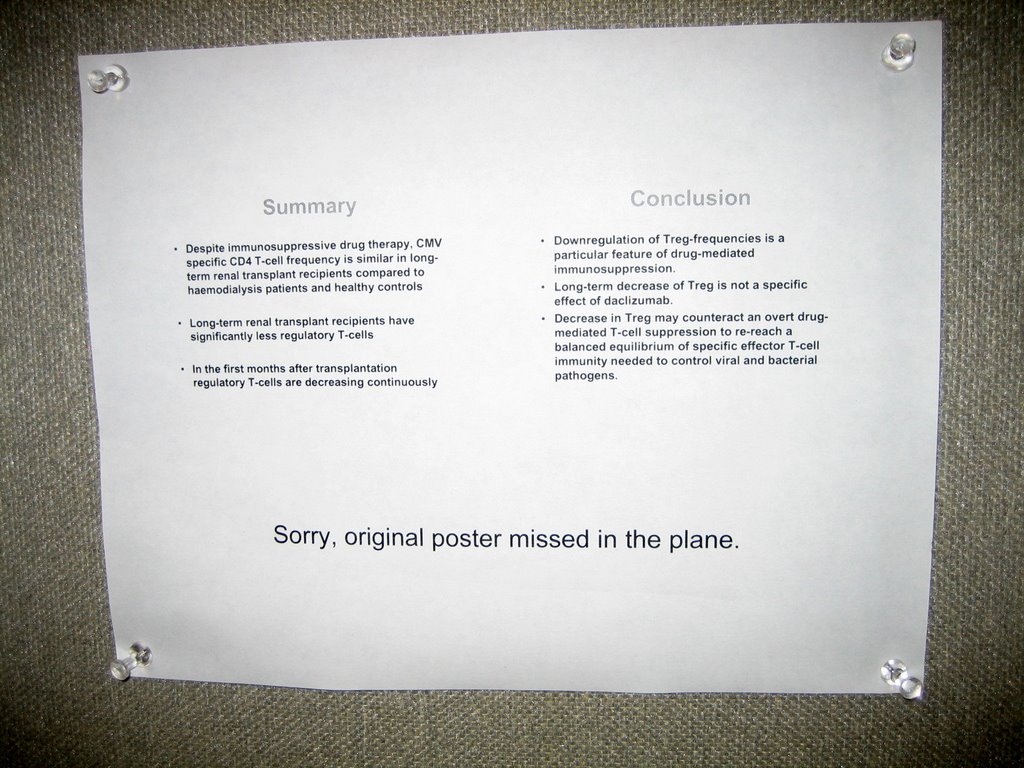
The art department of the Cleveland Clinic forgot to add the Clinic logo to the posters but that was a minor mishap compared to the poor guy who lost his poster on the plane (click to enlarge the photo below).


"Sorry, original poster missed in the plane"

There is a blog about ASN Renal Week 2006 but it looks like the authors were busier this year than in 2005 and managed to publish just a few posts.

In the long security line at the San Diego airport, a young lady saw my ASN conference bag choke-full with abstract and syllabus books and tried to pronounce: "Neph-ro-lo-gy... What is that?". "Kidney diseases", I answered. "Kidney? Do you carry one there?", quipped her boyfriend. We still have a lot to do in terms of educating the general public ;-)

About ASN:
"The American Society of Nephrology (ASN) was founded in 1967 as a nonprofit corporation to enhance and assist the study and practice of nephrology, to provide a forum for the promulgation of research, and to meet the professional and continuing education needs of its members."

More photos from San Diego:
Seaport Village in Downtown San Diego, California
Balboa Park, San Diego, California
San Diego Zoo in Balboa Park, San Diego, California
Coronado, San Diego County, California

Monday, November 13, 2006

Botox Injections for Treatment of Diabetic Gastroparesis

A 75 year-old female with diabetic gastroparesis is admitted to the hospital with generalized weakness and N/V for 2 days.

She is not able to tolerate metoclopromide (Reglan).

The GI consultant recommends botulinum toxin (Botox) injections of the pylorus.


Figure 1. Stomach filled with food (left); Botulinum toxin was injected in a 4-quadrant fashion in the pylorus (right).

What is the effect of the procedure on the patient's symptoms?

Read more in Botulinum Toxin Injections for Treatment of Diabetic Gastroparesis. ClinicalCases.org

Sunday, November 12, 2006

The Lancet Launches a Blog, Critiques Medical Bloggers

The venerable British medical journal The Lancet was founded 1823 but it does not shy away from the latest Web 2.0 tools. It launched a podcast in April and a blog in October 2006.

The journal advertises an impact factor 23.88 on its front page (a measure of how many other journals cite its articles) but it also finds time to critique the "competition" of the medical bloggers by claiming that many of them do not close disclose conflicts of interest. A free registration is required to read Bloggers beware: conflicts of interest and diabetes (link via Notes from Dr. RW).

Figure 1. Mixed content/advertising and blog ethics. Source: Paid Blog Posts? Philipp Lenssen. Creative Commons license.


References:
The Lancet, from Wikipedia, the free encyclopedia.
The Lancet Features Weekly Audio Summary
Bloggers beware: conflicts of interest and diabetes. The Lancet.
Paid Blog Posts? Philipp Lenssen.
Look out bloggers. The medical journalists are on to you. Notes from Dr. RW.

Update 03/27/2010:

The URL of the Lancet blog (http://blogs.thelancet.com) is no longer acive.

Saturday, November 11, 2006

Google Finds Correct Diagnosis in 58 % of Cases Published in NEJM

According to a BMJ study, Google searches revealed the correct diagnosis in 58% of cases published in the case records of the New England Journal of Medicine in 2005. In each of the 26 cases studied, researchers selected 3-5 terms from each case and did a Google search without knowing the correct diagnoses.

In conclusion, "the use of web based searching may help doctors to diagnose difficult cases."

Hmm... I use Google multiple times every day but, in its current form at least, I am not sure sure I will let any search engine (which basically relies on "wisdom of crowds") to be my trusted diagnostic adviser.

Dr. Charles ran a few sample searches and was not very convinced either.

The Krafty Librarian points out that, "first, the authors just stated that Google only displayed results to the correct diagnosis 58% of the time, and now the they are ready to use it as a clinical decision tool! Those odds are slightly better than flipping a coin!"

"This is research?", asks one of the rapid responses, "I am amazed by the publication of this article. As a regular reviewer for numerous journals, this article would never have seen the light of day. The results actually show an extremely poor correct diagnostic rate even with trained personnel to filter and process the information. As doctors we would never accept the same level of diagnostic accuracy of a colleague. I am shocked that this has been published by the BMJ."

By the way, by naming their paper "Googling for a diagnosis" the authors violated one of Google "rules" which advises strongly against using the name of the search engine as a verb, e.g. googling.

I have covered the use of Google in medicine at length before -- you can review it here.

References:
Googling for a diagnosis--use of Google as a diagnostic aid: internet based study. BMJ.
Googling For A Diagnosis. The Krafty Librarian.
Is Google The Fastest Diagnostician On the Planet? UBC Academic Search - Google Scholar Blog.
This is research? BMJ. T C Winthrop.
Google 'aids doctors' diagnoses. BBC.
Attention: Paging Dr. Google! Dr. Charles.
Do you "Google?" Google Blog.
Google in Medicine
Adam Bosworth, Vice President of Engineering at Google Inc. covered similar topics in: How do you know you're getting the best care possible?
Google now wants to diagnose your disease, offers differential diagnosis based on 10 sites and Wikipedia http://goo.gl/SD1qM

Image source: Doctors Using Google by Philipp Lenssen, used with permission

Thursday, November 9, 2006

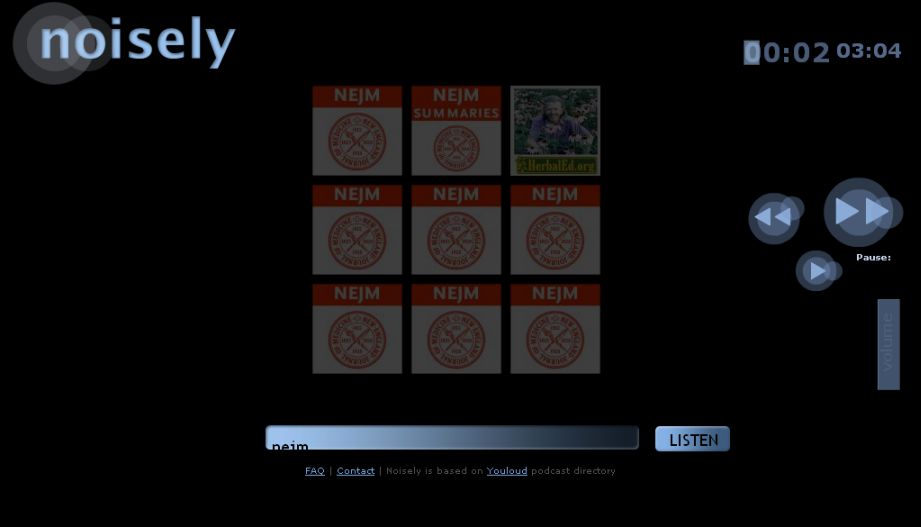
Stream Podcasts Without Subscribing via Noisely.com

Noisely is supposedly an "intelligent podcast player". According to Download Squad, if you enter words that describe what you want to listen to, Noisely will find the right podcast for you. "Noisely works solely online in your browser and searches through their database, spitting out results based on matching keywords, and the date the actual podcast took place."

For example, just type "NEJM", and the podcast starts automatically. Noisely worked well with popular feeds like NPR and BBC but did not find JAMA podcast in my test today.

References:
Listen to continuously streamed Podcasts with Noisely. Download Squad.
Image source: Noisely.com