Friday, August 18, 2006

What's New in General Internal Medicine?

The latest Update in General Internal Medicine is published in the Annals of Internal Medicine (PDFs free after 6 months). While the whole text is spread over 11 pages, I would like to summarize just a few things I found useful. Recommendations are divided in 3 groups: "start", "consider" and "stop."


Start

Start prescribing a high-dose statin (Lipitor 80 mg po qd) for patients with CAD.
I am not so sure about prescribing the high dose if you can achieve a significant LDL and CRP reduction with a lower statin dose.

Start U/S screening for AAA in male smokers aged 65 to 73.
It took us such a long time to realize that U/S screening saves lives in AAA patients...

Start considering seriously MRSA in skin/soft tissue infections, and consider Vancomycin treatment according to local guidelines.


Consider

Consider referring eligible patients with CHF for AICD.

Consider once-daily Spiriva (tiotropium) in COPD patients.


Stop

Stop prescribing high-dose vitamin E. In a large study of 130,000 patients, vitamin E use was associated with increased mortality.

Stop prescribing cholinesterase inhibitors (Aricept) routinely in dementia. These drug are at best marginally effective and can cause significant adverse effects. Memantine (Namenda) is still considered helpful, at least until newer studies show that it may not be...

Stop prescribing beta-blockers for:
- low-risk patients in the perioperative period. Patients with RCRI > 3, may still benefit from a beta-blocker.
- first-line HTN treatment. Beta-blockers increase the risk for development of DM2 and offer less protection against stroke than CCB and ACEi.


Up-To-Date also publishes regular updates in different medical specailties in the section "What's New" (paid subscription required).


References:
Update in General Internal Medicine. Christopher L. Knight, MD, and Stephan D. Fihn, MD, MPH. Annals of Internal Medicine, 7/2006. Paid subscription required (PDFs free after 6 months).

Perioperative beta blockers may not benefit patients with diabetes (if not used properly)

Norvasc plus ACEi much better than Atenolol plus HCTZ

Images source: Openclipart.org, public domain.

Thursday, August 17, 2006

"Blogger Friends Circle" Shows Who Links To Your Blog

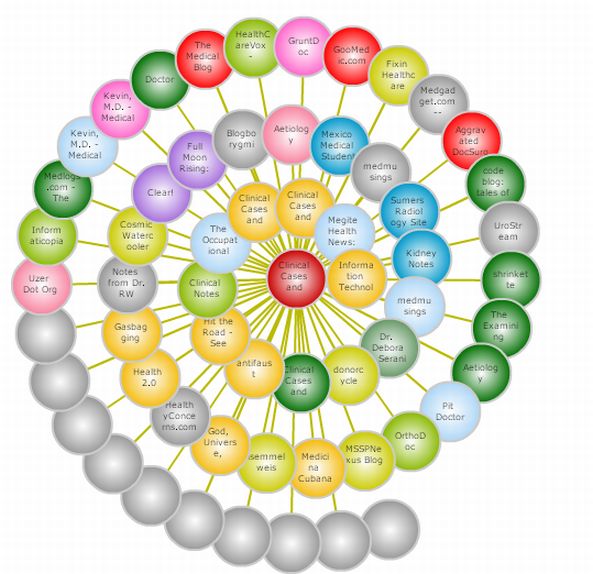
TTLB Blogosphere Ecosystem lists the incoming links in a form of a spiral wheel with colored bubbles. The wheel represent websites which link to one's blog most frequently. An example with my blog (ranked # 4695) is shown below. It looks like I get about 60-70 links per month from other websites.


To check the incoming links for you blog, replace the URL of my blog with yours:

http://truthlaidbear.com/showdetails.php?host=http://casesblog.blogspot.com

(remove the final "/" in the URL when you copy and paste)

References:
Link via Digital Inspiration.
Measure Your Blog Popularity on Social Bookmarking Websites with Socialmeter. Digital Inspiration.

Wednesday, August 16, 2006

Blogger Hacks: Change Your Blog to Fit Your Ideas

Blogger.com is owned by Google and is probably the most popular free blogging services on the web. You can edit the template and this offers almost unlimited options for customization.

This customization or "hacking" just got easier with the launch of BloggerHacks Wiki which "catalogs dozens of "hacks" for Blogger in categories ranging from Navigation to Encryption. The hacks vary in difficulty from easy to advanced, and there's also an area for requesting new hacks." (link via DownloadSquad.com).

Blogger.com a new beta version last week which does not allow you to edit the template yet (it will be fixed later) but if you already have an old blog, you may find BloggerHacks Wiki very useful.

References:
Blogspot URLs That You Should Bookmark. Digital Inspiration.
Image source: Blogger.com.

Monday, August 14, 2006

A Drop in Google Shares Causes Chest Pain

Last week, a computer glitch by Nasdaq lead to a drop of $350 a share in Google stock value in just 10 minutes.

According to The New York Sun:

"At about the $391 price point, an order originated on Instinet-ATS (a Nasdaq company) that triggered trades between 4:10 p.m. and 4:12 p.m. at a price as low as $38 (representing a drop of almost $350 a share from the close). In brief, someone from a Nasdaq member firm punched in an erroneous figure to commence a trade.

An investor whose identity was not revealed, "bought 200 shares earlier last week at around $380, or about $76,000, only to discover from his broker he was suddenly sitting with a fast and damaging paper loss (at the quoted $38 a share) of about $68,400.

The broker told his customer the $38 price was probably a mistake, but he added that he could not guarantee it, given the volatility in Google's shares. Nonetheless, the customer, he said, became hysterical, complaining of chest pains and crying. "The way he sounded, I thought for sure the man was going to have a heart attack," he said."

Luckily, Nasdaq soon corrected the mistake. There was no word if this helped the chest pain of the "poor" investor.

References:
Error Knocks Down Google $350 a Share. The New York Sun.
Image source: Openclipart.org, public domain

Sunday, August 13, 2006

BMJ Offers Tips on Dealing with Angry Patients

BMJ Career Focus continues its series of articles with practical advice:

Tips on... Getting more energy

Tips on... Dealing with angry and aggressive patients

Handling aggressive patients

May be you can stay out of trouble by using the The "BEST" Communication Model described in one of the previous issues...

Image source: Openclipart.org, public domain.
Saturday, August 12, 2006

Mediterranean Diet Seems to Improve Cardiovascular Risk Factors After Just 3 Months

According to a substudy of PREDIMED published in the Annals of Internal Medicine:

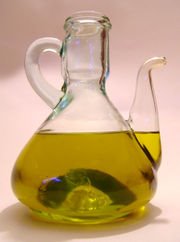
"Compared with a low-fat diet, Mediterranean diets supplemented with olive oil or nuts have beneficial effects on cardiovascular risk factors."

How was the study done?

772 asymptomatic people aged 55 to 80 years were recruited for the study. Participants were assigned to a low-fat diet or to one of 2 types of a Mediterranean diet. Those allocated to Mediterranean diets received either free virgin olive oil (1 liter per week), or free nuts (30 gm/day). The authors evaluated laboratory outcomes at 3 months.

Mediterranean diet improved (decreased) plasma glucose levels, systolic blood pressure, cholesterol, and C-reactive protein levels compared to the low-fat diet. The changes were small and the study was not powered to show any clinical significance, but again, the intervention duration was only 3 months

Further Reading from Wikipedia

Cuisine of the Mediterranean

Mediterranean diet

References:

Effects of a Mediterranean-Style Diet on Cardiovascular Risk Factors.
Ramon Estruch et al., Annals of Internal Medicine, 7/2006.
Why to Eat Like a Greek http://goo.gl/Chpwf - Mediterranean diet improves heart risk factors http://goo.gl/DkPhF
Image source: Olive oil, Wikipedia

Friday, August 11, 2006

What I Learned from Making the Website of the Cleveland Clinic Hospitalists

As some of you probably know, I am a staff physician at the Section of Hospital Medicine at the Cleveland Clinic. Being one of the largest academic hospitalist groups in the country, I found it odd that we did not have a website yet, and with the support of my colleagues (and bosses) I decided to create one.

How It Started

I had a lot of experience tinkering with the Blogger.com templates and the first version of the website was naturally done there at Hospitalists.blogspot.com.

The IT and marketing departments reviewed our provisional website on blogspot.com, they liked it, and gave a green light to relocate it to the Cleveland Clinic servers.

Launching the New Website

Our brand new official website is at: ClevelandClinic.org/Hospitalist

Now you can see the people who work in the section, including their CVs and publications. We modeled this part after the UCSF hospitalist website.

Also, we have listed the main areas where we work: the huge main campus with 1,000 beds, the outpatient preoperative center with 15,000 patient visits per year and the subacute rehabilitation center.

There are also links to our hospitalist fellowship program and the research projects currently underway at the section. As academic hospitalists, we have several projects in different stages at any time.

This is by no means the complete version of the website, it is and will continue to be a work in progress. Our goal is to have it constantly updated to keep pace with the persistent stream of new developments at the Cleveland Clinic. Your input and comments are highly appreciated, please send feedback to clinicalcases@gmail.com.

Things I Learned

I learned several things during my work on the websites for the Section of Hospital Medicine at the Clinic:

1. If you want to start a web project, go ahead and give it a try instead of waiting for somebody else to do it for you.

2. Start your website on Blogger.com. It is much better to show a complete version of the website (although temporary) to the decision makers, so that they can visualize it, rather than to have just a project on paper.

3. Relocating your website from Blogger.com to its permanent place on the company/hospital servers is relatively easy.

4. As I have written before, Blogger.com can be used for much more than blogging. Both your practice, and you personally, should have websites. In a society that sees the world more and more through "Google eyes", if something is not on the web, it does not exist.

The purpose of this post is not only to showcase our new website but also to encourage you to start your own, if you have such plans. After all, if I did it, you can too.

References:
How Can a Doctor Use Google Page Creator?
Image source: Cleveland Clinic

Thanks to John Sharp and his colleagues at the IT and marketing departments of the Cleveland Clinic for all the support.